
- Home
- AUTHOR INTERVIEWS- CHECK THEM OUT
- In Conversation With Richard Lewis Mater Author of Beat.
In Conversation With Richard Lewis Mater Author of Beat.
- By Norm Goldman
- Published December 21, 2021
- AUTHOR INTERVIEWS- CHECK THEM OUT

 Norm Goldman

Reviewer & Author Interviewer, Norm Goldman. Norm is the Publisher & Editor of Bookpleasures.com.
He has been reviewing books for the past twenty years after retiring from the legal profession.
To read more about Norm Follow Here

Bookpleasures.com welcomes as our guest Richard Lewis Mater author of Beat.

Norm: Good day Richard and thanks for taking part in our interview.
Please tell our readers a little bit about your personal and professional background.
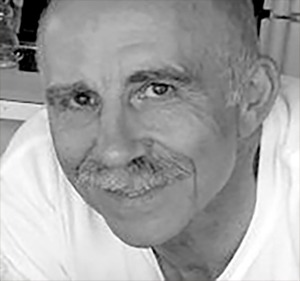
Richard: Well, my father was from Brooklyn and served in military intelligence during World War II. My mother was a liaison officer with the French Army, and the two met and fell in love in occupied Germany after the war.
I was born in England and grew up in California, on the East Coast, and for most of my teenage years, in Munich, Germany, where my father worked for Radio Free Europe.
My professional career began with low-level jobs in book and magazine publishing in New York City. Then I chucked it all and hit the road for California, along with my girlfriend in a used VW bus.
For work I did factory and restaurant jobs, manned retail counters, pumped gas, and did some freelance writing. Eventually, I moved to Hollywood and re-invented myself working in television news and local programming. That was followed by a long career in network television.
Norm: How has your environment/upbringing colored your writing?
Richard: Growing up in Europe from age 11 to 17 had a huge impact. We traveled a lot and visited relatives on my mother’s side in England and France.
I think I grew up with a pretty international perspective. Beat incorporates an element of that. San Francisco circa 1976, as depicted in the novel, has a dose of Paris. Even several of the characters are French.
Norm: How did you become involved with the subject or theme of Beat?
Richard: I wanted to write about being an angst-ridden 20something trying find his way in life. A first-person psychological character study.
The screws put to the protagonist, both self-inflicted and brought on by the turmoil of the times and his own history -- especially coming up through the counterculture and the anti-war movement.
When you’ve discarded
middle-class goals and a life plan, how do you put it all back
together in some new way?
Factor in the end of the anti-war movement,
the revolutionary nihilism of the Weathermen, drugs going from
relatively benign pot to cocaine, speed and heroin. You hit a wall,
and you know it’s time to do something drastic and new.
“We’re pushing a decade since the Summer of Love,” as Constantina says in the book. “It’s time to move on.”
Norm: What were your goals and intentions in this book, and how well do you feel you achieved them?
Richard: My first goal was to write a novel, hopefully a good one. One dealing in themes of compromise and lost idealism. Chronicle a generation.
I grew up surrounded by books, including the French Obelisk Press versions of Henry Miller’s work when it was still banned in America: Tropic of Cancer and Capricorn.
I also became a big reader of Hemingway in my early teen years. Steinbeck, Hesse, Camus, and Kerouac followed. J.D. Salinger’s Catcher in the Rye. I was a voracious reader.
I think I did a solid job writing Beat. I kept at it until I was confident that I did the best I could. And that took years.
Norm: Is there much of you in the character of Billy Johnson?
Richard: Like Billy, I was
an activist in the anti-war movement who later found myself in the
San Franciso Bay Area during the early and mid-1970s.
It was the end of innocence in the counterculture. And at that point, I was done with radical politics. I needed to figure out the next stage of my life.
Norm: How did you go about creating the other characters in the book such as Manny and Ti? As a follow up, are the characters in your book based on people you know or have encountered or are they strictly fictional?
Richard: Some of the characters in Beat are inspired by real people, others are composites, and some are completely fictional. But even the ones inspired by real people took on a life of their own during the writing process and changed. Sometimes drastically so. Sometimes less so.
Norm: What was the most difficult part of writing this book?
Richard: Learning to write fiction, the nuts and bolts of a novel. Staying with it over a period of many years. Coming back to it from long breaks. Determining the ending, which went through several different incarnations.
And overall, what to cut and what to keep and continue to re-write. But I loved the creative outlet it provided, and most of the time the process was very rewarding and fun. A joy really.
Norm: Did you learn
anything from writing the book, if so what was it?
And perhaps it’s better not to know that ahead of time. Also, I was pleasantly surprised at what I pulled off in what I consider to be the best chapters and scenes. Punched above my weight, I would say.
Norm: It is said that writers should write what they know. Were there any elements of the book that forced you to step out of your comfort zone, and if so, how did you approach this part of the writing?
Richard: Writing a novel with all that it involves was stepping out of my comfort zone. I had previously written only non-fiction. Music and entertainment industry-related pieces and one non-fiction book.
I approached writing a
novel by being sure to work with a very good editor once I had the
roughest of drafts. One who got what I was trying to do and who was a
great teacher.
And there were some specific scenes that were a real challenge for me. I kept at it relentlessly until I thought I got them right.
Norm: Where can our readers find out more about you and Beat?
Richard: MY WEBSITE
Norm: What is next for Richard Lewis Mater?
Richard: I’m finishing up a distance-running memoir. It includes essays and reflections on running, a life lived, paths taken and not taken, aging, and more. All of it is set against taking on an iconic distance-running challenge in my 60s.
Norm: As this interview comes to an end, do you feel that writers, regardless of genre owe something to readers, if not, why not, if so, why and what would that be?
Richard: Yes, I think writers owe readers their best effort, and hopefully they inform and entertain in some way. Take the reader on a journey to someplace different, interesting, that makes them think -- or even just escape.
And a laugh or two along the way is good.
Norm: Thanks once again and good luck with all of your endeavors.
FOLLOW HERE TO READ NORM'S REVIEW OF BEAT