
- Home
- Biographies & Memoirs
- Where History and Adventure Meet: Kirk Ward Robinson’s Hiking Through History
Where History and Adventure Meet: Kirk Ward Robinson’s Hiking Through History
- By Norm Goldman
- Published February 24, 2026
- Biographies & Memoirs

 Norm Goldman

Reviewer & Author Interviewer, Norm Goldman. Norm is the Publisher & Editor of Bookpleasures.com.
He has been reviewing books for the past twenty years after retiring from the legal profession.
To read more about Norm Follow Here
In Hiking Through History: Hannibal, Highlanders & Joan of Arc, Kirk Ward Robinson shares a memoir that mixes travel stories with historical exploration.
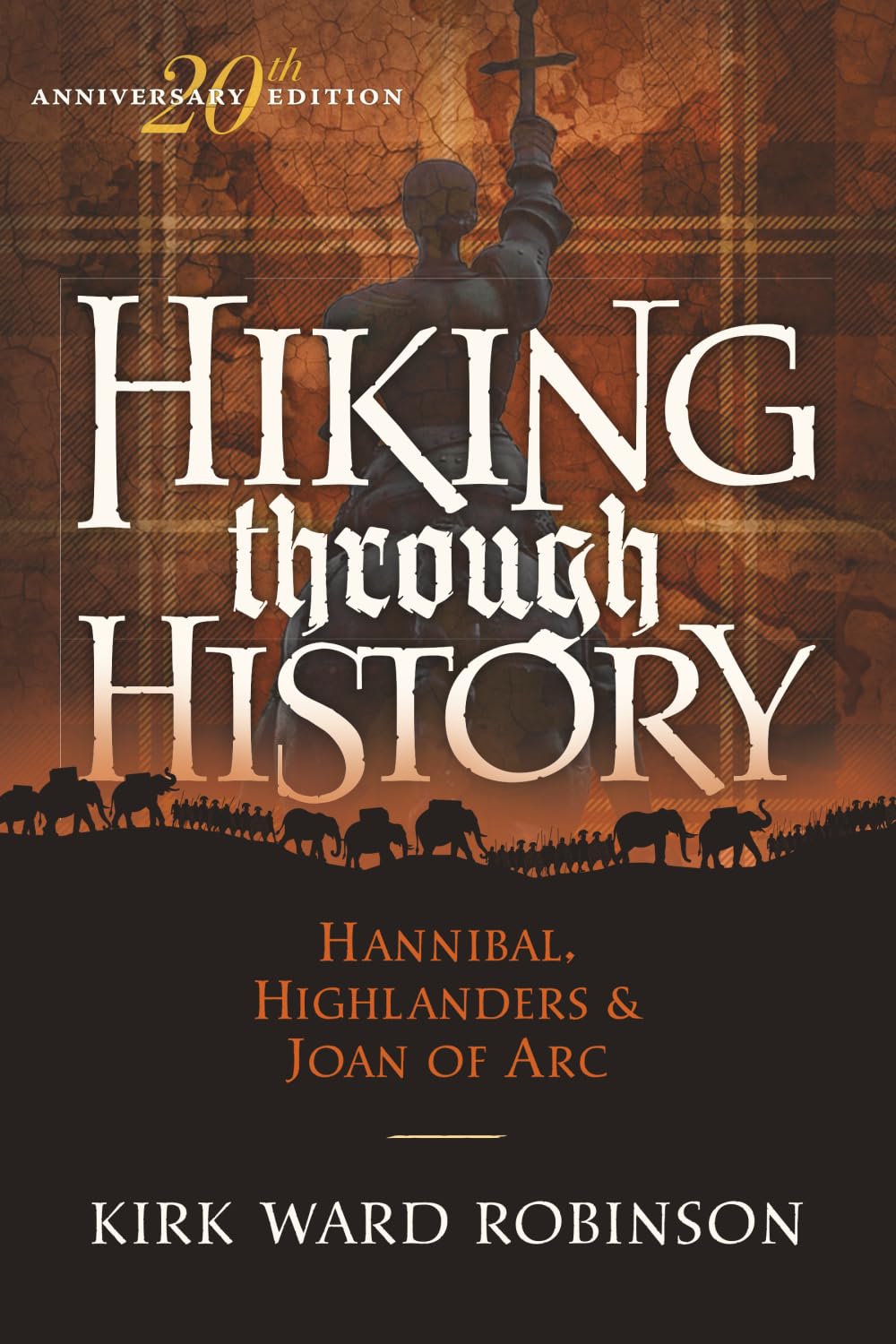
Now twenty years old, the book looks back on Robinson’s 2005 journey across Europe by ship, on foot, by bike, bus, and rental car.
Along the way, he follows the stories of three figures who have fascinated him: Hannibal and his daring Alpine crossing, the Highland clans of Scotland, and Joan of Arc’s campaign through medieval France.
The story begins with a transatlantic trip on the MV Galaxy, where Robinson and his longtime friend 'Nymous' leave Galveston, Texas, for Italy. Right away, Robinson’s writing shows his wit, self-awareness, and sense of humor.
He doesn’t present himself as a privileged traveler. Instead, he describes nights spent on observation decks, camping among Roman ruins, and moving through the Italian countryside without modern technology, capturing what travel was like in 2005.
The main part of the memoir focuses on Hannibal. Robinson combines careful research with his own experiences in the places where history happened.
He follows Hannibal’s famous route from Cartagena in Spain, through southern France, and over the Alps into Italy, visiting key battle sites like Trebbia, Lake Trasimene, and Cannae.
Along the way, he faces language barriers, tough mountain paths, and even searches for a cold beer in Italy. Robinson’s visits to these places make the history feel real and easy to understand.
Still, his excitement for the topic sometimes seems to get in the way of a more critical look at Hannibal’s strategies.
This small issue doesn’t take away from the book’s strengths, but it does encourage readers to think about the details of the history he describes.
The part about Scotland, based on a trip in 1998, is the emotional heart of the memoir. Robinson travels through the Highlands, thinking about his own family’s past, since his ancestors were forced out during the Highland Clearances.
He describes his experiences with the land and people thoughtfully, and his reflections on the Clearances highlight the personal side of historical tragedy.
The part about Joan of Arc may be the memoir’s most ambitious section. Robinson traces all of Joan’s campaign across France, traveling on foot and by bike from Domrémy to Rouen.
His research is thorough, and he skillfully blends history with his own thoughts, just as he did in the Hannibal section.
His account of standing in the Place du Vieux-Marché, where Joan was executed, is especially moving.
A key theme in these journeys is Robinson’s belief that history should be experienced in person, not just studied.
He values slow travel, which he calls moving at the pace of the sun, as a way to make real connections that fast tourism often misses.
Robinson often thinks about what we lose in our rushed world, like handwritten letters, slowly gained wisdom, and the careful observation shown by Benjamin Franklin’s study of the Gulf Stream.
Robinson’s writing is warm and friendly. From time-to-time he wanders off topic, but, nonetheless, he always comes back to bigger ideas.
He is honest about his own struggles, like feeling uneasy in crowds, having trouble with French, and sometimes making mistakes in planning. This honesty helps readers feel connected to him and makes him a likeable guide.
This memoir isn’t a conventional travel narrative—it’s wider in scope, deeply personal, and shaped by the author’s own reflections.
For readers who believe the past is best understood by walking through it, Hiking Through History stands out. It blends accessible history with the lived experience of someone who has embraced both the hardships and the rewards of the journey.
It will appeal to anyone who wants more than dates and timelines, offering a chance to encounter ancient and medieval history in the landscapes where it unfolded.
Readers who enjoy a well told story—rich with humor, drama, and emotional depth—will find much to appreciate, as will armchair travelers eager to explore places they may never reach themselves.
I recommend this book to fans of travel writing, military history, or anyone curious about what awaits at the end of a long path.
Follow Here To Read Norm's Interview With Kirk Ward Robinson.