
- Home
- AUTHOR INTERVIEWS- CHECK THEM OUT
- In Conversation With Dorothy Longo Author of The Rhythm of Unity
In Conversation With Dorothy Longo Author of The Rhythm of Unity
- By Norm Goldman
- Published June 28, 2023
- AUTHOR INTERVIEWS- CHECK THEM OUT

 Norm Goldman

Reviewer & Author Interviewer, Norm Goldman. Norm is the Publisher & Editor of Bookpleasures.com.
He has been reviewing books for the past twenty years after retiring from the legal profession.
To read more about Norm Follow Here
Little did she know that this decision would shape her destiny for the next five decades.
Immersed in a world of melodies and harmonies, Dorothy's love for music and music education propelled her to achieve both a bachelor's and master's degree in the field. She swiftly made her mark as a singer and pianist, enchanting audiences in cozy clubs and stylish cocktail lounges, where her soulful performances left an indelible imprint on the hearts of listeners.
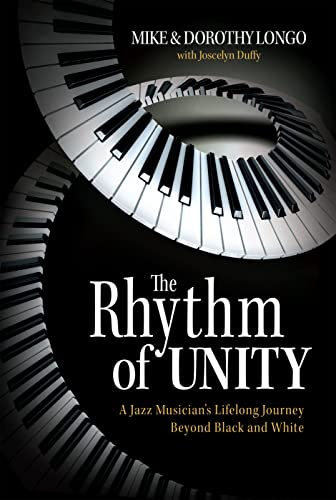
The year 1981 marked a significant moment in Dorothy's life when she met the musical icon, Mike Longo.
As she embarked on a journey under his tutelage, little did she know that this serendipitous encounter would lead to a lifelong partnership and a profound intertwining of their fates. Their love story blossomed, culminating in a joyous union in 1988, and together they embarked on an incredible 32-year journey of shared passions and unbreakable bonds.
While their love for music remained the centerpiece of their relationship, Dorothy and Mike's journey extended far beyond the stage. With an unwavering commitment to the Baháʼí International Community's United Nations office, Dorothy served as the Operations Officer for over 27 years in the bustling cities of New York and Geneva. Her tireless dedication and unwavering belief in the power of unity left an indelible mark on the global stage.
Dorothy Longo earned the nickname "Jazz Wife" as a tribute to her unwavering devotion and loyalty to her husband's musical legacy. With each step she takes, she carries a symphony of experiences, wisdom, and unyielding passion for the arts.
Join us as we step into
the world of Dorothy Longo, a remarkable author whose life story is
as captivating as the tales she weaves on paper. Discover the
inspirations, triumphs, and challenges that have shaped her literary
voice and be prepared to be spellbound by her unique perspective and
unwavering spirit. This is an interview you won't want to miss.
Norm: Good day Dorothy and thanks for taking part in our interview.

Dorothy: Hello Norm Thank you for your invitation to take part in your interview. I appreciate your interest in Mike’s biography, The Rhythm of Unity and your support of this great American art form we call jazz.
Norm: Can you elaborate on
how Mike Longo's early life sparked his interest in jazz?
Dorothy: Mike grew up in a musical family. His mother was a gifted pianist and singer, and his father was a bass player and had his own local band.
Mike was drawn to the piano as a child before he could even play.
There was some intuitive connection that he felt. Fortunately, his parents encouraged this and gave him lessons at 8 years of age, even though he was picking out tunes on the piano by himself since the age of 4.
He became fascinated with boogie-woogie after witnessing a young child named Sugar "Chile" Robinson play in a short film at the cinema.
Mike started practicing and by the age of 13, he was winning contests by playing boogie-woogie patterns, creating his own right-hand improvisational melodies over the repeated bass pattern in the left hand.
When he was in high school, he could play piano at a Black “sanctifying” church on Sundays, as well as at local clubs and high school functions.
There was never a time when he was not playing the piano publicly, sometimes for minimal pay or just jamming.
He would often talk about
how he would sleep out on the screened porch and listen to music all
night.
He would switch between stations and listen to some
classical music, music from Havana, and jazz from New York including
Dizzy, Oscar Peterson, Ella Fitzgerald, etc.
Norm: What were some of the key influences and experiences in Mike's musical education that contributed to his development as a jazz pianist?
Dorothy: When Mike was a
high school student, one of the key influences was Cannonball
Adderley.
Cannonball taught music at neighboring Dillard High
School in Fort Lauderdale and was not yet known as the great jazz
artist who later became famous in New York City.
It was because
of Cannonball that Mike found his way to playing for the Black
church. Then Cannonball played at a high school function where
Mike was also playing, and they bonded immediately.
Mike’s dad
hired Cannonball to play with his band, for which Cannonball was very
grateful, as he made more money in one night than he did in a week
teaching high school.
Cannonball started to get more of his own
gigs, and one night when Mike was in the 10th grade, Cannon’s piano
player didn’t show up one night.
He called and asked Mike’s
Mom if she would allow Mike to finish the week with the band.
This was a source of great musical experience, and Mike learned much
from it.
Mike gained valuable experience playing with the Harold Ferguson Band on the Chitlin Circuit alongside seasoned jazz musicians.
When it was time for Mike
to go to college, Cannonball recommended he attend Western Kentucky
University because Cannonball had gone there to study composition
with Roy Harris.
He said they had small classes and it would be like getting private lessons, and that is where Mike got his Masters in Music.
When he was in high
school, Mike also could hear Oscar Peterson play live at a concert.
Mike became enthralled with Oscar’s playing and bought every
recording of his that he could get his hands on.
Mike would listen to them and imagine he was lying under the keyboard and watching Oscar’s hands as he played.
Norm: We're interested in learning about Mike's relationships with jazz legends like Dizzy Gillespie and Oscar Peterson. Could you share some anecdotes or stories about their collaborations and friendships?
Dorothy: Mike admired Dizzy and Oscar Peterson ever since he was a child. He would listen to them play on the radio as a teenager at night on the screened porch of his house.
Below are some examples of his experiences with some jazz greats.
Oscar Peterson: When Mike was invited to study with Oscar at the Advanced School of Contemporary Music in Toronto, Mike had just arrived in New York.
Oscar took him under his wing. Mike said that he had to relearn how to actually play the piano as he had never had instructions on technique.
When Mike was practicing, Oscar would often come into his practice room and give him an unscheduled lesson, and Oscar ultimately gave him a key to his studio so Mike could practice on his piano at night.
Once Mike was
experimenting with something, he had heard Bill Evans play.
Oscar came barging into the room and chastised him, saying, “That’s
not you. You know damn well that’s not you!”
Oscar
talked about how, as a youth, Art Tatum would allow him to sit beside
him at gigs so Oscar could watch his hands.
However, Oscar was adamant that he would not copy Art’s “sound”, and he was just as adamant that Mike not copy his sound or anyone else. Hence the chastisement for trying to sound like Bill Evans.
Mike completed 6 months of
intensive study at Oscar's school in 1963 and didn't meet him again
until 1970, when they played together at the Village Gate, with Mike
in Dizzy's band and Oscar leading a trio.
After they finished their first set, Oscar grabbed Mike and said, “I want you to know how damn proud I am of you.” Of course, Mike was elated.
Nancy Wilson: Mike returned to New York City from Oscar Peterson’s school on a Monday and by Friday he was Nancy Wilson’s accompanist. Mike adored Nancy and played with her until she moved to California.
"No one can accompany a singer better than Mike Longo," Nancy stated.
Dizzy Gillespie: There’s so much about Dizzy. Here are a few.
Dizzy had taken Mike
everywhere in the Black community, and Mike would often spend days
living with relatives of his when they were playing.
He’d also go visit Dizzy and his wife, Lorraine, frequently between gigs so Diz and he could play together to keep up their chops.
Mike was driving
Dizzy to the deli in Englewood, New Jersey, on a summer day to get
pastrami for his toy poodle, Maestro, who only ate hot pastrami.
On
the way back through the Black section of town, they pulled up to a
red light. Diz yelled out multiple racial slurs after opening the
electric window on Mike's side of the car.
He then ducked down so that the people walking by saw only Mike in the car.
When a few guys started walking toward the car with angry looks on their faces, Mike pointed to Dizzy as he straightened up in full view. "Aww, it's the eccentric Dizzy Gillespie!" one guy said to the other, as they all started laughing.
In 1981, Mike was booked
at a floating concert hall under the Brooklyn Bridge called Barge
music. They had been hosting classical musicians for weekly concerts
and booked a jazz artist for a change of pace.
It was a solo piano concert. Don Schettini, a wealthy headhunter friend of Mike, learned about the concert and invested in a remote recording truck to capture it.
The result was an LP called Solo Recital, Mike’s first solo album, put out on his own label.
At Dizzy's house, where they often played chess, Mike brought the newly released record. Prior to Dizzy hearing this recording, they had always had what Mike felt to be a father-son relationship.
Everything changed that night;
upon hearing Mike’s recording, Dizzy suddenly began relating to him
as a peer, despite Mike not thinking of himself in that light.
That evening turned into one of the most pivotal nights of Mike’s life. After the album received a four-star review in DownBeat magazine, he realized that if he wanted to release a record that truly represented the way he played and felt about music; he was going to have to produce and distribute it under his own label.
During a rehearsal in
Japan, the guys in the quintet were all drinking from an enormous
bottle of sake that Moody bought, and they were getting torn up.
They made it through the concert alright, but then they were whisked
away in limousines for a show at an after-hours club. By the
time they got there, everyone was drunk as a skunk.
When they
arrived at the venue, it was this huge theater that was very plush,
similar to the showrooms in Vegas.
Backstage, Mike saw this
ladder leading up above the curtain of the stage. Out on the
stage, a show was going on with chorus girls and singers and the
whole bit.
He climbed up the ladder and went to sleep on the
scaffolding above the stage. When it was time for Dizzy to go
on, they couldn’t find Mike. Someone had seen him climb up there
and some stagehands came up and brought Mike down.
Then they
couldn’t find Dizzy. In the meantime, they had already
announced the group, and the audience was sitting and waiting for
them to come on stage.
As they were looking for Dizzy, Mike
found a broom closet with mops and buckets in it and climbed in it
and went back to sleep.
He was awakened when someone kicked him in the foot, and it was Dizzy telling Mike to get out of his dressing room. (It was the broom closet!!) The stage manager finally caught up with both of them and got them on stage.
Dizzy and Mike had related
deeply as friends, musicians, and like-minded souls striving to lead
a life more in tune with spiritual principles.
Whenever Mike spoke to Dizzy's serious side, he would use his birth name, "John." They began to share in an evolution that bound them even closer together.
They studied and deepened on the Bahá’í Writings,
separately and together.
Once while on a plane, with Dizzy in
first class and Mike in coach, both were reading the same passage
from a book called Gleanings by Bahá’u’lláh (the Prophet
Founder of the Faith.)
They both got so excited that they ran to show it to the other and met in the middle of the plane, exclaiming, “This really is the Manifestation of God for this day!”
James Moody:Mike
and Moody – what can I say. They adored each other and
considered each other to be loyal brothers. Moody would stay at
our apartment in New York City when his wife Linda wasn’t with
him.
They spent a lot of time laughing and telling jokes, as
well as working together musically. Before Mike started his
first gig with Dizzy in December 1966, he received a postcard from
Moody who was overseas that read “Ready, Set, Go – James Moody.”
Mike had only ever met Moody once, and he was so stunned at his
thoughtfulness and kindness. As Moody and Mike traveled and
played together, they became closer than friends.
When they
played the Club Baron in Harlem, Moody said something to Mike about
his being a Black man. Mike responded, “Moody, I don’t
think of you as a ‘Black man.’ I consider you as James
Moody and I hope you see me as Mike Longo.
Well, Mickel (this is what Moody called Mike because his little daughter couldn’t pronounce his name), James Moody and Mike Longo just became friends for life.
Their bond became even stronger when Moody confessed that he’d never had a close relationship with his biological brother and wanted to consider Mike his ‘brother.” Mike said “Moods (Mike’s nickname for him), I never had a brother either, so I guess I’m stuck with your Black ass!”
They were always honest
with each other. Upon joining Dizzy's group, Mike was afraid of
losing his job since he couldn't keep up with Moody and Diz's high
energy level.
Moody told Mike that Dizzy kept him on because he
could see that he was improving. On the nights when Mike didn’t
come up with it, he would be very depressed and would talk with Moody
about it.
Moody would say to him, “I’m sorry Mickel, you just weren’t swingin’”
Carmen would frequently
perform with Dizzy's group if her schedule allowed. I remember
a story Mike told of a time they were returning from a grueling tour
that allowed no time for socialization.
As they were driving
through the countryside they passed a flock of sheep. Mike
rolled down the window and started singing “I Love You” to the
sheep. Carmen laughed uproariously and often told the story of
Mike Longo singing a love song to sheep.
Ron Carter: Ron was a friend of Mike’s and also took piano lessons from him for two years. They loved playing together. During one of Mike’s last performances, Mike was not physically well at all.
I of course, went with him
and helped set up some medical equipment he needed and also his
personal recording machine so he could listen back to the music.
In the process, I was crawling around on the floor underneath the
piano. Ron came to that night’s show to support Mike, and I
had no idea he was in the audience pre-show to see my antics.
After the show, Ron came up and talked with Mike. I had only met him once before, briefly. I was very moved when Ron leaned over to me and quietly whispered in my ear “Thank You!” It meant so much to him I was taking good care of Mike.
Norm: Dorothy, could you describe your first meeting with Mike in 1981? How did your partnership in music, business, and faith grow over the course of your 39-year romance?
Dorothy: When I met Mike in 1981, I was a lost soul. I was reeling from a divorce and trying to improve my musicianship as I played in clubs around the New York area.
For the first 9 months of studying with him, I was afraid he was going to fire me, as I wasn’t up to the level of most of his students.
After a personal crisis where I lost my gig, my agent, and my car because my car was stolen and I couldn’t make it to a gig, Mike was so caring.
This was the beginning of our personal relationship. I went to hear him play on Long Island and that is when we started dating. From the beginning, we dated no one else. As he wrote more educational books, I would edit them, so we developed a platonic but close working relationship. I continued lessons for a while, but I remember thinking one day – I don’t want to be a professional musician, I want to be this man’s wife and support him.
As Mike was getting over his second divorce, he wasn’t ready for commitment as life partners, so we developed our friendship for 7 years before we married.
Mike was a Bahá’í, and I had never heard of the Faith. He gave me some books to read, and I immediately recognized what I believed was the Word of God. After 6 months of studying on my I became a Bahá'í, independent of Mike, because há’ís do not proselytize. This strengthened our spiritual connection deeply as we both helped each try tory and live by Bahá’í principles. We had independent lives, but we supported each all our endeavors. As we grew to trust more and more, we finally married in 1988. I always say adjustment was before we were married, because we were both so frightened of failing again. However, as soon as we got married, we became “Mom and Pop at home” – leading our mutually happy relationship as husband and wife. In 1984, I stopped studying with him and began serving at the Bahá’í International Community’s United Nations Office in New York, a position I h2015,until 2015 when I retired to care for Mike as his health was deteriorating.
How did the principles of Bahai Faith influence your lives as artists and individuals, alongside Mike and Dizzy? How did this spirituality shape their worldview and their approach to music?
Dorothy:
Both Mike and I felt that the Bahá’í Faith “saved our lives.” We had both experienced great emotional trauma in our early lives, and the Faith provided an anchor for both of us as a guide for how to live a productive life of service.
As an artist I know Mike felt that any insights he received musically came from God, often through Dizzy. Dizzy said, “You don’t create music; you discover it. It’s out there in the universe and you just have to reach out and grab it.” The bond between Mike and Dizzy grew through their shared musical passion and faith. Dizzy would always reach out to Bahá’ís wherever he traveled, often staying at their homes and inviting them to concerts. When Mike and Dizzy traveled together, they would share specific writings that made an impression on them. It affected how they treated each other and other musicians in a highly competitive and often dog-eat-dog environment. It is well known that Dizzy played an integral role in incorporating Latin rhythms with African rhythms to form Latin Jazz, an example of integration and the fact that there is only one race, the human race which is a basic principle of the Bahá’í Faith. Mike and Dizzy both believed this even before becoming Bahá’ís, but their commitment to living out this principle and sharing it with others – musicians, fans, friends, etc. – was enhanced when they had the Bahá’í Writings as their guide.
Norm: In the book, it's mentioned that Mike encountered racism in the music industry. Could you elaborate on some of these experiences and how Mike navigated them? How did his bandmates offer support and protection during this time?
Dorothy: Even though most musicians of both races supported Mike, there were some people on the fringes of the music industry – producers, agents, club owners – who seemed to resent the fact that in their minds Mike “sounded Black.” (During the early and mid-20th century there was an artificial separation of “White music” and “Black music”.) One example was an influential producer who also played piano. During one concert with Dizzy, Mike played the blues to an overwhelming enthusiastic response. After the show the man came up to Mike, very hostile, and said “You can’t play that way. You can’t play that way.” Mike's response was – I just did. This producer never booked Mike after that. However, Dizzy and Moody were insistent on hiring Mike, even if people in power didn’t approve or would have preferred not to have Mike on a recording or on a show. Mike gave no significance to these types of incidences, which is why he created his own record label “Consolidated Artists” so that he could choose what and with whom he played. Several of Dizzy’s recordings are on our label and recordings including other artists.
As they were touring, there were incidents where Mike’s life was in danger, and Dizzy and Moody were concerned for his safety. At one gig, Mike was hit on the back of the head by a gin bottle while playing. Dizzy went on the radio the next day to say how terrible an incident this was. Dizzy said that he would hire anyone he wanted to, and all of his musicians should be respected. Another time, racial tensions were so high that Mike was surrounded on stage by 4 Black Panthers and 4 FBI agents while he played. As another example, in 1967, the band got booked to play ten days in Los Angeles over Christmas and New Year’s. Dizzy had gotten into the habit of featuring Mike playing the slow blues, but when he did so at a Black nightclub, the audience rejected it, resenting the idea of a White musician playing “that way.” After the gig, Mike went to the men’s room, and a big burly Black man followed him. Approaching Mike, he said, “You know, I don’t like White people.” Mike replied, “What do you want me to do about it? I ain’t too crazy about them myself.” Mike then turned around and walked out. Moody, who had protectively followed him to the bathroom, was laughing his ass off as Mike exited.
Norm: Mike's realization of "unity in diversity" as the way forward for a harmonious society is a powerful message. How did jazz and the rhythmic principles taught by Dizzy play a role in this realization? Can you explain how Mike used his artistry to combat racial prejudice and promote equality among fellow jazz musicians?
Dorothy: From the early 20th century through the 1960s and early 70s, many people thought Black musicians played how they did because of something innate in their “race.” Dizzy never believed this. In an interview in 1972, Dizzy said that he felt a lot of a musician’s artistry comes from their experiences and background. In the same way that musicians study harmonic development for years, rhythmic approaches must be studied as well. Because of living in both the Black and White worlds of music, Black musicians could marry European harmonic principles with the polyrhythms and polymetrics that Africans brought to this country as slaves. This “marriage” was the source of a new music – jazz, blues, and gospel – which could only have happened in America. Bebop, first played by Dizzy Gillespie and Charlie Parker, was an evolution in jazz that incorporated more complex rhythms and was built upon earlier forms of jazz. As a 3rd generation Italian whose grandparents were labeled “Afro Sicilian” or “Black Italian”, Mike had the advantage of living among the African American community ever since he was a child, so he had the rare opportunity as a White man to absorb the life and culture of both worlds.
Through racial division and enmity in America, the basic laws of physics in jazz seemed to have gotten lost. Dizzy believed that the pulse of the music must be in tune with nature, not artificially imposed. He saw the principles of bebop music as something based on physics, not on race. Dizzy was a messenger who taught this concept to his “students”—namely the musicians in his band—and Mike was receptive to receiving it.
Mike applied Dizzy's teachings on the physics of rhythms in his jazz performances and lessons, following his lead. Mike’s students all had to learn drum rhythms, no matter what instruments they played, because the basis of bebop is rhythm. Someone once asked Dizzy what he thought about before he played, and he responded, “I just think of a rhythm and hang a few notes on it.” Mike and his students and band members have all commented that when their mastery of the African rhythms increased, their melodies and harmonies went to a higher level as well.
The following is an example of a situation in which Mike could show racial unity in the face of resistance. Before he went with Dizzy, Mike had a trio comprising a bass player and drummer, both of whom were Black. The bassist was Herman Wright, and the drummer was Detroit-native Roy Brooks. Roy was quite a character, often getting himself into trouble. While living in a hotel opposite Birdland Jazz Club, he once heard a voice telling him to go naked to the club and play. So he walked in with only his drumsticks, completely unclothed. Mike really liked his playing, though, so they became the new Mike Longo Trio.
The thrill of having a new band was quickly stifled by stark criticism from White musicians for Mike having a Black rhythm section. Their comments really pissed him off, and he let everyone know he had the right to hire anyone he pleased! Herman Wright and Roy Brooks were his group—and they would remain so, even when both Blacks and Whites hated Mike.
Norm: Could you provide more information about Mike's prolific solo career as a jazz pianist, composer, and educator? What were some of his notable accomplishments, such as the 4-DVD series and the 10 books on jazz education?
Dorothy: Mike’s career included thousands of gigs across the globe and had him playing throughout Europe, Japan, and South America, as well as at notable American venues such as Carnegie Hall and Avery Fisher Hall at Lincoln Center. He played for President Václav Havel of the Czech Republic, Vice President Al Gore (as he campaigned for the presidency), and high-level Japanese and European government officials. During his 70-year career, Ike worked with famous artists like Dizzy Gillespie, James Moody, and Randy Brecker on around 45 recordings. With different band sizes, he has released twenty solo albums, from solo piano to trio and 17-piece big band. These included a tribute to Dizzy Gillespie entitled I Miss You John, a Tribute to Oscar Peterson, and a Celebration of Diz and Miles. Hundreds of tracks have been released by them, and they have published ten jazz education books that cover basic theory to advanced harmonic and rhythmic concepts. He hosted a television show called Jazz Perspectives for five years, from 1993 through 1998. He was also extremely devoted to sharing his four-DVD educational series called The Rhythmic Nature of Jazz, as he felt it necessary to share the rhythmic principles of jazz that he learned from Dizzy Gillespie, which are not commonly available to musicians and music educators. Nationally and internationally, he taught multiple master classes, frequently combining them with concert performances.
As a composer and an arranger, Mike was tapped by Dizzy Gillespie, James Moody, and Buddy Rich and is featured as composer/arranger on three of Moody’s recordings, as well as on music that was performed by Moody in July 2002, a commission from the San Diego Symphony Orchestra. In 1999, Mike founded the New York State of the Art Jazz Ensemble and dedicated himself to arranging Jazz Tuesdays at the John Birks Gillespie Auditorium in New York City for nearly two decades (2004–2020). Jazz Tuesdays offered affordable jazz concerts by world renowned musicians in a family-friendly environment. Mike also taught hundreds of students, both privately and in national and international seminars and workshops. Beyond his performances, recordings, and teaching work, Mike’s greatest impact was upon those who knew his integrity and character, listened to the magic he created when he would play, and learned from his profound insights into and thirst for understanding the innermost workings of music.
Today, Mike’s legacy lives on through the work he put into founding and building the merged Artists Productions label and publishing company which not only sells Mike’s recordings, educational books, and his series The Rhythmic Nature of Jazz, but up the recordings of 40 other artists, some seasoned professionals and other up-and-coming talents. His educational master classes, home courses, and transcripts of interviews with Dizzy Gillespie and Oscar Peterson continue to inspire musicians and help them develop an understanding and appreciation for the music that was dear to his heart. Our website jazzbeat.com has them available for purchase.
Norm: As you completed the memoir, Reflections of a Jazz Wife, what aspects of Mike's character and experiences did you feel were important to highlight? How did your contributions add depth and dimension to his story?
Dorothy: Mike’s humble devotion to being a perpetual student and striving to eliminate ego from himself and his playing was an integral part of his character. He gave up fame and fortune to pursue this path. Despite offers to play for high-profile gigs like the Tonight Show Band, accompany Tony Bennett and Ella Fitzgerald, and write movie scores, he turned them down to deepen his knowledge of music. He never judged the choices of other artists, regardless of whether they were his students. His pupils included Broadway, studio, and diverse genre musicians and singers. He could go to wherever a particular musician was and build from there, in the direction that musician wanted to go. It was important for him to contribute to the evolution of music by encouraging the individual growth and development of each artist.
As far as my contributions to Mike’s musical growth and process, I realized that music was his primary identity. It was who he was. I wanted to support that and felt that I could do so, and we structured our lives around it. As an amateur musician myself, I understood a lot of what he needed intuitively. Mike once told me that I saved his life, to which I replied that he had saved mine. Mike was the type of man that needed an emotional “home”, and that was what we provided for each other.
Norm: Throughout your journey together, what were some of the most significant lessons or insights that you and Mike learned about music, spirituality, and the power of unity?
Dorothy: Together we learned that love is the binding force of the universe and that without unity and trustworthiness, nothing can be accomplished. There is unity of family, community, city, state, and now the entire globe. As Bahá’ís we firmly believe that we are all interrelated and that humanity must strive for a structure that ensures unity for all inhabitants on this earth without diminishing the importance and necessity for sane nationalism. Music is a reflection of this unity. When you look at the example mentioned previously of how Dizzy incorporated Latin rhythms into African and European music, this is just one example of the high level of musical expression that can be achieved through unity. Hopefully this ideal will be manifested and built on by current and future artists. “The earth is but one country, and mankind its citizens.” -- the Bahá’í Writings.