
The Lives They Saved: The Untold Story of Medics, Mariners, and the Incredible Boatlift that Evacuated Nearly 300,000 People on 9/11 Reviewed by Joel Samberg of Bookpleasures.com
- By Joel Samberg
- Published August 23, 2021
- History
 Joel Samberg

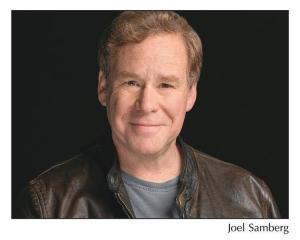
Reviewer Joel Samberg: Joel is an author, book editor, journalist, and corporate communications consultant with more than forty years of experience. He has written for Connecticut Magazine, Pittsburgh Magazine, New Jersey Monthly and dozens of others, and his nonfiction books have been on such topics as music, movies, and comedy. He is also the author of the 2019 novel, Blowin' in the Wind. You can learn more about Joel’s books and book editing service:You can learn more about Joel Here and Here.
View all articles by Joel Samberg
Author: L. Douglas Keeney
Publishers: Lyons Press: Rowman & Littlefield
ISBN: 978-1-4930-4810-6
One can only imagine the vast richness and drama in store for any historian whose stated passion is to discover lost voices of America history. The thematic possibilities are seemingly endless: the brave assistants who actually performed a vast majority of Civil War photographer Mathew Brady’s dangerous field work in the 1860s; the inspired and unsung technicians and engineers who figured out how to make motion pictures talk in the 1920s; the tireless laborers, truckers and painters who helped build the national interstate highway system in the 1950s; the astute, painstaking draftsman and seamstresses who created the spacesuits that Neil and Buzz wore on the moon…

These are among the thousands of untapped histories, from all walks of life and throughout every generation, just waiting for someone to discover and explore, each story a challenge in its own right.
L. Douglas Keeney found one and wrote a book about it. It concerns the men and women who, mostly through nautical means, helped people escape from lower Manhattan during the 9/11 attack on the World Trade Center.
Keeney had previously written a number of important and absorbing volumes that covered stories of American history which in many cases had been secreted away or clouded in mystery for generations. These include The Doomsday Scenario, about the official government manual he unearthed which details how the government would operate after a nuclear attack, and The Eleventh Hour, about previously concealed diaries and journals reflecting an important meeting President Franklin Roosevelt had in 1943 with the leaders of England and Russia.
In a way, this newest volume, The Lives They Saved, is somewhat different because it’s much more of a human-interest story in how it relives the lives of everyday people—firefighters, police officers, EMTs, ferry captains, medics, mariners, Coast Guardsmen—on the morning in which they suddenly found themselves helping others escape the destruction and carnage after terrorists flew jetliners into the Twin Towers. Because of a virtual lockdown of the borough, most of the evacuation had to take place on the waterways surrounding the southern tip of the island.
Keeney sought out the oral histories of tens of thousands of people who were involved and created a diary of that dreadful morning. As noted on the jacket flap, it was “an unscripted evacuation of one of the busiest, most densely populated cities in the world.”
And it’s precisely
because of its focus on everyday people instead of heads of state,
military leaders and other larger-than-life individuals that some
readers may pose questions to themselves about the book that will
have the effect of holding it to a different standard. Maybe even a
higher standard. We might, for example, imagine some readers wishing
that the book revisited some of the real-life characters years after
the event to see how they fared.
Others—admittedly those who like their nonfiction as dramatically developed as it is accurate—might pine for more of a distinct, multi-character story-thread weaving its way through. And there will always be those who regard some attributes of the book’s presentation, such as the routineness of its chapter titles and the scarcity of biographical development, as a bit less sophisticated than other books of its genre.
But such nitpicking is not at all intended to diminish the authority and essentiality of The Lives They Lived. The book has significant power of its own. In fact, it is laid out as an almost minute-by-minute chronicle, which is quite effective, and written in rational, secular language so that detailed descriptions and explanations are no problem at all for the average reader. (Plus, its 24 pages of end-notes let us know that everything shared between the covers is accurate and well-documented.)
No, the nitpicking is meant solely to emphasize how difficult this subject it is to cover. There are too many questions, notions, conundrums, anecdotes, details, tragedies, heroes, and dozens of other elements that make it one of the most challenging topics to cover in modern times. No matter how it is written, formatted, or designed, it will never fully satisfy everyone.
Maybe the nameless, elusive, fantasy 9/11 rescue book to which I refer is being written as we speak. Maybe some people out there will claim to have already read it. Maybe it will never be written because of all the inherent difficulties of producing such a book.
But make no mistake: despite all this, no one can deny that The Lives They Saved is a valuable and worthwhile attempt to meet that challenge.