
- Home
- AUTHOR INTERVIEWS- CHECK THEM OUT
- In Conversation With James Ballard Author of Poisoned Jungle
In Conversation With James Ballard Author of Poisoned Jungle
- By Norm Goldman
- Published July 22, 2021
- AUTHOR INTERVIEWS- CHECK THEM OUT

 Norm Goldman
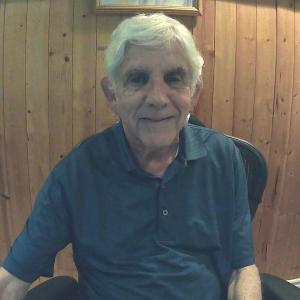
Reviewer & Author Interviewer, Norm Goldman. Norm is the Publisher & Editor of Bookpleasures.com.
He has been reviewing books for the past twenty years after retiring from the legal profession.
To read more about Norm Follow Here

Bookpleasures.com welcomes as our guest James Ballard author of Poisoned Jungle. James served as an army medic in the Mekong Delta of Vietnam from December of 1968 to October in 1969. He has been exploring the repercussions of his experiences ever since. In his author’s note to Poisoned Jungle, he writes: “The impact of war is not only transformational on the human psyche—but ongoing. It sets in motion a powerful set of psychological consequences. Finding equilibrium with those forces is imperative.”

Good day James and thanks for taking part in our interview.
Norm: What is the one thing other people always seem to get wrong about you?
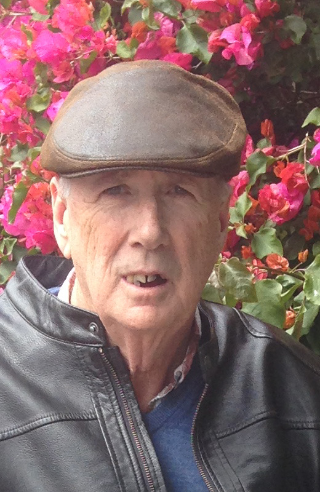
James: Hi Norm. Thanks for your interest in Poisoned Jungle.
I immigrated to Canada in 1975. Because I’m originally from the U.S., a lot of Canadians assumed I had immigrated during the war to evade the draft. After getting to know me, many are surprised that I am a Vietnam veteran.
Norm; You served in Vietnam as a medic in Vietnam's Mekong Delta. Did you enlist or were you drafted?
James: I graduated from high school in June of 1967. The U.S. began inserting combat troops into Vietnam in 1965 so had started drafting young men in earnest by the time I graduated. Without a student deferment or a medical exemption, it was common to receive a draft notice by a young man’s nineteenth birthday. Mine came right on schedule.
Norm: What did you do before you went off to Vietnam? Were you working?
James: I worked on a few construction sites after high school but didn’t have time to begin an actual career before being drafted.
Norm: While your time there, could you tell us about your relationships, how did they develop and what was your friendships like?
James: In the Army, I trained and served with men from every region of the country who came from diverse cultural and ethnic backgrounds. I’d never met anyone from New York City or Mississippi before. There was even a French Canadian from Quebec in medic’s training. There’s not much I enjoyed about the Army but getting to know so many other young men from across the country was a positive experience.
In Vietnam, I grew close to several men in my unit. We depended on each other for our very survival. I maintained lifelong friendships with two men from the war. Sadly, they both passed away within a month of each other in 2017. Both developed cancers, quite possibly from exposure to Agent Orange. I dedicated Poisoned Jungle to Greg and Terry.
I am also back in touch with a former medic I was in-country with and a Vietnamese woman who as an eighteen-year-old worked for the Americans in a medical capacity.
My relationship with Linh was not romantic, but I thought highly of her as a person and worried about what had become of her after the war.
I feared she might have been sent to one of the so-called “reeducation camps” because she had worked for us.
In 2018 I noticed a post she sent to a veterans’ site seeking information about her American husband’s tour. He had just passed away. I learned she was able to leave Vietnam before the end of the war and settle in the U.S. We have not met in person again but communicate frequently.
Norm: What did you do as a medic, and what training did you have before going in as a medic?
James: Medics are trained as battlefield paramedics, that’s the most understandable description I can use.
Every infantry platoon in Vietnam had a medic who went into combat with them. A platoon’s medic, with his thirty pounds of medical supplies in his aid bag, treated a grunt’s wounds in the field.
Our job was to provide emergency medical care on the battlefield and keep the casualties alive until a medevac could airlift them to an evacuation hospital.
I had no medical background before the Army. After the standard eight weeks of boot camp, I spent ten weeks in intensive medical training.
After that, I was assigned to the emergency room at the hospital at West Point. The experience helped prepare me for what I needed to know as a medic in Vietnam because I at least gained some hands-on experience in emergency medical care.
While at West Point, I received my orders for Vietnam. I kept learning all I could because people’s lives depended on it.
Norm: What initially was your perception of the war and did it change? If it did, how?
James: I perceived a deep cynicism from the vets returning from the war who were still in the Army, so I had reservations about Vietnam before deploying. I understood their reticence soon after arriving in-country.
The wounds suffered by my fellow soldiers, the civilians caught in the crossfire, and even the suffering of the enemy, were all life-changing for me. It is difficult to describe in just a few words, so I wrote a book about it.
Norm: What motivated you to write Poisoned Jungle?
James: Poisoned Jungle provides a first-hand account of the Vietnam War through the eyes of a medic.
More than just a war story, I wanted to explore in depth the psychological consequences of war through my protagonist, Andy Parks.
As you quoted me in your introduction, war is a transformational experience. It leaves psychic wreckage in its wake, which requires healing. I wanted to give the reader an honest and penetrating look at how a former medic coped and came to terms with his war experiences.
Norm: What were your goals and intentions in this book, and how well do you feel you achieved them?
James: Without mentioning PTSD, survivor’s guilt, or moral injury by name in Poisoned Jungle, I attempted to give the reader a human perspective on all three.
This triad of psychological consequences from war trauma is entwined deep within the psyche of Andy Parks.
He functions better in the war than he does when he returns. Why, and how does that happen? In human terms, I explore the many facets of war and how one man regains a sense of equilibrium.
The war has changed Andy Parks. Can he still have a decent life? How does he achieve that?
The reader will be the ultimate judge of how well I have succeeded. After fifty years, I’ve had the opportunity to flesh out what I’ve wanted to say about the war through the experiences of my protagonist.
Norm: What was the most difficult part of writing this book?
James: Making sure I did justice to the core subject of the work—the psychological consequences of war—and putting a human face on those consequences. I consciously avoided any hint of the didactive in the writing.
Norm: Did you write the novel more by logic or intuition, or some combination of the two? Please summarize your writing process.
James: I lean very much to the intuitive and emotive as a writer, so the challenge is in giving voice and coherence to what I want to express.
I am also a great believer in the subconscious and allowing it to work for me in the writing process. I will often go to bed and wake up just knowing how to better nuance some of the previous day’s writing.
After the initial first draft, written quickly, I took almost three years with the second. My favorite part of the writing process is shaping and finessing a chapter. When I have a chapter written as well as I can on the computer, I make a hard copy and always see more that can be finessed in that form.
Norm: Is there much of you in the novel?
James: A big part of my story is embedded in Poisoned Jungle, but it is a novel and not a memoir. Having made that statement, I have personally lived with the psychological triad of PTSD, survivor’s guilt and moral injury and have spent a lifetime digging deep into my own psyche.
The book is an authentic account of war and its repercussions on not just soldiers, but the harm that is visited on societies long after the last battles are fought.
Norm: Did you know the end of your book at the beginning?
James: Not entirely. Every writer will ask how best to convey the story they are writing.
There is truth in literature, and my understanding of the subject matter evolved and deepened with the writing of Poisoned Jungle.
The final draft incorporated a different ending to the novel, although the scene was in the original version.
Norm: There are dozens of books written about the Vietnam War? Why do you believe yours stands out from the others?
James: Yes, there are many books about Vietnam. For starters, I wanted to write an authentic account from a medic’s perspective about the war.
I wanted it to stand as a well written piece of literature, and without the ethnocentrism and self-justification that exists in so many of the books about the Vietnam War.
Vietnamese characters also appear in my work. Written in a third person limited narrative, I attempted to give the reader an understanding of what a combat medic experienced during and after the war.
There is no self-pity in Andy Parks. He genuinely wants to have a decent life but realizes the war has changed him.
How he goes about finding that decent life while coping with the psychological repercussions of his war experiences is the basis of the novel. I think I have written a unique perspective on the war. In particular, the last third of the novel does something very original.
Norm: What process did you go through to get your book published?
James: I didn’t know what to expect when I submitted the manuscript. I took great care with the Query letter and also submitted the Author’s Note that is in the book.
I sensed the latter attracted some interest because it spoke to the authenticity of my experiences and the ability to explore the subject matter of Poisoned Jungle.
Three publishers expressed interest in the novel, and I signed with Koehler Books.
Norm: What is next for James Ballard?
James: I have completed a second manuscript about the war, which is part of a trilogy. After five drafts, I feel it is in submittable form.
I would also like to write a beekeeping memoir about my experiences keeping bees for a living in the Peace River Region of Alberta, where I lived for forty years. I will run out of years before I run out of material.
Norm: Where can our readers find out more about you and Poisoned Jungle?
James: More about the book and author can be found on my WEBSITE. I have tried to make it informative and interesting for readers.
The site includes an award-winning book trailer based on the Author’s Note at the beginning of Poisoned Jungle. Blogs on the themes of the novel can also be found. Some of my photos from the war are included with the essays.
Norm: As this interview comes to an end, could you tell our readers what has been the best part about being published?
James: Being published helps validate the writing of the novel. Poisoned Jungle has also won several literary awards including a silver placement in the Ben Franklin Awards for “Best New Voice: Fiction.”
When I began writing, I wasn’t even sure if I would ever be published. To achieve that goal and win several literary awards in the process has been humbling and gratifying at the same time.
It has also put me in touch with other writers and a couple of long-lost friends from the war I would otherwise not have had contact with. I am grateful.
Norm: Thanks once again and good luck with Poisoned Jungle.
Follow Here To Read Norm's Review of Poisoned Jungle.