- Home
- AUTHOR INTERVIEWS- CHECK THEM OUT
- In Conversation With Film & TV Writer, Producer and Author Reuben Leder
In Conversation With Film & TV Writer, Producer and Author Reuben Leder
- By Norm Goldman
- Published June 15, 2021
- AUTHOR INTERVIEWS- CHECK THEM OUT

 Norm Goldman
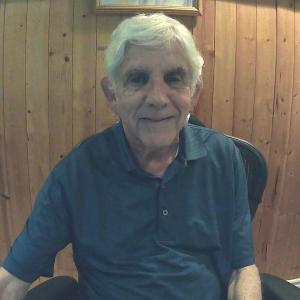
Reviewer & Author Interviewer, Norm Goldman. Norm is the Publisher & Editor of Bookpleasures.com.
He has been reviewing books for the past twenty years after retiring from the legal profession.
To read more about Norm Follow Here

Bookpleasures.com welcomes as our guest film and TV writer, and producer, Reuben Leder.
Reuben began his long career in TV, beginning with The Incredible Hulk. He went onto write and produce the first 6 seasons of Magnum P.I. for which he received 2 Emmy nominations. One episode that he wrote and directed received an NAACP Image Award nomination for the guest star.
Following were several other TV pilots and show running of existing shows, including his own creation, Berlin Break, a post-Cold War spy thriller shot in Berlin.
Reuben was also recognized by the voters of the WGA for participating in the writing of the 101 Best Written TV Series, Star Trek: The Next Generation.
Reuben also wrote and directed the feature film Baltic Storm, a fact-based political thriller examining the tragic North Sea sinking of the ferry 'Estonia'. It starred Greta Scacchi and Donald Sutherland.
He has recently published his first novel, You Might Feel a Little Prick

Norm: Good day Reuben and thanks for taking part in our interview.
Reuben: You're quite welcome. Thanks for having me.
Norm: What do you consider to be your greatest success (or successes) so far in your careers?

Reuben: A month ago, I'd have been wracking my brain for which movie, or TV series, or individual episode I did, to answer that question.
But today, my unequivocal answer—even though it's just come out and who knows how much success in conventional terms it'll receive—is You Might Feel a Little Prick.
The short reason is this is the one story that had its genesis in a personal life experience that didn't have a squadron of studio or network executives swooping in to give me the ubiquitous "notes" on how the "project" should be improved. I own every word on every page.
For better or worse, this is the story I wanted, and needed, to tell.
Norm: What has been your greatest challenge (professionally) that you’ve overcome in getting to where you’re at today?
Reuben: I would guess my greatest challenge was pretty much the same challenge that most aspiring writers, artists, or musicians, have faced—and that is getting someone on the "inside" to give you that first break.
Now someone reading that sentence might say, "Hey, wait! What do you mean? Your father, Paul Leder, was a film director!" Yes, he was. But he was completely out of the Hollywood eco-system. He had no industry connections.
He would raise just enough money to make one of his ultra-low budget films, then take out a second mortgage on our house to do the next one.
The benefit to me was that as a kid, I—and my sisters as well—would work on these films (mostly because he didn't have to pay us), and gain the experience that would serve us well when—and if—we made it.
I painted houses, tarred roofs, played piano in bars, and all the while kept on writing screenplays that I would do my damnedest to get someone inside the industry to read: cold calling, writing letters, (remember those things?), and just blind submitting.
I would tape every rejection letter on my bathroom wall until a production company, Levy-Gardner-Laven, producers of The Big Valley and other things that will date me, optioned one of those scripts. Then, overnight, but really it was years, I was "in." It gave me great pleasure to finally take down those scores of rejection letters off the bathroom wall and burn them.
Norm: What did you find most useful in learning to write and produce for TV? What was least useful or most destructive?
Reuben: The most useful relates back to the last question: the experience of working in every aspect of film production: sound, camera, the art department, and eventually co-writing a few of them with my Dad, gave me the wherewithal to learn how to write for production, which is a rare talent for a newly-minted writer.
That ability was recognized by the powers that be at my first mainstream job at Universal and I was promoted to producer. In other words, I knew better than to write a piece of scene description such as, "The Mongols sacked the village," then leave it to the director and producers the problem of how to shoot that one innocuous sentence within the constraints of budget and time.
Knowing what resources were available and how many days were scheduled to shoot the "sacking of the village" informed just how I would write the individual beats within that scene.
I don't think anything was the least useful—outside of absurd notes from censors and executives—as every experience I've had, good or bad, was always something to learn from.
Norm: What's the most difficult thing for you about being a writer?
Reuben: Not to be glib, but right now I would have to say my back: years of daily hours on a keyboard and leaning into a screen has taken its toll in the form of numerous surgeries, including three spinal fusions. So, what's difficult often times is writing through pain.
In terms of difficulties inherent in the craft, not only in the beginning of my career, but even today, it's maintaining the discipline to be disciplined: to "kill your darlings" as the cliché goes.
I was fortunate enough to have some wonderful mentors at the beginning of my career, and I listened to them. From writers (and readers) you respect, the best criticism is the kind that forces you to examine where that critique is coming from, forget about ego, and figure out a way that's still true to your voice to put the solution on the page. Even today, I still listen. And I still learn.
Norm: How did your experience in film inform the novel-writing process of You Might Feel a Little Prick?
Reuben: Very much so inasmuch as You Might Feel a Little Prick began its life as a screenplay, and only became a novel after the experience I'm about to relate.
As I mentioned earlier, this story, my "love letter" to the medical and health insurance cartels, was very personal to me—and I'll elaborate on that in a bit.
When I wrote it, I was in the middle of a very fortunate run of selling spec screenplays to various studios. Yes, I was paid very well but oftentimes would spend a year or more re-writing the script to serve the whims of executives, then different executives when the original executives were fired, same with multiple directors and producers, until the story became so homogenized, whatever it was that sparked the sale in the first place had been written out of the script, which would often go on to die a slow, lonesome death in Development Hell. Then you'd write another one and hope for the best.
But You Might Feel a Little Prick was apparently going to be the exception. At first, the experience was great; a prominent director wanted to film it and submitted it to their agency, one of the biggest on the planet. The script then went to the agency's story department for "Coverage," which is kind of like a book report.
The director got their hands on that very precious Coverage and it was a rave: the analyst gave it the highest possible rating: "Strongly Recommend." We thought, with the agency's power to package it with their actors and sell it to a studio, we were on our way to having it filmed.
Until the director's agent called me that night from their car. The agent said that although it's a great script, "My brother is a doctor and he isn't like that."
I politely, because you always have to be polite and "collaborative" with these guys, stated the obvious: that I wasn't writing about his brother, that I didn't even know he had a brother, that I was writing from a deeply personal experience which included some doctor dialogue, while hyperbolic, was taken verbatim from these experiences.
I also added that there were characterizations of noble doctors as well, and—
But it didn't matter what I said or how I said it because the agent probably had tossed the script after page ten and told me I would have to "soften" it before they would shop it to the studios.
When I politely, always politely, pushed back, that's when the agent pretended to be rear-ended by another car and hung up on me. Only in Hollywood.
The agent miraculously recovered from the phantom automobile accident and called the director and said that I was too difficult to work with, and offered the director a plum job on another movie.
It didn't matter, because as I digested what had just happened, I called my manager and asked him not to send the screenplay out to studios/producers/movie stars—the entire Hollywood universe—because I decided to take the plunge I'd always dreamt of taking, and write this story as a novel.
Norm: When did the idea for this book first emerge?
Reuben: I mentioned my back. That whole experience was twenty years of my life and still counting: twenty years of tests, physical therapy, procedures, acupuncture, chiropractic intervention, and I'm sure I'm leaving plenty of stuff out—then at last the surgeries, which were always according to the surgeons who made their money by preforming surgeries, "a last resort."
Until those surgeries failed, and had to be "tweaked" which meant, of course, there was no last resort. It was a never-ending hamsters wheel.
Simultaneously, I would do battle with the insurance companies, because only very rarely were the bills correct.
For example, somehow, the anesthesiologist the hospital procured for a surgery was always "Out of Network", which they didn't inform me of because I was unconscious. But I was quite conscious when I received the denial of benefits letter because "I" used an "Out of Network" anesthesiologist. Therefore, virtually their entire fee was not covered.
However, I still had to, and wanted to keep writing, producing, and directing. And it was on the film Baltic Storm where I met the woman who I married two years later.
But two short years after that, she received a diagnosis of a virulent cancer and was given three months to live. It turned out to be twenty-six months. I stopped working and became her caregiver.
My travails with my orthopedic issues were nothing compared to this horror. I'm sure anyone can imagine. But can one imagine a renowned oncologist at a world-famous cancer institution, not only bringing his dog to work, not only making his RN's walk the dog, but letting the dog run free in the office and exam rooms, where it went into my wife's bag and ate her sandwich?
Wait, it gets worse. With fake chagrin, he lightly scolded the dog, then—without washing his hands of dog drool and bits of food—laid them on his patient. My wife. From these horrors is where the idea for the book emerged.
Norm: Could you share a little about the book with our readers?
Reuben: If I wrote this as a memoir, it would've been nothing but an angry screed. Probably cathartic, but who in their right mind would want to read about this unrelenting misery? One with no Hallmark happy ending?
So when I decided to write the screenplay, and then as a novel as related in the previous answer, I decided to give all this grief to some other characters, and write it as a dark, and gory, satire. But balance those difficult laughs with pathos. Kind of a highwire act, but I believe I pulled it off.
Norm: What were your goals and intentions in this book, and how well do you feel you achieved them?
Reuben: Naturally, I wanted to wreak revenge on various versions of the real life miscreants. However, I did not want the story to be a revenge fantasy; I did not want my characters to become killers.
Above all, they had to remain moral—and positive. They would stand up for themselves, but the villains had to get their just desserts via their own avarice, self-protection, or as the easy word goes: Karma. That was definitely tricky to pull off.
A couple of the advanced reviews wrote that the novel reminded them of Paddy Chayefsky's Hospital, which is incredibly flattering, but I also had thematic elements of Catch 22 as well as an old Vincent Price movie called Theatre of Blood where Price played a hammy Shakespearian actor who used scenes from Shakespeare to give his critics some very unfavorable reviews of his own.
However, above all, especially with the heroics we've seen from so many members of the medical profession in regards to fighting the scourge of Covid-19, I wanted to have a character represent the nobility of medicine, and give my protagonists, if not a guaranteed, but still hopeful future.
Norm: What was the most difficult part of writing this book and what did you enjoy most about writing this book?
Reuben: The difficult part was the medical research. I was pretty good on what I had personally experienced. Don't these surgeons know that when you're flat on your back in on a gurney in Pre-Op and they're five feet away washing their hands saying cynical stuff to one another about their patients that you can hear them?
And remember? There's surgical sponges, then there's writers—who are the best sponges of them all. The rest of the medical research was me watching tons of operations on YouTube. When I gave the next-to-last-draft of the book to a doctor friend of mine (who conveniently was also a working writer), to read for medical errors, the biggest compliment was he told me, "I got the life."
What I enjoyed? Killing off disguised versions of the decades of insensitive torturers who got into medicine for all the wrong reasons. Yes, enjoyed that very much.
But I also enjoyed the process of writing a novel. I wish I had started them years ago. As a screenwriter, yes, you put in a bit of your own sensibilities and attitudes: how can you not?
But the most important thing is to only write what the camera can see and what the sound can hear. Just about everything else is either superfluous or you're just showing off. If a character is angry or sad, you have to show it, via dialogue and/or action. You're not allowed to go inside a character's head and interpret their thoughts and feelings.
A novel is so much more liberating in that way. The danger, of course, is becoming too self-indulgent. But again, that's where the discipline I learned in writing for the screen came in. I quickly learned to step on the brakes when I was driving the book off that metaphorical cliff.
Norm: What projects are you working on at the present?
Reuben: I've outlined the next novel. And can't wait to get to it. It's also a dark comedy with some thriller aspects. It's called Let Your Poor Heart Break a Little.
The theme is the indomitability of love. Even if the characters themselves don't quite get it.
However, the biggest project I'm working on is doing whatever it takes to make readers aware of You Might Feel a Little Prick.
Norm: Where can our readers find out more about you and You Might Feel a Little Prick?
Reuben: After years of resisting it, I'm finally on social media. You can find me on Facebook, Twitter, and my, drumroll WEBSITE
Norm: As this interview comes to an end, if you could go back ten years and give yourself one piece of advice what would that advice be?
Reuben: Take better care of my back? And more seriously, not ever take anything for granted. Vin Scully, the famous Dodger announcer, used to say, "If you want to make God laugh, tell Him your plans." That advice works in the secular world just as well.
Norm: Thanks once again and good luck with all of your endeavors
Reuben: Thank you.