
- Home
- General Non-Fiction
- The Mermaid and the Minotaur Reviewed By Joel Samberg of Bookpleasures.com
The Mermaid and the Minotaur Reviewed By Joel Samberg of Bookpleasures.com
- By Joel Samberg
- Published February 1, 2021
- General Non-Fiction
 Joel Samberg

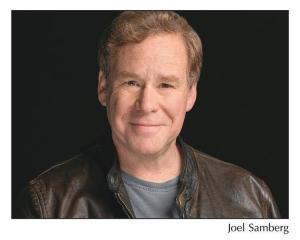
Reviewer Joel Samberg: Joel is an author, book editor, journalist, and corporate communications consultant with more than forty years of experience. He has written for Connecticut Magazine, Pittsburgh Magazine, New Jersey Monthly and dozens of others, and his nonfiction books have been on such topics as music, movies, and comedy. He is also the author of the 2019 novel, Blowin' in the Wind. You can learn more about Joel’s books and book editing service:You can learn more about Joel Here and Here.
View all articles by Joel SambergAuthor: Dorothy Dinnerstein
Publisher: Other Press
ISBN: 978-1-63542-094-4
Of all the fascinating findings and encounters that are part of this reissue of what is often called a ‘classic work of feminist thought,’ an equally fascinating one that seems to be missing is precisely how author Dorothy Dinnerstein arrived at all the others. Which is to say that this academically-rooted discourse is brimming with the kind of provocative thoughts, indisputable facts, intriguing theories, forward-looking ideas, and titillating questions about gender relations, social arrangements, and feminist psychology that only a tireless, uber-focused, astonishing and perhaps even stupefying professional would be able to put down on paper.

Originally published in 1976, Dinnerstein’s literary journey can easily make a reader want to know about the author even more than they want to know about the subjects at the heart of her book. How did she do her research? Where did she go, who did she talk to, and how did she react to and interact with the events she witnessed? Why was it all so important to her, and how did her findings affect her life?
Just who is she?
But that’s not to be, at least not to the degree a reader might desire for strictly curious reasons. The book isn’t about her. (Or is it?) It’s about the psychic lives of men and women, past and present, and about how genders affect each other, affect society, and are affected by society. It’s about ‘Sexual arrangements and human malaise,’ which is actually a subtitle used inside the book, though not on its cover. Dinnerstein, who died in 1992, was a psychologist and a professor of psychology at Rutgers University for thirty years, and it is a bit more of her presence in the book that may have engaged readers who are not enrolled in women’s studies courses, or brushing up on feminism, or training to be psychologists, or simply not quite used to such titanic and formal endeavors as The Mermaid and the Minotaur. After all, this is a book with almost forty pages alone of foreword, preface, afterword, notes and other supplemental material (including a new introduction by Gloria Steinem), so it’s bound to be heavy in magnitude, if not necessarily in weight.
But this is all in critique only of what’s not there, not of what is. As previously stated, what is there is captivating psychological food for thought on gender roles, sex, parenthood and many interrelated matters. Some observations are quite absorbing, such as one early on in the book where Dinnerstein suggests that humans are by nature unnatural. “We do not yet walk ‘naturally’ on our hind legs, for example: such ills as fallen arches, lower back pain, and hernias testify that the body has not adapted itself completely to the upright posture,” she writes.
Riveting stuff, but certainly not as riveting as sex, which comes into play in this book far more than fallen arches—along with childcare, relationships and other significant gender-linked themes. (Here, too, is where the reissue may have benefitted from more rethinking of its overall presentation: an index, absent here, would have been a great advantage for readers disinclined to read the book cover to cover but wish to hone in on specific topics; the same is true for those who need to go back to earlier skipped passages to find the meanings of psychological terms with which they are unfamiliar.)
Such criticisms aside, beyond the provocative thoughts, indisputable facts, intriguing theories, forward-looking ideas and titillating questions are plenty of little delights, made all the more delightful given the book’s critical and complex nature. For instance, there’s the occasional relevant reference to a movie or another book (“Oliver,” The Threepenny Opera, a story by Isaac Bashevis Singer). For another, while much of the prose is rather psycho-ese (the psychologist’s version of legalese; in other words, loquacious), there are enough of the author’s sometimes-quirky pronouncements to keep most readers engaged. Glance at her final paragraph and you’ll get the gist of that. Just remember that you have to get there first!
By the way, the title of the book, in the author’s words, “is meant to connote… both (a) our longstanding general awareness of our uneasy, ambiguous position in the animal kingdom, and (b) a more specific awareness: that until we grow strong enough to renounce the pernicious prevailing forms of collaboration between the sexes, both man and woman will remain semi-human, monstrous.”
If that doesn’t make you want to get there, then perhaps nothing else will.