- Home
- Non-Fiction -Reviews
- The Last Interview Reviewed by Norm Goldman of Bookpleasures.com
The Last Interview Reviewed by Norm Goldman of Bookpleasures.com
- By Norm Goldman
- Published November 16, 2020
- Non-Fiction -Reviews

 Norm Goldman
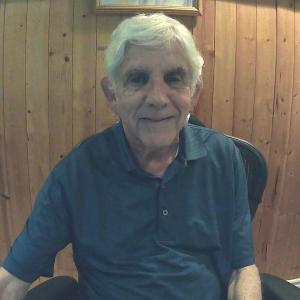
Reviewer & Author Interviewer, Norm Goldman. Norm is the Publisher & Editor of Bookpleasures.com.
He has been reviewing books for the past twenty years after retiring from the legal profession.
To read more about Norm Follow Here
 Author: Eshkol Nevo
Translator: Sondra Silverston
Publisher: Other Press
ISBN: 978-1-63542-987-9
Eshkol Nevo is an Israeli
writer who has published a collection of short stories, five novels,
and a work of non-fiction. His debut novel Homesick (2004) was
awarded the Reimond Vallier prize in France, shortlisted for the
Sapir prize in Israel, and longlisted for the UK's independent award.

His second bestselling novel World Cup Wishes ( 2007), won the Golden
Book Prize in Israel and was awarded the Adei-Wizo Prize in Italy.
His novel Neuland (2011) sold over 130,000 copies in Israel and was
awarded the Steimatzky Prize for Book of the Year. Nevo's fourth
bestselling novel Three Floors Up was adapted into a film by renowned
Italian director Nanni Moretti titled 'Tre Piani.'
In 2008, Eshkol was awarded membership in the Israel Cultural Excellence Foundation, one of the country's highest recognition for excellence in the arts.
He is the grandson of the third Prime Minister of Israel,
Levi Eshkol.
In the Last Interview translated from the Hebrew by Sondra Silverston, Nevo uses his imagination and concocts a Q&A where an author, supposedly Eshkol, is asked dozens of penetrating questions by a website editor.
You have to admit that this is a creative way to
craft a memoir where Eshkol bares his soul, looking back on his life
and writing career.
In an actual interview conducted, Eshkol was
asked how did the book come about. His reply was that he had writer's
block, so he invented the Q&A game, where he could answer the
most outrageous questions they often ask him. After a couple of
months, he realized that the "game" had become a novel
about love, friendship, longing, and the hope(and fear) to start life
again.
The questions and answers touch various aspects of his life
as a writer and his personal life, including love, longing, and the
hope and rear of restarting one's life all over again.
When asked
about what he finds most challenging about writing, Eshkol replies:
"The minute I start writing, I have an urge so strong that I
can't ignore it, the urge to eat. I go into the kitchen after every
page. No after every paragraph. But, that physical hunger is
something I can deal with. The real problem is a different kind of
hunger."
You would probably view Eshkol's books as very
Israeli. He tells the "fictitious" interviewer that he has
no idea if they lose something in translation.
Some questions are
quite pointed, such as when was the last time you cried? When was the
last time you wanted to cry? When was the last time you had a broken
heart? What embarrasses you? Does your grandfather's political legacy
influence you as a writer? How does it feel to be named after your
grandfather, Levi Eshkol?
Eshkol was born in Jerusalem in 1971. He
attended Tel Aviv University, where he studied Psychology, and he
studied copywriting at the Tirza Granot School. Today, Nevo owns and
co-manages the largest private creative writing school in Israel and
is considered the "godfather" of many upcoming young
Israeli writers.
Sondra Silverston, who translated The Last
Interview, has translated Israeli fiction writers such as Etgar
Keret, Ayelet Gundar-Goshen, Zeruya Shalev, and Savyon Liebrecht. Her
translation of Amos Oz's Between Friends won the National Jewish Book
Award for fiction in 2013. Born in the United States, she has lived
in Israel since 1970.
The Last Interview is an eye-opener of a
memoir where Eshkol lays himself open to forthright penetrating
self-questioning. Eshkol alights on a topic, offers asides and
digressions, circles back to hismain point. There is a great deal
to unpack here, and Eshkol generously exposes himself for all to see
who he really is.