
- Home
- AUTHOR INTERVIEWS- CHECK THEM OUT
- In Conversation With Michael K. Smith Author of In the Shadow of Gold
In Conversation With Michael K. Smith Author of In the Shadow of Gold
- By Norm Goldman
- Published November 13, 2020
- AUTHOR INTERVIEWS- CHECK THEM OUT

 Norm Goldman
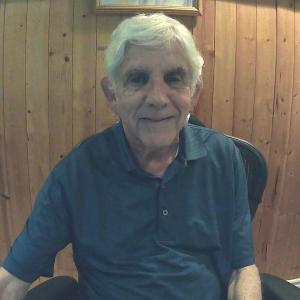
Reviewer & Author Interviewer, Norm Goldman. Norm is the Publisher & Editor of Bookpleasures.com.
He has been reviewing books for the past twenty years after retiring from the legal profession.
To read more about Norm Follow Here
Bookpleasures.com welcomes as our guest Michael K. Smith author of In the Shadow of Gold.

Norm: Good day Michael and thanks for participating in our interview.
Norm: Please
tell our readers a little bit about your personal and professional
background.

Michael: I’ve been trained as a mechanical engineer and started an auto parts business in 1980. The business was sold in 2000 and I retired at age 60. Then I pursued life’s pleasures: hunting, fishing, flying, traveling. But after a few years, I needed something else…some new kind of challenge.
I thought back to my college years and as an engineering
student, I didn’t take elective courses. However, a young lady I
was dating at the time signed up for a creative writing course so I
did too.
The first assignment was a short story which I wrote about the Civil War. Three days later the professor read the story to the class…creative writing may have been the only ‘A’ I received in four years! So, as I was thinking of something new to do, I thought of that old short story and started to write a book. That short story became the last chapter of my first novel: Home Again. Writing has become a passion and In the Shadow of Gold is my fifth novel.
Norm: How long have you
been writing? What keeps you going and why do you write? Do you have
a theme, message, or goal for your books?
Michael: I’ve been writing for seven years and all of them are historical novels either about the American Civil War or World War2. My idea is to entertain a reader with a good story and also to leave that reader with historical knowledge and understanding of the time that he/she may not have had before.
Norm: Why have you been drawn to historical fiction? As a follow up, are there aesthetic advantages and disadvantages peculiar to historical fiction? Does it have a particular form?
Michael: I guess I’m comfortable in an either Civil War or WW2 setting, so envisioning a story in those environments comes easy. The advantage is the time line. All my novels march to the beat of a known time and that framework allows my characters to evolve as they experience different aspects of the events at the time. Almost all of my research, then, is via non-fictional sources. They say that a non-fictional history book will tell you what happened and when, but a historical novel will tell you how it felt and what people had to deal with.
Norm: In fiction as well as in non-fiction, writers very often take liberties with their material to tell a good story or make a point. But how much is too much?
Michael: This is a good question because it differentiates some differences between some historical novel authors. I would never want to bend the actual history to make a story better. My characters work inside the timeline and possibly interface with actual historical characters but the actual historical characters have to have been in the exact same place and same time. For this reason, my novels tend to be well received by staunch history buffs.
Norm; Do you write organically or are you a planner?
Michael: Maybe a blend of both. I usually know where the novel starts and ends, but my scenes tend to be organic. When a scene is established, I like to let the characters play the scene out. Many times I do not know where the scene is going. The characters just keep acting and interfacing until it’s over. What’s really fun is to read it after the scene is over and wondering where it all came from.
Norm: You write with a very vivid and descriptive style. Do you use any particular techniques to help with your writing or to help flesh out descriptive imagery? Are there any writers you admire or look to for inspiration?
Michael: Descriptive imagery is all powerful tool. Not only does it ground the reader in a scene, but it can be used as pregnant pause. Say there is a dialogue between two characters who are having a heated discussion and one character issues an ultimatum to the other. The other character is taken aback and doesn’t know immediately what to say. Instead of saying it, a descriptive piece of imagery lets the reader know he is taking some time to respond. I especially like Ian McEwan’ methods .
Norm: What did you know going in about your theme in your recent novel, In the Shadow of Gold? How did you become involved with the subject or theme of your book?
Michael: The lost Confederate treasure has been a mystery ever since the war ended. Nobody knows. Even today theories of what happened to it are being pursued. Just last year The History Channel did an episode about a treasure hunter who found evidence the gold was at the bottom of Lake Michigan. Any story of lost gold has a certain amount of gravitas.
Norm: What were your goals and intentions in this book, and how well do you feel you achieved them?
Michael: In Shadow of the
Gold, I saw an opportunity to paint the picture of slavery at the
time they were officially freed from bondage. When slavery ended, the
plight of Blacks took a different turn.
Sure they were free, but they
had no skills, no jobs, no place to live and no hope. Our government
failed to establish avenues for the Blacks to climb out of the hole
they were dumped into.
I’m not sure an old white man can describe
how the Blacks felt at the time, but I think it’s an honest try.
I tried to give each Black character a bit of skill and in the refugee camp where they lived, they were able to survive by pooling those skills. Did I achieve the goal? You’ll have to read the book and make your own judgement, buy personally, I feel good about the effort.
Norm: It is said that writers should write what they know. Were there any elements of the book that forced you to step out of your comfort zone, and if so, how did you approach this part of the writing?
Michael: Yes, that’s just what we’re talking about with the plight of Blacks. I was way out of my comfort zone, but it felt good to get into the characters and grind it out using a lot of empathy. Also, in the book the main character contracts malaria. I needed a lot of professional medical advice on how the character would react while suffering from the disease.
Norm: Can you share some
stories about people you met while researching this book? What
are some of the references that you used while researching this book?
Norm: Do you agree that to have good drama there must be an emotional charge that usually comes from the individual squaring off against antagonists either out in the world or within himself or herself? If so, please elaborate and how does it fit into you novel?
Michael: Good stories are about characters who change as he/she finds their way. That change can create intense dramatic scenes sometimes as the character fights change. In Shadow of Gold, the main character, Yancey, wants to get rich and do with those riches as he wishes: mostly material things. But as he changes, he realizes there are higher causes.
Norm: What did you enjoy
most about writing this book?
Michael: There are two, almost three, romances in Gold. I really like to write about the early onset of a romance. An organic progression. Boy meets girl and has no idea he might fall in love with her sometime in the future.
Norm: What was the most
difficult part of writing your book? Did you learn anything
from writing your book and what was it?
Michael: There is a mystery in this book wherein a character in present time is searching back in history to determine where his wealth came from. The switching from present to past back and forth as the present character discovers what the historical characters did presented unique issues.
Norm: Where can our readers find out more about you and In the Shadow of Gold?
Michael:
On my WEBSITE
or AMAZON or just Google my full name.
Norm: What is next for Michael Kenneth Smith?
Michael: A WW2 novel of a Polish pilot who heroically fights in the Battle of Britain only to be sent back to war-torn Poland after the war to be imprisoned by the Russians. At the same time, a Russian Night Witch, also a pilot, fights for her homeland only to be captured by Germans. The two meet near the end both desiring to escape to the west.
Norm: As this interview comes to an end, if you could invite three writers, dead or alive into your living room, who would they be and why?
Michael: Lynne Olson who is a resource for my WW2 novels. Michael Sharra who wrote Killer Angels, one of the best historical novels ever written.
Norm: Thanks once again and good luck with all of your future endeavors
Follow Here To Read Norm's Review of In the Shadow of Gold