- Home
- In Conversation With Jonelle Patrick Author of Five Novels, the latest, The Last Tea Bowl Thief
In Conversation With Jonelle Patrick Author of Five Novels, the latest, The Last Tea Bowl Thief
- By Norm Goldman
- Published October 19, 2020

 Norm Goldman

Reviewer & Author Interviewer, Norm Goldman. Norm is the Publisher & Editor of Bookpleasures.com.
He has been reviewing books for the past twenty years after retiring from the legal profession.
To read more about Norm Follow Here

Bookpleasures.com welcomes as our guest, Jonelle Patrick.
Jonelle is the author of five novels set in Japan, and has been writing about Japanese culture and travel since she first moved to Tokyo in 2003. Her most recent novel, The Last Tea Bowl Thief will shortly be released.

She’s a graduate of Stanford University and the Sendagaya Japanese Language Institute, teaches at writing workshops, and is a member of the Mystery Writers of America, International Thriller Writers, and Sisters in Crime. She divides her time between Tokyo and San Francisco.
Norm: Good day Jonelle and thanks for participating in our interview.
Jonelle: Thanks for inviting me! I’m delighted to be here talking with you at Book Pleasures.
Norm: How did you get started in writing and what keeps you going?
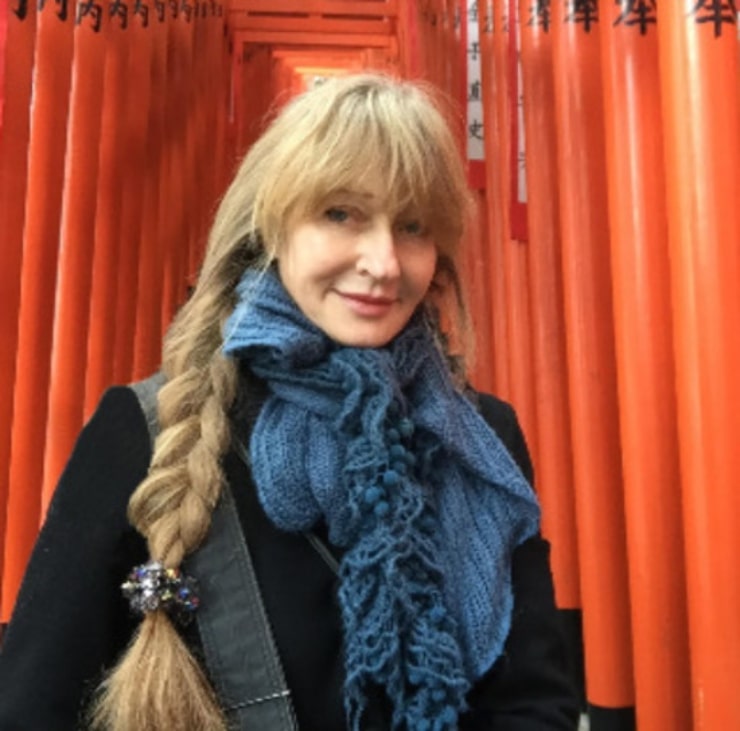
Jonelle: I’ve been a writer all my life, and when you’re a writer, you write. All the time. I can’t help it, it’s like breathing. Fortunately, there are lots of good places to do it these days—my blog and my monthly newsletter soak up some of those words—but my friends are always happiest when I’m beavering away on a book, because otherwise they get these WAY too lengthy emails.
Norm: What do you think most characterizes your writing?
Jonelle: Almost everything I write is connected to Japan, and I hope my readers always take away something that’s so interesting, they can’t wait to tell their friends about it. I want them to feel like Japan insiders after reading something I’ve written, and hope that the entertaining oddities and cultural observations give them a glimpse into worlds they didn’t know existed, but would like to spend more time in.
Norm: Do you write more by logic or intuition, or some combination of the two? Please Summarize your writing process.
Jonelle: I lay track in front of a moving engine. I always know where I’m headed, but I let the developing relationships between the characters steer how I get there.
The characters always grow and change—sometimes in quite unexpected ways!—as the plot tosses complications into their lives. I’ve found that it pays to always be on the lookout for alternate ways to get to my destination, because sooner or later, a character is going to sit down in the middle of the tracks and refuse to go the way I’d planned.
Norm: What inspires you?
Jonelle: If I’m being totally honest…failure! The most interesting insights almost always come from failing at something. Failure makes me stop and think, not just about what happened, but why it happened. Failing means I’m still taking chances and experiencing new things, which is where the best and freshest writing comes from.
Norm: Do you think about your reading public when you write? Do you imagine a specific reader when you write?
Jonelle: I do! I write for people like myself, who love to be utterly whisked away to another place or another time.
I write for readers who use books to travel to other worlds and alternate realities, the way other people escape on a plane. I was lucky that the pandemic hit while I was working on The Last Tea Bowl Thief, because spending hours in samurai-era Japan was much more entertaining than spending them between my all-too-familiar office walls!
Norm: In fiction as well as in non-fiction, writers very often take liberties with their material to tell a good story or make a point. But how much is too much?
Jonelle: There’s one rule of writing international mysteries that I would never break: the characters and story are fictional, but the cultural details can’t be.
In fact, everything about the setting and the historical period and the cultural norms have to be absolutely accurate, right down to the pickle seller outside the 1500-year-old convent gate.
I think one of the great pleasures of reading novels set in exotic places is how much we learn by seeing that culture through an insider’s eyes (which is why all that glamorous “book research” people always imagine me doing in Japan is more likely to be checking whether the Mejiro subway station has escalators or stairs than gazing at blooming cherry trees…)
Norm: How do you choose the names of your characters?
Jonelle: That’s quite an interesting question, because Western readers aren’t familiar with Japanese names, so I have to use all kinds of tricks when naming my Japanese characters.
The first thing I do is to make sure none of them start with the same letter. Then I try to choose last names that are already familiar in the West—Mr. Honda, Mr. Suzuki, and Miss Kurosawa have all made an appearance! Westerners also need to be able to easily pronounce the names inside their heads, so names like Kiri are good, but Ryosuke, not so much.
And of course, they need to be culturally accurate–for example, their first names need to fit their age. Just as someone named Gertrude is more likely to be a grandmother than a kindergartener in America, no high school girl in Japan is named Keiko anymore. The names also have to be accurate for their historical period—characters who lived in samurai era Japan had very different names than people do today.
Norm: How do you deal with the loneliness that comes with writing?
Jonelle: It’s not loneliness that’s a problem so much as dealing with awkward dinner conversation. Nobody—and I mean nobody—wants to hear what my characters did today in 1700s Japan. I have to make up for the fact that I’ve just spent all my waking hours in never-never land by hoovering up some news tidbit or amusing internet meme I can toss out instead.
Norm: If you could relive a moment in your life, which moment would you choose and why?
Jonelle: I’d relive that first glorious day I was riding the Yamanote Line and realized, “I’M LIVING IN JAPAN!”
As adults, we don’t get to feel the pure joy of childhood as often as we used to, but I felt it again and again during the first year I lived in Tokyo, because every day I’d see or eat or experience something that I didn’t understand, so I had to stop and think about it. It’s about as close to being a kid again as I’ll ever get.
Norm: Could you tell us about your most recent novel, The Last Tea Bowl Thief ?
Jonelle: With pleasure! This one is a mystery with two timelines—one set in samurai-era Japan, one in modern-day Tokyo—and the storylines slowly converge.
As the puzzle pieces fall into place, the reader learns the whole satisfying story of the missing tea bowl. But it’s also the story of two women from opposite sides of the globe, whose futures depend on finding this rare masterpiece. They soon discover that neither can possess it without the other’s help, and unless they find common ground, both will lose what’s most dear to them.
Norm: How much research did you do before writing the novel?
Jonelle: If you don’t count being in Japan for eighteen years—which provided all the challenges and mixed feelings about what it’s like to be a foreigner living in Tokyo—it took about two years of exploring an obscure village near Kyoto during every season and in every kind of weather to make that place come alive.
I also badgered many a docent for details at restored traditional farmhouses, annoyed many a potter at his wheel, paid my respects at the mountain convent where one of the characters is sent by her family, and traveled around to every museum show featuring works from the Six Ancient Kilns (using my American phone to take furtive forbidden reference photos, because it doesn’t make the super-loud shutter sound that’s required by law in Japan).
Norm: What was the time-line between the time you decided to write your book and publication? What were the major events along the way?
Jonelle: I started outlining a book about a stolen tea bowl long before I had an agent, but it didn’t turn into The Last Tea Bowl Thief until ten years and four other books later.
Along the way, I found my agent, endured trial by fire learning how to post, tweet, blog and Instagram, and steadily acquired the ten thousand hours of writing that finally led to the lucky day my editor at Seventh Street Books plucked this manuscript from the thousands bamming on his door.
Norm: It is said that writers should write what they know. Were there any elements of the book that forced you to step out of your comfort zone, and if so, how did you approach this part of the writing?
Jonelle: Ahahahaha, one of the main characters in The Last Tea Bowl Thief is a foreign woman who has lived in Japan for years, and I bet you can guess whose living-outside-the-comfort-zone experiences got poured into her!
Not one pair of pants in all of Japan fits her, the last empty seats on the subway train are always next to her, and her command of honorific Japanese sometimes has the opposite effect from what was intended. I once heard someone describe being a foreigner in Japan as being immersed in a weak acid bath—at first, it’s just nice and warm, then after a while, it starts to itch a little.
The longer you’re there, the more sensitive you become, until the only way to escape the discomfort is to find a way to desensitize yourself, or run away, screaming.
My Japanese is now fluent and I’ve learned to snag the coveted spot standing next to the subway door instead of sitting, but the truth is, Japanese natives will never see me as anything but a foreigner. After writing The Last Tea Bowl Thief, though, I can now be mildly amused by that, saying to myself, “It’s all material.”
Norm: Do you agree that to have good drama there must be an emotional charge that usually comes from the individual squaring off against antagonists either out in the world or within himself or herself? If so, please elaborate and how does it fit into you novel?
Jonelle: I agree that kind of emotional conflict is absolutely necessary to the telling of a good tale.
In The Last Tea Bowl Thief, all kinds of people want to possess the missing tea bowl for all kinds of reasons, some of them noble and some of them not, but all of them achingly human. Desiring something enough to steal it sets up both an internal conflict (with the character’s conscience) and an external one (can they get away with it?) The conflict ripples out from there, affecting everyone from the person the tea bowl was stolen from to those whose mission is to catch the thief.
Norm: Are you working on any books/projects that you would like to share with us? (We would love to hear all about them!)
Jonelle: I haven’t started my next book yet (although I admit I’m thinking about it!) because I’ve been busy launching a monthly newsletter called Japanagram that covers topics like little-known but truly excellent stuff to do outside the big cities (firewalking at Mt. Takao!), Japanese home cooking (all the delicious foods you’ll never see in restaurants), seasonal things you can only do/buy that month (like ghost lamps) and a monthly essay called Why, Japan, Why? that delves into all the puzzling things about Japan that have amused and amazed me over the years (please tell me you’ve always wondered why Oreos are more Japanese than sumo wrestlers in Japan!)
Norm: Where can our readers find out more about you and The Last Tea Bowl Thief?
Jonelle: The Last Tea Bowl Thief book website has all kind of great info and extras, like a video slideshow and how to host a killer pop-up book club (complete with the recipe for an original cocktail called The Ninth Attachment!)
I write a blog
about stuff you’ll only see in Japan called (how surprisingly) Only
In Japan, and everything you might want to know about me and my books
is at MY WEBSITE
Norm: As this interview comes to an end, what advice can you give aspiring writers that you wished you had received, or that you wished you would have listened to?
Jonelle: I suspect you lovely aspiring writers out there don’t need much inspiration to write what you love, so I’m going to throw out something practical instead: if you want to be a professional novelist these days, you also have to be a blogger, an active (and genuine) member of all the social media communities, and be prepared to spend as much time publicizing your book as you did writing it.
And you can’t wait to do these things until you have a publishing contract in hand, so devote some time every day after you finish working on your manuscript to build communities of people around you who will want to read it.
Norm: Thanks once again and good luck with all of your future endeavors.
Jonelle: Thank you so much, Norm, and thank you for giving me the opportunity to talk with you and answer such great questions!