- Home
- AUTHOR INTERVIEWS- CHECK THEM OUT
- In Conversation With Nancy Kunhardt Lodge Author of The Crystal Navigator and Mona Lisa's Ghost, (Eric Hoffer Book Award,) and The Gravity Thief
In Conversation With Nancy Kunhardt Lodge Author of The Crystal Navigator and Mona Lisa's Ghost, (Eric Hoffer Book Award,) and The Gravity Thief
- By Norm Goldman
- Published August 8, 2020
- AUTHOR INTERVIEWS- CHECK THEM OUT

 Norm Goldman
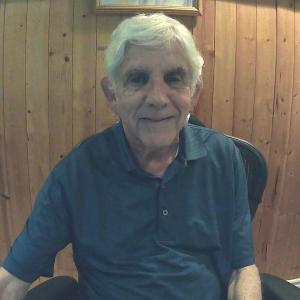
Reviewer & Author Interviewer, Norm Goldman. Norm is the Publisher & Editor of Bookpleasures.com.
He has been reviewing books for the past twenty years after retiring from the legal profession.
To read more about Norm Follow Here

Bookpleasures.com welcomesonce again as our guest, Nancy Kunhardt Lodge. Nancy has a master’s degree in Classics and a Ph.D. in Renaissance Art History. She has taught at Tufts, Boston, and American Universities and written scholarly articles and delivered papers at Renaissance Conferences in Italy and the U.S., among them at the Frick Collection of Art, the Corcoran Museum of Art, and the Smithsonian Resident Associates Program.
Nancy has been a member of SCBWI since 2009.
She is the author of two award-winning, Sci/Fi Fantasy Middle Grade novels: The Crystal Navigator (named as one of the best middle grade books of 2014 by the National Education Association, and Mona Lisa's Ghost, (winner of an Eric Hoffer Book Award,) and The Gravity Thief.
All three books have been picked up by Madrid publisher, Editorial Kolima for publication in Spanish.

Norm: Good day Nancy and thanks once again for participating in our interview. What has been your greatest challenge as a writer that you have had to overcome in getting to where you are at today?
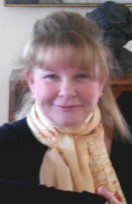
Nancy: Hi Norm, it’s nice to sit down with you again. The greatest challenge for any writer is rejection. A rejection letter is soul-lacerating, especially if you know you’ve written a good book.
Writers believe traditional publication will legitimize their work. Many feel like failures. They interpret rejection as an edict that their book isn’t good enough for publication by a ‘real’ publisher. I felt this way until friends who worked in the industry told me that agents and publishers don’t care if a book is well-written or has a brilliant plot.
They are businesses and, as such, they are only interested in books that will make money.
Today, it’s dystopia, wizards, and vampires. Someday, my genre-sci/fi fantasy, art historical adventure-may be popular.
One friend in particular, who had worked at Simon and Schuster for years told me all a writer has to do is touch one child to be validated. I have dozens of enthusiastic letters from fifth, sixth, and seventh-grade children telling me how much my books mean to them. These letters, the editorial reviews from Kirkus and Booklife, the literary Awards my books have won, and the Amazon reviews validate my work.
Norm: For your writing, does the story come first, or the world it operates in?
Nancy: I have the germ of an idea first. The hard part is developing a plot. For example, when I started The Gravity Thief, I knew I wanted to write a book about a bald-headed villain with an upside down fork on his head, the amplituhedron, figures in paintings climbing out and visiting our world, and a chaos-generating machine.
I wrote Chapter 1 and an outline that I scrapped later. Then, I did about a year of research on physics. I knew that electrons and photons behave differently when they’re not being watched. I thought why not apply the same principle to figures in paintings.
Norm: How does an author know when to stop revising?
Nancy: I would never stop revising unless my husband didn’t pull the manuscript from my claw-like grip. I spent a year revising The Gravity Thief. Sometimes, I see the manuscript lying on the kitchen counter, and I think of new twists. I think I revised Broca’s character more than any other. Every time I read it, I found places where the narrative needed tightening and fleshing out characters. However, there comes a time when I know I’ve done the best I can. Then, it becomes my husband’s property to edit. He knows if I see it, I’ll keep changing things.
Norm: Has a reader ever told you something about your books that surprised you?
Nancy: When visiting schools, children never cease to amaze me with their suggestions for new books and comments about the ones they’ve read. After reading The Crystal Navigator, two children told me, they loved it because it showed them there’s no limit to the amount of magic an author can put into a book. A fifth-grade girl asked a question that astounded and flummoxed me. “Did you always know you were a genius?” In general, their favorite parts are the ones when Lucy visits the artists and the ones with Wilbur, Lucy’s magic Wise One. They love that my Corgi Wilbur inspired my books.
Nancy: I came to writing middle grade fiction after a career of writing dry, scholarly articles which had no suspense, no plot, so the transition wasn’t easy. However, the two most important lessons I learned along the way are: every word, every sentence must move the story along. If it doesn’t, take it out.
The second rule is having to do with disappointing the reader by not answering a question raised in the book. If you drop a bread crumb or storyline, by the end of the book, every single crumb, every single thread must be explained and answered.
Norm: What would you like to say to writers who are reading this interview and wondering if they can keep creating, if they are good enough, if their voices and visions matter enough to share?
Nancy: If you are a writer, you can’t not write. Writing is a little like channeling a muse or gardening. At some point in the process, you forget you’re writing. You become unaware of things going on around you. It is that zone which allows your writing to flow uninhibitedly, and the book takes form as if by magic.
As far as fear of putting your work out for all to see, I would say everyone has a unique vision of the world. An artist, whether writer, composer, dancer, or actor owes it to the world to share her original thoughts with the world. If you keep at it, you’ll end up with a book you can be proud of. If you give up, you’ll have nothing.
Norm: What do you hope will be the everlasting thoughts for readers who finish your latest novel, The Gravity Thief?
Nancy: The Gravity Thief is about exploration, imagination, and learning to confront scary things with courage. I hope all my books
Norm: What served as the primary inspiration for the book?
Nancy: One inspiration was my love of Vermeer’s silent, mysterious painting called the Music Lesson and art history in general. I liked giving Lucy the bravery to walk into Velasquez’ Maids of Honor. Another inspiration was the discovery of the Amplituhedron, a massive geometric jewel in the universe that simplifies particle interaction. I have fun bending physics theories out of all proportion.
Norm: Did you write the book more by logic or intuition, or some combination of the two? Please summarize your writing process
Nancy: As an art historian, I am a visual person. I always envision scenes, people, dialogue before I write.
Before beginning The Gravity Thief, I had clear visions of the empty space in the Dutch Room of the Isabella Stewart Gardner Museum where Vermeer’s Concert had hung, Lucy trudging through a blizzard to Sam’s treehouse, Sam’s broken leg, a child who had climbed out of his painted world, thieves in long coats and fedoras snatching it off the wall, leaving the child marooned in the alien atmosphere of our world, and a bald-headed evil mastermind. There were lots of scenes I envisioned that didn’t make it to the final book.
Norm: What was the most difficult part of writing this book?
Nancy: The most difficult part of writing a novel is coming up with a layered, exciting plot. At first, the whole thing seems insurmountable. I wrote chapter one using the scenes I saw in my mind. To tell you the truth, I have no idea how I wrote any of my books
Norm: What did you enjoy most about writing this book?
Nancy: I had great fun writing creating the characters with whom Lucy and Sam interact: the hapless, endearing Tommy McButton, the grumbling Abbess, the soft-hearted John Gaunt, and, of course Broca in his lab on Pho The sign outside his house, No Strangers, forbidding entry to anyone who doesn’t look like him was a backhanded jab at the current occupant of the White House.
Norm: Did you write the story to express something you believe or was it just for entertainment?
Nancy: The subtexts came are the lessons Lucy learned- Sam’s belief that no one is born bad, proved by Broca’s transformation, Lucy’s realization that appearances have nothing to do with what a person is like. Her disgust when she first encounters Spiky which quickly dissolves into love when she gets to know him. At the end, there is the Gravity machine reborn as a machine which creates equilibrium.
Norm: What projects are
you working on at the present?
Nancy: I’m
at that awful beginning stage of writing a book when I’m trying to
work out an enticing plot. Dialogue and creating settings are
easy for me I spend a lot of time reading about areas of Physics that
may be relevant to the painting I’ve chosen to be the accelerator
of the story.
Norm: Where can our readers find out more about you and The Gravity Thief?
Nancy: My Website
I have written about The Gravity Thief on its Amazon page. The editorial and Amazon reviews are also helpful as summaries.
Norm: Thanks once again and good luck with all of your future endeavors
Nancy: Thank you, Norm.
FOLLOW HERE TO READ NORM'S REVIEW OF THE GRAVITY THIEF