
- Home
- AUTHOR INTERVIEWS- CHECK THEM OUT
- In Conversation With Journalist & Author John Marquis
In Conversation With Journalist & Author John Marquis
- By Norm Goldman
- Published July 30, 2020
- AUTHOR INTERVIEWS- CHECK THEM OUT

 Norm Goldman

Reviewer & Author Interviewer, Norm Goldman. Norm is the Publisher & Editor of Bookpleasures.com.
He has been reviewing books for the past twenty years after retiring from the legal profession.
To read more about Norm Follow Here
Bookpleasures.com welcomes as our guest, John Marquis. John has been a journalist for 50 years, has published several books, including Blood and Fire, his acclaimed study of the murder of baronet Sir Harry Oakes in the Bahamas in 1943.
He has also published Papa Doc, about the brutal reign of Francois 'Papa Doc' Duvalier in Haiti, and My Very Good Friend Bert Lawrence, a personalised profile of the writer D.H.Lawrence.
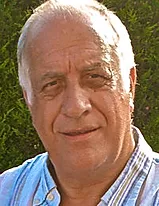
John was born in Wigston Magna, Leicestershire, England, during the Second World War.
He began writing for a living when he was 17. He was a cub reporter with the Northampton Chronicle and Echo - then an evening paper in the English midlands - and later worked for Reuters and the Thomson newspaper empire in London.
For several years, he was London Sports Editor and Chief Boxing Writer for the Thomson group, covering major fights all over the world during the Muhammad Ali era.
In the 1980s, he moved to the English West Country as Editor and Publisher of Packet Newspapers and associated titles, then for the last decade of his career was Managing Editor of the Bahamas' leading daily, The Tribune.
His book Long Hot Summer reflects on his years as a journalist in the Bahamas.
In 1974, John won a British Press Award - known as the 'Oscars of British journalism' - for investigative reporting.
His new book, Death in the Night, is an updated version of Blood and Fire, with additional information about the baronet's killers and their motives.
Norm: Good day John and thanks for participating in our interview.
How long have you been writing and what keeps you going? As a follow up, could you tell us about people or books you have read that have inspired you to embark on your own career?
John: I was always keen on writing when I was a schoolboy. A TV series called Deadline Midnight inspired me to become a reporter and I was lucky enough to get my first job shortly after my 17th birthday. It was the beginning of a very satisfying career lasting half a century which took me all over the world on assignments and led to me becoming Editor of newspapers in Britain and the Bahamas.
My start in newspapers coincided with the Angry Young Men era in English literature, when gritty provincial novels were being written by an aspirational new breed of novelists like John Braine, Alan Sillitoe, David Storey, Colin Wilson and Kingsley Amis. I was particularly inspired by John Braine’s Room at the Top and Alan Sillitoe’s Saturday Night and Sunday Morning.
When I retired from full-time journalism in 2009, I kept on writing columns for my old paper in the Bahamas, and producing my books.
Norm: What do you think is the future of reading/writing?
John: I fear that general literacy is in decline, but I still feel there is a massive demand for books of all kinds. The book format is remarkably durable because it is both attractive and portable. Reading online is not the same experience.
Though I was a newspaperman for half a century, I believe that books will outlast newspapers because ‘the book experience’ has not been successfully replicated by new technology.
Norm: What advice can you give aspiring writers that you wished you had received, or that you wished you would have listened to?
John: Four-fifths of my writing life has been in journalism, which I loved. I wrote a couple of (very bad) novels when I was in my teens, but quickly realised that if I were to make a success of my chosen profession, I needed to concentrate on that rather than trying to become the new Ernest Hemingway.
Having said that, journalism has been the foundation of many a fine novel-writing career, as proved by Hemingway himself, along with the likes of John Steinbeck, Tom Wolfe and many others. I never received advice from anyone when I started out, but I think self-belief is absolutely crucial for any professional writer, whether they be journalists or novelists. Writing is essentially an ego-driven activity. A writer always assumes he/she has something to say that everyone else wants to hear. This belief in oneself is the dynamo that drives you on.
Norm: How many times in your career have you experienced rejection? How did they shape you?
John: My early attempts at novel writing were rejected by publishers, but I did get one or two encouraging replies from respected firms. In journalism, ‘spiking’ of articles is part of the business, so egos get bruised a lot in the newsroom. However, you need to be tough to survive. If you really feel that you have what it takes, you just get your head down and keep going. Newsrooms are an unforgiving environment. If you don’t shape up, you get out. Simple as that.
Norm: Are there any significant differences between English, Canadian, and American audiences? What would they be?
John: I think every
reader, whatever their nationality, appreciates a good story, whether
fiction or non-fiction. Though I’ve read hundreds of novels in my
time, I read mostly non-fiction nowadays - history, biographies,
politics, a bit of travel, humour and anything to do with art and
artists.
When I’m not writing, I draw and paint, just for amusement, though I’ve sold some of my work at exhibitions and festivals. My books have sold in the UK, Europe and throughout the Americas, so I’m not sure there are significant differences in taste. Whatever your genre, the key is to keep the reader riveted to the page. 'I couldn't put it down' remains the best compliment a book can receive.
Norm: What helps you focus when you write?
John: As I’ve written nearly every day of my life since my teens, often to tight deadlines, I’m fortunately very fluent in my thinking, and have never experienced anything resembling writer’s block. I find the act of writing extremely absorbing and hours fly by when I’m in the thick of an article or book.
I used to know the best-selling author Arthur Hailey, who wrote several block-busting novels, and he told me he actually hated the process of writing. Research is what turned him on. However, writing is a great pleasure for me, and my revision is minimal. The first draft is often the best.
Norm: Do you write more by logic or intuition, or some combination of the two? Please summarize your writing process.
John: When someone once asked me ‘How do you write’ I replied: ‘I start at the top left-hand corner of the page and keep going.’ That really sums it up. I rarely think too deeply before putting pen to paper, probably to my detriment. If I had to think too much about it, I don’t think I’d ever get anything done.
Norm: What would you like to accomplish as an author that you have not?
John: I would have loved
to have written one really great novel, like For Whom the Bell Tolls
or The Great Gatsby. But I am very happy with my lot.
I feel that I was fortunate enough to have been involved in the greatest job on earth for all of my working life. You can’t really ask for more than that. I noticed recently that two of my books are stocked as research material at several of the world's leading universities, including Harvard, Princeton and London. For a boy with only a basic education - I left school at sixteen - that's heady stuff.
Norm: What would you like to tell us about your most recent book Death in the Night?
John: It is a revised follow-up to my first book, Blood and Fire, which covers the famous murder of Sir Harry Oakes, then the British Empire’s richest man, in the Bahamas in 1943.
I became very interested in the case when I
was working as a political reporter in Nassau during the 1960s.
During my second sojourn in the Bahamas between 1999 and 2009 I was given further information about the case by informed sources, and this forms the basis of my new book. The Oakes murder - often described as the greatest murder mystery of the 20th century - is an ever-interesting topic because of the exotic setting and the cast of characters involved, including the Duke of Windsor, who was Governor of the Bahamas at the time of Sir Harry’s brutal demise.
Norm: How did you become involved with the subject or theme of your book?
John: A senior police source gave me information in 1969 which pointed clearly to one suspect. As that person was still alive at the time, my options were limited when it came to publication. But, as most of the protagonists are now dead, I am free to go ahead with my theories on who killed Sir Harry and what their motives were.
Given the setting, the high-profile figures involved, and the fact that the Duke was nominally in charge of investigations, the story has everything. It is the ultimate murder mystery, with the added allure of being fact, not fiction.
Norm: What were your goals and intentions in this book, and how well do you feel you achieved them?
John: I think the Oakes
murder had a lasting impact on Bahamian life because it introduced
the notion of selective justice in a colonial society where British
justice was supposed to prevail.
There’s no doubt that the colony’s
ruling clique of the day, the Bay Street Boys, were protecting
themselves, and their own positions as political leaders, in trying
to hang an innocent man, Count Alfred de Marigny.
I wanted to blow the lid off the case, and I feel I’ve done that. Blood and Fire was well-received when it was published in 2005, and has gone on to sell steadily for 15 years, but I think Death in the Night takes things much further.
Norm: What do you hope will be the everlasting thoughts for readers who finish your book?
John: I think readers will conclude that, of all the theories put forward over the years about the Oakes murder, mine is the most plausible and best-argued. There have now been about ten books about the Oakes case, some by quite distinguished authors, but I feel confidently that mine comes closest to the truth.
Norm: What upcoming projects are you excited about?
John: Besides books with international appeal, like Papa Doc and Death in the Night, I write books about Cornwall, where I live, and plan to explore the appeal this beautiful place has had for major writers over the years.
D.H.Lawrence was here during the First World War, John le Carre lives here now, and Colin Wilson spent more than half a century in Cornwall before his death in 2013. Many other fine writers, including Daphne du Maurier and Winston Graham, also called Cornwall home. It is an area with a tremendous artistic and literary heritage, and I want to compile a book of essays called Writers of Cornwall or something along those lines.
Norm: Where can our readers find out more about you and your books?
John: I have my own WEBSITE and also sell through Amazon,
Barnes and Noble and Waterstones.
There is quite a bit about my
journalistic career online, and I gave an extensive interview in 2011
to the leading British journalism website, Holdthefrontpage.
I have
featured in four TV documentaries about my books - two about the
Oakes murder, one about Papa Doc, and another about the American
con-and-kill duo Sante and Kenny Kimes, who were the subjects of my
book, Evil and Son.
My Amazon profile is a fair description of my career to date.
Norm: As this interview comes to an end, what question do you wish that someone would ask about Death in the Night but nobody has?
John: Well, the book is due to appear before the end of the year, and I’m hoping readers all over the world will be asking where they can buy a copy. This book takes Blood and Fire to another level, and I think readers will find it enthralling. It will be sold on Amazon, and signed copies will be available from me, direct.
Norm; Thanks once again and good luck with all of your future endeavors