
- Home
- AUTHOR INTERVIEWS- CHECK THEM OUT
- In Conversation With Karol Hoeffner. Karol is the Chair of Screenwriting at Loyola Marymount University in Los Angeles, and Author of Several Novels Including the Upcoming Release of Knee Deep.
In Conversation With Karol Hoeffner. Karol is the Chair of Screenwriting at Loyola Marymount University in Los Angeles, and Author of Several Novels Including the Upcoming Release of Knee Deep.
- By Norm Goldman
- Published June 8, 2020
- AUTHOR INTERVIEWS- CHECK THEM OUT

 Norm Goldman

Reviewer & Author Interviewer, Norm Goldman. Norm is the Publisher & Editor of Bookpleasures.com.
He has been reviewing books for the past twenty years after retiring from the legal profession.
To read more about Norm Follow Here

Bookpleasures.com welcomes as our guest Karol Hoeffner. Karol is the Chair of Screenwriting at Loyola Marymount University in Los Angeles. She has penned several novels including the upcoming release of Knee Deep.

Karol also has fourteen film credits including Mary Kate and Ashley's Winning London, MTV's All You've Got, several Danielle Steel adaptations, a television mini-series Harem, movies-of-the-week based on true stories – The Making of a Hollywood Madam and Miss America: Behind the Crown.
Among her other credits are the original movies, Voices from Within and Burning Rage.
Norm: Good day Karol and thanks for participating in our interview. What do you consider to be your greatest success (or successes) so far in your career as an author and screenwriter?
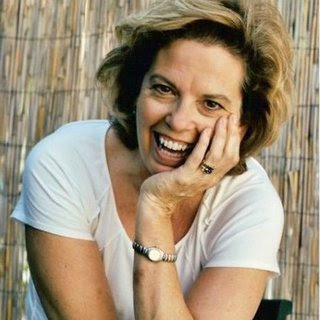
Karol: Thankfully, there are as many ways for a writer to measure success as there are ways to measure failure. One way is to acknowledge with appreciation the number of people who have seen your films or read your novels. I’m happy to say that my films have been seen by millions of viewers. I was thrilled when Kaleidoscope was the number one made-for-television movie of the year.
Success is also measured by critical praise. Although I agree with Ron Howard who said that he stopped reading reviews because when they were good, they were never good enough and when they were bad they were devastating. Still, I confess to having saved and cherished a smashing good review from The New York Times for Scorned and Swindled. And I’ve been pleased with the advance reviews for Knee Deep.
And success is also measured by longevity. I am a vested member of the WGAW; I have over twenty-five years of uninterrupted service as a writer paid for their work. And that is no small feat.
But possibly one of my
proudest moments occurred sitting on my own couch in my living room.
I was watching a PBS documentary about women who had survived spousal
abuse. In one of the interviews, a young woman said that if she had
not left her abusive boyfriend when she did, she was certain he would
have killed her. When the filmmaker asked her why she was finally
able to leave after years of abuse, she answered, “It’s going to
sound silly. But I was watching Miss America:Behind the
Crown about Carolyn Sapp who came forward with her story of
abuse, and I thought if she can find the courage to leave, so can I.”
She packed her bags and left for a shelter that very night.
I always hope that what I
write will touch an audience, but I never expected to create
something that would actually save a life.
Norm: What has been your greatest challenge (professionally) that you’ve overcome in getting to where you’re at today?
Karol: The biggest challenge I faced occurred when I turned 45 and my successful writing career appeared to be over.
The network assignments that had been my bread and butter suddenly disappeared. My manager told me I had been slammed by two colliding forces that created a perfect storm.
The first was that the made-for-TV- business dried up almost overnight and the second was that I was over forty. He added that I was lucky in that it had taken the network five years to figure out how old I actually was.
Nevertheless, I was
devastated. For a hot minute, I considered getting my real estate
license and selling houses instead of scripts. But instead, I
decided to write a feature spec in the voice of a seventeen-year-old
boy who becomes involved with an internet porn star who moves next
door in his sleepy suburban neighborhood.
I wrote the script and used the nom de plume K.A.Hoeffner to hide my sex. Although the script did not sell, it garnered lots of attention.
Folks all over town wanted to meet with the young guy who wrote Pandora’s Box. My manager reported that most of the execs had a hard time believing that the script had been written by a woman and not-so-young woman at that. But because of that script, I landed the assignment to write the Mary Kate and Ashley movie Winning London, and reignited my career.
Norm: Why do you write? Do you have a theme, message, or goal for your screenplays and novels?
Karol: I never intentionally map out “theme” in my work, but I do believe in the importance of the writer’s intent. If you don’t have something to say, then why bother saying anything. I tell my students that the stories that they are best qualified to tell often means looking for the cause and effect in their own lives.
To gain possession of our artistic core, we must grasp what drives us, searching for the way life has marked us. And I find that’s true in my own work. I lost my aunt and uncle - two of my most favorite people in my world - in a tragic small plane crash. Their death continues to impact the way I see the world and bubbles up thematically in much of my work.
Norm; What did you find most useful in learning to write? What was the least useful or most destructive?
Karol: What has been most useful to me in learning to write was to stop being so precious about my work. The recognition that all writing is rewriting freed me to experiment, to write more freely. Not being attached to what I wrote yesterday allows me to examine the material with a more objective eye and for the story to evolve organically.
The worst advice I ever
got was to choose projects or stories based on whether or not they
would sell. It took me years to realize that concentrating on
commercial appeal is a waste of time because nobody knows what the
reader, the publisher or the studio head will want on any given
Monday. So it’s best to write what you want, never what you
think will sell.
Norm: What would you like to accomplish as an author that you have not?
Karol: As an author and screenwriter in the feature and mini-series market, I’ve always worked solo. I’ve never experienced the writers’ room, where a group of writers break the season for a show and work together on the outline followed by individual writers or writing partners writing each episode. I’ve discovered through teaching Screenwriting that I love the workshop experience. Based on my running a workshop in the classroom, I’d love to work on a television limited series for a streaming service.
Norm: When writing your novels and screenplays, do you write more by logic or intuition, or some combination of the two? Please summarize your writing process.
Karol: I consider myself more of a visceral writer. I approach my work on an emotional, intuitive level. When I start a project, I open up a word document and just put stuff in it: bits of dialogue; ideas for scenes or characters; dream journals; and tons of research. At a certain point, generally when I reach somewhere between 80 and 120 pages of “stuff,” I close the file and begin work on shaping the narrative.
I hate outlining, but I do it anyway or at least pretend to do it. I prefer to write scene ideas on note cards and lay them out on a large dining table. I feel freer using note cards than working with linear outlines because I can move the cards and the plot points around on the table. I don’t feel locked into a certain order and the story can unfold in surprising ways.
I don’t over-analyze structure or get lost in details in the outline stage because I love discovering stories when I go to pages. Once I begin writing, I tend to write very quickly and rewrite as I go along. The first day, I might write ten to fifteen pages. The next day, I would rewrite those pages and then write another five pages, and so on. I’m the queen of the rewrite.
Norm; When writing your novels, do your characters come first or the story?
Karol: I’m sometimes struck by a notion or a situation, either something I’ve observed or experienced and I will play around with that idea to see if I can find a premise with legs. But very early on in the ideation process, I go to character. I used to go to great lengths to create character bios for each of the characters and I still require my students to do just that. But in my own writing, the characters evolve more organically. Most are based on either someone I know or have observed or someone I could imagine knowing.
Norm: What do you believe defines a character?
Karol: Behavior. It’s not so much what a character says, but what a character does, how they react. Like real life, characters are defined not by what they say but by what they do.
I’ve also found it helpful to give my characters what screenwriters John Watson and Penn Densham defined as a character nugget, which is a back-story event--a dark and powerful life experience that affects how the protagonist navigates emotionally. You can think of it as a failed life script that is visceral and biological, something from their past that keeps creeping into the present. A character nugget informs the narrative itself, providing a dramatic backbone for conflict and transformation.
Norm: How does an author know when to stop revising?
Karol: I’m still working on that answer. In terms of my screenplays, I don’t stop revising until the picture is locked in the editing process. Every day I’m on the set rewriting and refining scenes. For my novels, it’s the last pass before it goes to publication.
But there are moments in
the writing process when it’s time to pause from writing and to
have other eyes on the material. For me, that time comes when I feel
“written out”. I reach a point when I don’t know what else to
say or do. That’s when I know it’s time to take a break
from the process and elicit notes from other trusted voices.
Norm: Could you tell our readers about your most recent novel, Knee Deep?
Karol: Knee Deep is a Hurricane Katrina love story sprinkled with voodoo magic that offers an uplifting message of hope - whether it's a pandemic or a hurricane, love can transcend any disaster.
My protagonist, sixteen-year-old Camille was herself named after a hurricane. Her parents own a bar in the Quarter, and Camille grew up in the shadow of Bourbon Street, raised on stories of hauntings, lusty encounters, and voodoo magic. And even though her family loses their home in a hurricane, she counts herself among the lucky until she discovers that her eighteen-year-old neighbor whom she secretly loves goes missing in the storm.
I crafted Camille’s story as a Mardi Gras memoir, one girl's journey through the parties and the parades as her community comes together and rises up from the chaos following the devastating storm.
Norm: How did you become involved with the subject or theme of your book?
Karol:I fell in love with New Orleans on my first trip when I was sixteen, the same age as the protagonist in my novel, Camille. As a teenager, I walked down the same streets that she walked, breathing in the culture of the Quarter. That first trip was followed by many other experiences in the Crescent City, and she eventually became a part of my heartsong.
I began work on the novel fifteen years ago, in the wake of Hurricane Katrina, which I witnessed from afar, safely cocooned in Los Angeles. I watched the continual news coverage for five days, unable to take my eyes off the TV screen as the tragic aftermath unfolded. When the levee broke, I ,too, broke down. My grief was so strong that my own family began to worry about me.
Although I was not there for Katrina, I visited shortly after. I drove into the Ninth Ward where I had celebrated Twelfth Night in my twenties. All that remained of the shotgun house where I had danced until dawn were cracked concrete steps in the side yard. I spent my days in cafes, talking to the survivors, listening to their stories.
I spent my nights writing in my hotel on Royal Street. I imagined my sixteen-year-old self in the city with the hurricane brewing and what it would be like to be on the verge of becoming an adult and to have your whole life upended by a natural disaster.
When I returned, I continued working on the novel, but ultimately I put the manuscript away because I did not feel equipped to tell the story of the hurricane. That right belonged to the many who had lived through it.
So I waited until enough time had passed and enough books had been written so that the storm could service the story I wanted to tell instead of the other way around.
I take pride in the life I carved out as a working writer, but this manuscript rises above what I’ve done before. It is a child of my heart.
Norm: What were your goals and intentions in this book, and how well do you feel you achieved them? As a follow up, what do you hope will be the everlasting thoughts for readers who finish your book?
Karol: Not all love is equally given or returned. I wanted to explore the feelings we have when we love someone more than they love us - the painful inequity of caring too much. Camille experiences both true love and true disaster and asks the question which is harder to survive.
I hope that readers will
cry at least one during the book, that good kind of cathartic cry and
will be buoyed by the hopeful message that the deep feelings of loss
are replaced with hope.
Norm: Which character in your novel was the easiest to write? Most difficult?
Karol: My protagonist Camille was by far the easiest to write. Camille came to me very quickly; she walked onto the page full-blown. I didn’t initially intend to write the novel in the first person, but her voice was so strong that in a very short time, she just took over. Which is why I decided to craft the novel as a memoir.
All of the characters in the book seemed easy to write, but the one I took most care with was M--, Camille’s nemesis. She’s African-American and I wanted to get it right. I was grateful to my young friends of color who helped me shape her personality and words.
Norm: Where can our readers find out more about you and Knee Deep?
Karol: on my AUTHOR'S LANDING PAGE
and the Regal Site Author’s Page
and Regal Site Blog
Norm: What is next for Karol Hoeffner?
Karol: I recently completed the pilot for a limited series entitled SISI, based on the life of Elisabeth, Empress of Austria and Queen of Hungary, who was one of the most alluring royal figures of the Victorian age. The child-bride to a powerful ruler in Europe, she rebelled against the confines of royal life to support and defend the marginalized in Hungary and Italy.
I became Sisi obsessed when I was teaching in LMU’s study abroad program at the Budapest Film Academy in Fall 2017. Now comes the business of finding a buyer to develop the pilot into a series.
This summer, I plan to answer your original question of what’s next. After my mother’s passing, I catalogued hundreds of family letters. Among them were love letters written by my grandparents in the thirties, ones my mother wrote to her parents when she first married and notes I passed to friends in high school. I’ve recently begun to read through them in the hopes that my next novel is buried somewhere in those words.
Norm: As this interview comes to an end, what question do you wish that someone would ask about your novels, but nobody has?Karol: Although I don’t know what my answer would be, I’d like for someone to ask me about the difference between writing a novel and writing a screenplay and why after over twenty years as a working screenwriter, I returned to prose.
Norm: Thanks once again and good luck with all of your future endeavors