
- Home
- AUTHOR INTERVIEWS- CHECK THEM OUT
- In Conversation With Internationally Produced Playwright With Over 60 Produced Plays and Musicals, Colette Freedman
In Conversation With Internationally Produced Playwright With Over 60 Produced Plays and Musicals, Colette Freedman
- By Norm Goldman
- Published August 5, 2019
- AUTHOR INTERVIEWS- CHECK THEM OUT

 Norm Goldman
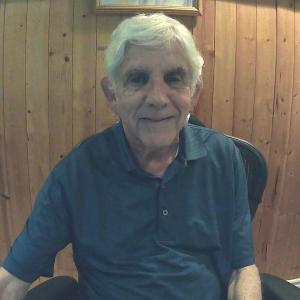
Reviewer & Author Interviewer, Norm Goldman. Norm is the Publisher & Editor of Bookpleasures.com.
He has been reviewing books for the past twenty years after retiring from the legal profession.
To read more about Norm Follow Here


Bookpleasures.com welcomesas our guest author and internationally produced playwright with over 60 produced plays and musicals, Colette Freedman.
Colette's play Sister Cities has been produced around the country and internationally, including Paris (Une Ville, Une Soeur), Rome (Le Quattro Sorelle) and Australia. She also wrote the novel and the film which stars Jacki Weaver and can currently be seen on Netflix.
Colette co-wrote, with
International bestselling novelist Jackie Collins, the play Jackie
Collins Hollywood Lies. In collaboration with New York
Times best selling author Michael Scott, she wrote the thriller
The Thirteen Hallows (Tor/Macmillan).

Her other novels include The Affair and The Consequences (Kensington), Anomalies with Sadie Turner (Select Books) I Wrote That One, Too with Steve Dorff (Backbeat Books) and her most recent book, The Reluctant Fairy Godmother with Kimberly Much. (Metamorfic).
She also wrote the film And Then There Was Eve which won best feature at the LA Film Festival 2017 and co-produced the film Quality Problems, both of which are currently available on Amazon. Her film Miles Underwater is currently in post production and she has co-written several Lifetime thrillers with Brooke Purdy.
Colette has several scripts in development, including Joint Venture, Scattering Rachel, Therapy and The Last Bookstore, which won Grand Prize at the CWA awards, We Screenplay’s Diverse Voices, Best SciFi Feature Action on Film and Richmond International Film Festival.
Norm: Good day Colette and thanks for participating in our interview
Why do you write and
what was your training as a playwright? Do you have a theme, message,
or goal for your plays and books? As a follow up, what do you think
over the years has driven you as a writer?
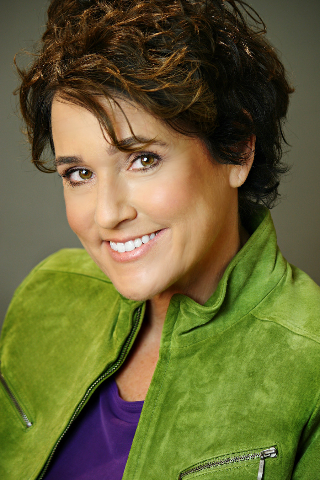
Colette: I write because I finally feel like I have something viable to say. I always knew I was a writer, but when I was younger, I didn’t have a lot of life experiences. Now, I’ve been through the trenches…and what drives me is that I have a lot of things I really want to say. Starting my career as a playwright, which is all about dialogue and character development, gives me a unique edge because those elements of storytelling come really naturally.
Norm: What are common mistakes playwrights and authors make?
Colette: Preaching and talking down to an audience. The key to great stories is that they feel organic, the characters exist in a make believe world and we, as readers, get to follow their journeys as eager voyeurs. We are invited to watch the story unfold and see the choices the characters make as if it’s really happening to them. Authenticity of voice is important so that the characters have their own belief systems, ideologies and motivations… rather than just being mouthpieces for an author’s agenda. Sure, as writers we definitely plant our own agenda, but the mistake is often screaming it at a reader rather than giving them the credit and letting them decide for themselves.
Norm: Is your work improvisational or do you have a set plan? What's the most difficult thing for you about being a writer?
Colette: My work is a combination of improvisational and organized. I do outline, but only barebones as I’m a great believer of allowing my characters to tell me what they want to do. In films, structure is extremely important; however, in novels and plays there is a bit more leeway. Sure…everything always kind of breaks down into the basic three act structure of beginning, middle and end…. but there is a lot freedom within those parameters.
Norm; What has been your greatest challenge (professionally) that you’ve overcome in getting to where you’re at today?
Colette: My favorite quote is “leap and the net will appear.” I think I waited a long time to initially leap…but now that I have, there is no turning back. In other words, just go for it. As artists, we are so filled with fear about making money that it’s often scary to go for it; however, when you finally commit… the net invariably appears.
Norm: What did you find most useful in learning to become a playwright and author? What was least useful or most destructive?
Colette: I started as an actor, so learning how to create a character from the inside out was incredibly useful. Both Kimberly and I were actors first, so it makes the writing not only easier but a great deal of fun as we ‘acted out’ the characters. The least useful are people who subscribe to the ‘no, but’ pessimistic mentality rather than the ‘yes, and’ optimism. Misery loves company and it is imperative not to hang out with people who don’t believe in you. It’s a hard enough business, you definitely want to create a solid support system.
Norm: How many times in your career have you experienced rejection? How did they shape you?
Colette: As an actor, I experienced rejection almost daily. They say it takes 49 “no’s” to get the one “yes”. I was so practiced in rejections that when I transitioned to writing, I barely feel rejections anymore. They are simply “part of the process”
Norm: What would you like to say to writers who are reading this interview and wondering if they can keep creating, if they are good enough, if their voices and visions matter enough to share?
Colette: Just follow Edison’s quote “Success is 10 percent inspiration and 90 percent perspiration.” You’re probably already a good writer if you are reading this, I mean, you probably wouldn’t be reading something as obscure as a writer interview if you weren’t already in it for the long haul. So continue to stick with it. Keep writing, every single day. Everyone is going to tell you no, but if you keep telling yourself yes, then you will make it…eventually.
Norm: Could you tell our readers a little about your most recent book The Reluctant Fairy Godmother: and the Absolutely Positively Impossible Good Deed that you co-authored with Kimberly Much?
Colette: It is a magical book about a girl who realizes that she is absolutely, positively special.
Norm: If someone can only buy one book this month, why should it be this one?
Colette: We are in exciting times. Women are finally getting a seat at the table, many seats in fact and this book empowers little girls to demand their seat long before it is given to them.
Norm: How did you become involved with the subject or theme of your book? What were your goals and intentions in this book, and how well do you feel you achieved them?
Colette: I love writing women’s stories. Most of my other novels have female protagonists. I wanted to work on telling a voice from a younger perspective. I’ve always loved fairytales with a feminist twist and Kimberly and I have created a girl who is tough, sassy, flawed and utterly fearless. We had worked on a few projects together before and really got a long well, so it was a no brainer to collaborate together.
Norm: Where can our readers find out more about you and The Reluctant Fairy Godmother: and the Absolutely Positively Impossible Good Deed ?
Colette: Join our instagram or facebook page for The Reluctant Fairy Godmother. Or follow our WEBSITE & MY PERSONAL WEBSITE
Norm: What is next for Colette Freedman?
Colette: My film Miles Underwater is currently in post production, which I am incredibly excited about. It is co-written with Brooke Purdy, Directed by Jen Prince and produced by Jhennifer Webberley’s company Metamorfic (which produced two other amazing films I was privileged to be a part of Quality Problems and And Then There Was Eve)