- Home
- AUTHOR INTERVIEWS- CHECK THEM OUT
- In Conversation With Retired University President and Author, Dr. Philip Carlton Williams
In Conversation With Retired University President and Author, Dr. Philip Carlton Williams
- By Norm Goldman
- Published July 24, 2019
- AUTHOR INTERVIEWS- CHECK THEM OUT

 Norm Goldman
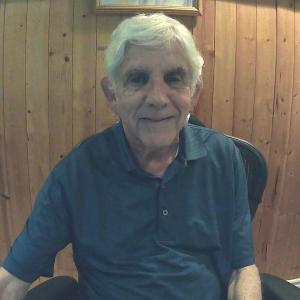
Reviewer & Author Interviewer, Norm Goldman. Norm is the Publisher & Editor of Bookpleasures.com.
He has been reviewing books for the past twenty years after retiring from the legal profession.
To read more about Norm Follow Here
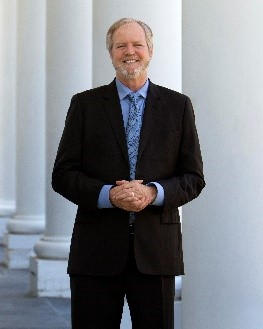
Bookpleasures.com welcomes as our guest Dr. Philip Carlton Williams. Philip is a retired university President and is the author of We're Smothering Our Universities, Anatomy of Corruption: An Inner Guide for Honest Leaders, Let the Champions Run: And Watch Our Universities Soar, The Lemon Drop Game: Your Recipe for Happiness and Success, Who's Running Our Colleges and Universities?: The Cast of Characters in Higher Education, Prepossession: A Poetic Play in Four Quarters, and Up From Atheism: One Man's Journey Back to God.
Philip also maintains a blog at SpiritedReasoner.com which is mirrored on a Facebook page called The Spirited Reasoner
Norm: Good day Philip and thanks for participating in our interview.
What do you consider to be your greatest success (or successes) so far in your various careers?
Philip: As a teenager back in the 1960s, I won a regional poetry contest that paid a top prize of $100. I recall blowing the money in one day, but what stuck with me for life was the knowledge that someone out there might like what I was writing.
Later, in the 1980s, I recall a similar feeling when my first mystery novel—Mission Bay Murder—was accepted for publication by a Canadian firm called PaperJacks.
Then, while I was practicing law in the 1990s, the American Bar Association accepted my handbook, From Metropolis to Mayberry:
A Lawyer’s Guide to Small Town Law Practice.
Now, in my retirement, I continue to find readers who are interested in my work.
Norm: What has been your greatest challenge (professionally) that you’ve overcome in getting to where you’re at today?
Philip: The screening process used by the publishing industry has always scared me. It’s as though none of the editors and agents have time to read the work of a new author, yet somehow good books keep getting published.
I’ve seen authors try just about anything to get some attention for their work. But I’ve also gotten to know some editors and agents and have witnessed the size of the piles of unsolicited manuscripts they receive. Even now I don’t understand how, or if, the screening process works.
Norm: How many times in your career have you experienced rejection? How did they shape you?
Philip: My first novel, which I called Tony and Tina, never found a home. At one point, a tactful but firm agent told me to trash it and start writing a new novel. It took me a few months to lick my wounds, but eventually I started writing again.
The most important lesson I learned from that experience was that I should keep writing not to get published, but for the pure joy of writing.
Norm: What would you like to accomplish as an author that you have not?
Philip: I’d like to write a play or screenplay, just to watch how directors and actors would bring a fresh interpretation alive.
Norm: Why do you write? Do you have a theme, message, or goal for your books?
Philip: I think, deep
down, I want my writing to bring people together. In some ways, I see
myself as a child calling out to my family as they argue, “Hey,
guys! Aren’t we supposed to love each other?” If even one of my
books could have that sort of effect on others, then all the work
would be worthwhile.
Norm: What do you think most
characterizes your writing? Do you write more by logic or intuition,
or some combination of the two? Please summarize your writing
process.
Philip: The books you listed in the introduction to this interview all had a similar genesis: I had observed something about society that was bothering me, and I wanted to get it off my chest. I felt like most people would agree with my point of view if they would only read the book and check the facts for themselves.
Norm: What did you find most useful in learning to write? What was least useful or most destructive?
Philip: I enjoyed the process of diagramming sentences on a chalkboard. It’s sad to me that so many children grow up today without having experienced that exercise. It’s not that I’m overly prissy or rule bound. I just believe that the purpose of language is to communicate our thoughts clearly to one another. When we use sloppy grammar, then other people have a harder time understanding what we are trying to say. That leads to unnecessary arguments and hurt feelings.
Norm: What do you think is the future of reading/writing?
Philip: I believe the trends in history have moved like a pendulum. For example, skirts were short during the flapper days of the 1920s, then grew longer during the 30s and 40s, only to grow shorter again with the advent of miniskirts in the 1960s. The advent of electronics seems to have shortened everyone’s attention spans over the past twenty years, but I’m hopeful that trend will reverse itself, as young people begin sensing the need for greater depth and breadth. So, overall, I’m optimistic about the future of reading and writing.
Norm: You have written about universities and their shortcomings? Why have you been interested in this subject and what do you hope will readers gain from reading We're Smothering Our Universities, Let the Champions Run: And Watch Our Universities Soar, Who's Running Our Colleges and Universities? and The Cast of Characters in Higher Education? Could you briefly tell our readers a little about these books?
Philip: From 2006 until 2017, I served as president at two regional public universities. During that time, I witnessed something I never thought could happen—elected officials questioning the value of public higher education. When I confronted my own legislators, they responded my grilling me about tuition inflation, campus crime, and increasing debt loads faced by college graduates. I had my own answers to those problems, answers founded in my years as an attorney and campus administrator, but I was surprised that no one had taken the time to lay out the facts. I decided I had a unique perspective that needed to be shared.
Norm: What do your plans for future projects include?
Philip: I’m back to working on fiction now—another murder mystery. This time, though, I’m taking the time a good novel needs for proper character development and motivation.
Norm: Where can our readers find out more about you and your books?
Philip: You can find my author page on Book Bub at https://www.bookbub.com/authors/philip-carlton-williams or on Amazon at https://www.amazon.com/Dr-Philip-Carlton-Williams/e/B079WGV788?ref=sr_ntt_srch_lnk_1&qid=1564002380&sr=8-1
Norm: As this interview comes to an end, what question do you wish that someone would ask about your books, but nobody has?
Philip: I wish someone would ask me why my books aren’t priced at much higher levels, which they clearly deserve. But alas …
Norm: Thank once again and good luck with all of your future endeavors