
- Home
- AUTHOR INTERVIEWS- CHECK THEM OUT
- In Conversation With Woodrow Wilson Author of Stranded on Mars, Fish Story, The Utah Flu, and Dead Astronauts
In Conversation With Woodrow Wilson Author of Stranded on Mars, Fish Story, The Utah Flu, and Dead Astronauts
- By Norm Goldman
- Published July 20, 2019
- AUTHOR INTERVIEWS- CHECK THEM OUT

 Norm Goldman
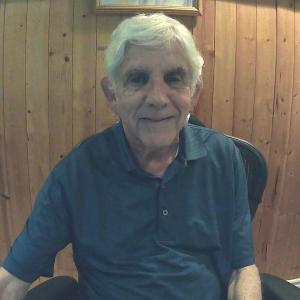
Reviewer & Author Interviewer, Norm Goldman. Norm is the Publisher & Editor of Bookpleasures.com.
He has been reviewing books for the past twenty years after retiring from the legal profession.
To read more about Norm Follow Here


Bookpleasures.com welcomes as our guest, Dr. Woodrow Wilson author of four novels, three cookbooks, and a STEM ebook aimed at young adults. In addition, Woodrow publishes two on-line magazines weekly: one about cooking and the other presenting science for the general public. He also writes science for a professional audience under contract to the American Institute of Physics.
His most recent novel, Stranded on Mars is a science fiction piece with accurate astronomy and rocket science. He has also published Fish Story, a tale of people kept by dolphins, Dead Astronauts, a space opera exploring an alien ship who occupants have died in transit, and The Utah Flu, a medical mystery about an epidemic that pops up near the old biological weapon facility.
Woodrow graduated from Caltech with a PhD in Chemical Physics. He has more than thirty years experience in research and development for the military and intelligence communities. He has explored space and other exotic environments in the laboratory and in the computer. He contributed to the design and testing of space-based and ground-based anti-ballistic missile defenses. He has studied chemistry at 10,000°F, 30,000 mph collisions, plus fires and explosions in zero gravity, the aurora borealis, and more. Wilson's work in military applications of space puts the science in this hard science fiction work Dead Astronauts.
He supported military
research programs developing medical protection against nuclear,
biological and chemical threats as well as against indigenous
diseases. His acquaintance with military medical research adds
reality to his medical mystery The Utah Flu.
Woodrow is
a Distinguished Toastmaster, and a retired Toastmaster District
executive. He has addressed scientific meetings in Russia and
Germany, and throughout North America. He addresses general audiences
on technical and historical topics.
Good day Woodrow and
thanks for participating in our interview.
Norm: I understand that your name gets you into a great deal of trouble. Could you briefly tell us about your experiences where this has happened?
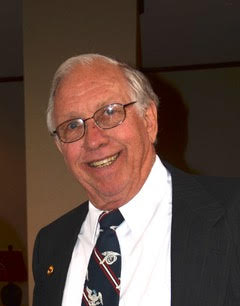
Woodrow: My name has been distinctive since I was young. Before my playmates knew who Woodrow Wilson had been, they knew who Woody Woodpecker was. I heard versions of Woody's famous laugh from all my friends.
As I got older, reactions to my name ranged from "Yeah, right" to "Any relation to the president?" "I thought you were dead" was a regular.
I worried about the first impression my name might make in a police interview. I hated driving over the Woodrow Wilson Bridge in DC. A fender bender could result in a ride downtown for a smart mouth.
Often, people—like you, Norm—think I must be some kind of a joke. The original Woodrow Wilson was president of Princeton before he was president of the country. When I applied to go to Princeton, I visited the university to prove I wasn't a prank. Several national labs have looked askance at a visitor request for someone with that name.
I'm having much less fun with my name these days. The younger generation isn't studying history. Most of them have never heard of President Wilson. Every once in a while, I'm greeted by someone with a gleam in his or her eye. "Oh, I went to your high school."
Norm: What do you consider to be your greatest success (or successes) so far in your various careers?
Woodrow: Norm, my greatest successes have been in the relationships I've built with people I've worked with. Technical teams I've supported have solved challenging problems in medicine, science, and engineering. Along the way we have generated new businesses and new business areas.
Toastmaster teams I've supported have trained thousands in communication and leadership.
Through it all, it's the team members who have made it all happen. I'm managed to remain close to many of these people—including people I hired over forty years ago. I've mentored these people and now enjoy watching them flourish. These are more than facebook friendships. I've been to their weddings and to their funerals. We still share meals together from once or twice a year. Sometimes I cook, sometimes they do. Our on-going rivalry over who makes the better Chicken Marsala has produced more than its share of collateral pleasure.
Norm: What has been your greatest challenge (professionally) that you’ve overcome in getting to where you’re at today?
Woodrow: I guess my greatest challenge has been the mechanics of language. I graduated a functional illiterate. No one had taught me anything about the mechanics of the English language since sixth grade.
All my so-called English teachers had been wannabe literary critics. Each one knew more about what an author was trying to say than the author did—and it always fit with his or her pet peeve. Parrot that opinion and pass the course with flying colors.
Things like grammar, punctuation, and spelling were for lesser mortals to teach.
I knew I'd have to fix that if I wanted to communicate my ideas. I spent evenings studying grammar books and writing spelling lists—over and over. After a year or two, secretaries starting asking me how to spell words. I'm smarter than autocorrect today. Thanks to spellcheck, my writing often says what I meant it to say. Grammar checking apps and my read-and-critique group polish the rest.
Norm: What do you think is the future of reading/writing?
Woodrow: My grandsons read and write above grade level, but they are not yet crippled by phones. I worry about their contemporaries. Text messages have them addicted to acronyms and text-bites. How many will read articles or books? Who will write them … and in what language? Yesterday I overheard a woman talking to her friend. She used the word "like" five times in one sentence. Five "likes," a couple of "basicallys," and zero content. OMG, is it 1984 already?
Norm: How did you get started in writing? Why do you write? Do you have a theme, message, or goal for your books?
Woodrow: All those English teachers from long ago convinced me my writing must have a theme, even if I don't know what it is. I write for recreation, but I'm sure my biases shine through.
I wrote fiction and nonfiction in high school. I had stories buzzing around in my head, and aspirations for a science career. That was long before I taught myself how to write. I wrote nonfiction in school. My English was passable. My FORTRAN was superb. Nonfiction was the mainstay of my working life. Intelligible technical proposals and research reports contributed to a successful research career.
I found time to return to fiction writing. I thought one of my pieces was good enough to be published, so I queried a publisher. He bought it. His business failed before publication. Dozens more queries proved that initial success was a fluke. I kept writing because I enjoyed it.
Norm: What do you think most characterizes your writing?
Woodrow: They say, "Write what you know." The world I know is the world of science, so that's what I write about. I've visited some fascinating niches in the world of science, so my novels take my readers to interesting places.
We've been to outer space, to research labs, and under the ocean.
My interests are eclectic, and my nonfiction shows it. My Mad Scientist eZine presents a range of science topics for the general public. The last few weeks' topics have included organ transplants, the moon, Mars, and the atmosphere. My Food for Thought eZine offers recipes for affordable healthy eating. It follows the mantra of my cookbooks that cooking should be as much fun as eating.
Norm: What advice can you give aspiring writers that you wished you had received, or that you wished you would have listened to?
Woodrow: I guess I'd have to paraphrase the old musician's joke about how to get to Carnegie Hall: practice, practice, practice. Keep on writing. Your next piece will be your best ever.
Norm: I noticed you have written three cookbooks. When and how did you become interesting in cooking and what motivated you to write cookbooks? As a follow up, what makes a good cookbook?
Woodrow: I started cooking in college. Three of us shared an apartment: a gourmet cook, an okay cook, and me. I had to hold my end up. Things escalated when I got to graduate school. My cooking companions there were a Belgian whose hobby was French cooking and a Turk who had worked his way through undergraduate school as a chef in a Benihana.
I had to up my game. We shared some great meals despite our starving student budgets. When I got married, I did the cooking when we had guests. When my mother-in-law started asking me for recipes, I knew I had something good. I continued developing recipes for years.
I started my first cookbook after a divorce. The first draft of Champagne Brunch: What to Do when You're over Forty and She's Still There in the Morning was going great. Then my research assistant gained thirty-five pounds and stopped visiting me. Soon after that, the floppy disc with the only copy was lost in a head crash. I promised myself I'd get back to that project someday.
Years went by. One day, I was faced with an advanced Toastmasters project to give a report. I was retired; what would I report on? "How about that cookbook I'm going to write someday?"
I researched cookbooks and determined they needed a focus, a theme and a title. I had none of those. What I had was a database of recipes. I reported I was a million miles from a cookbook. Fellow Toastmasters told me about modern publishing technology and encouraged me. I sat down and spent six months assembling forty years of recipes into my first book. The theme was cooking well ought to be as much fun as eating well. The focus was on delicious economical meals—like the ones that had made dating affordable during my bachelor days. Google and Amazon told me no one was using my working title, so I kept it. The Champagne Taste/Beer Budget Cookbook. My publisher loved the book and we were off.
Norm: Which came first for you, an interest in science fiction or one in science?
Woodrow: Sputnik inflamed my interest in science. I was educated to help win the space race. It was the patriotic thing to do. I continued working in science long after the race was won. My interest in science came first. The science I encountered fuelled my imagination. Science infuses the stories I write, but my characters make them happen. (Not all of us nerds are two-dimensional.) Most of what I've written would stand on its own without the science plot.
Norm: Do you write
more by logic or intuition, or some combination of the two. Please
summarize your writing process.
Woodrow: I've never really thought about it, Norm. I guess I write by intuition. Sometimes, I come up with an ending and create a plot to get there. Other times, I have a plot idea and figure out a logical ending. Either way, I work the whole thing out in my head before sitting down to write.
The first draft is straight through with frequent excursions back to fix misdirections. Subsequent drafts improve consistency and focus. Long walks work the hard parts out. My dog and I dedicated two weeks walking on the beach for the opening paragraph of my novel Fish Story.
Norm: What are your thoughts as to why people read science fiction or for that matter any kind of fiction?
Woodrow: People read fiction for entertainment. Many people read to be transported to somewhere or sometime they have never been. Science fiction and historical fiction are two genres that promise that experience.
Norm: What sort of goals should the beginning science fiction writer have in mind when crafting a science fiction novel?
Woodrow: There are a thousand different directions a new science fiction writer might pursue. I tend not to read most of them. No matter what you're writing, consistency is key. If the protagonist's sword has magical powers in chapter 1, it should still work for the antagonist when he steals it in chapter 9—or explain why not.
In the hard science fiction area, there are no mystical forces or other miracles. This is an area read by actual scientists. One physical impossibility can be enough to turn them off. Authors working in this genre show check their facts. Some well-plotted books have been ruined for me by dumb technical errors. Don't guess. Don't assume. If you don't know, look it up.
Norm: Could you briefly tell us about Stranded on Mars, Fish Story, Dead Astronauts, and The Utah Flu?
Woodrow: Thank you for this opportunity, Norm.
Stranded on Mars was inspired by the luck of the Apollo program. All the Apollo missions went to the moon with no Plan B. There was no rescue rocket siting on the launch pad waiting to bail the astronauts out. Apollo 13 had an accident on its way to the moon. With a lot of luck and some heroic engineering, the astronauts were saved. A mission to Mars will proceed with no Plan B. The launch window for a rescue mission would be two years away. The novel tracks the crew's efforts to survive, and NASA engineers' efforts to save them. When their ride home fails.
Fish Story is a role reversal tale of people kept by dolphins in an undersea city. The protagonist humans are abducted in the Bermuda Triangle. They are convicted of senseless cruelty for wanton slaughter of a pod of dolphins. They are sentenced to life on display in a dolphin zoo. Humans are pets, lab animals, and curiosities in the dolphin world.
Dead Astronauts arose from thinking about interstellar distances. How long would it take to reach the nearest star? If Moses had launched the Lost Tribe of Israel in its direction at Apollo speeds, they'd still have eighty thousand years to go. Even at a hundred times that fast, it will take almost a thousand years. What if someone from there tried to reach us that way? A lot can go wrong on a journey of a thousand years. Dead Astronauts explores a probe from alpha centuri that arrives after its crew has died in transit.
The Utah Flu is a medical mystery tracking the source of an epidemic that springs up near the old US biological warfare facilities. The Army Institute of Biological Defense says it isn't anthrax, and if it is, it isn't the Army's. (All US biological warfare research today is for medical protection.) An Army physician and an epidemiologist from the Centers for Disease Control and Prevention team up to track the disease spreading across the country. The computer geek falls for the beautiful doctor along the way.
Norm: Which one of them has been the most difficult to write? Please explain.
Woodrow: They're all hard, Norm. I put a lot into Stranded on Mars. We've all heard the advice to throw away the first three chapters. I did that in spades for Stranded on Mars.
The novel begins when the Mars return rocket fails. The crew has been together for years by that time. They trained for the mission as a team. They flew eight months to Mars in a claustrophobic capsule with little privacy. They lived and worked together in cramped quarters and competed for limited resources. Things are strained even before their return flight is aborted. I sketched out a prequel to get to know the crew and to develop their relationships before writing the novel. I've thought about fleshing the prequel into a novella, but it would turn out to be a soap opera.
Norm: Where can our readers find out more about you and your work?
Woodrow: MY WEBSTIE. It has more information about me. It includes details
about my books and links to excerpts. It also links to my eZines Mad
Scientist and Food for Thought
Norm: What is next for Woodrow Wilson?
Woodrow: There's no time as busy as retirement for a workaholic. I'm involved in a couple of Caltech Alumni events. I hope to find new ways to promote STEM programs to inspire the next generations of scientists and engineers. I research to support my weekly columns. Literature searches and simple math models support my science column. New recipes develop in my test kitchen. Only the best get published.
I squeeze all that and Toastmasters in between contract writing whenever it's needed. I'm toying with plots for my next novel. I have some unique science scenarios but no plots yet. I have the perfect murder, and am working on how to solve the crime.
Norm: Thank you so much for taking the time to answer my questions. It's been an absolute pleasure to meet with you and read your work. Good luck with all of your novels