
- Home
- AUTHOR INTERVIEWS- CHECK THEM OUT
- A Conversation With Author, Television Writer and Producer, Douglas Lieblein
A Conversation With Author, Television Writer and Producer, Douglas Lieblein
- By Norm Goldman
- Published June 3, 2014
- AUTHOR INTERVIEWS- CHECK THEM OUT

 Norm Goldman
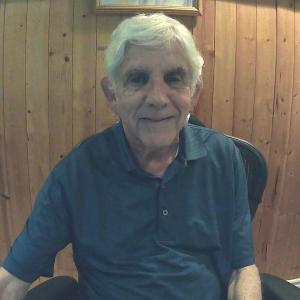
Reviewer & Author Interviewer, Norm Goldman. Norm is the Publisher & Editor of Bookpleasures.com.
He has been reviewing books for the past twenty years after retiring from the legal profession.
To read more about Norm Follow Here


Bookpleasures.com is
excited to have as our guest today, Author, Television Writer and
Producer, Douglas Lieblein. For nearly twenty-years Douglas has been
writing and producing half-hour television comedy. His credits
include Hannah Montana, Life With Boys and various other projects for
both Nickelodeon and The Disney Channel. He is a multiple Teen Choice
Award winner and a four-time Emmy nominee, although in his bio he
refers to himself a being a four-time Emmy loser
Douglas has recently authored his first novel, Flight of the Akero:The Book of Milo.
Norm:
Good day Douglas and
thanks for participating in our interview. How did you get
started in writing? What keeps you going?
Douglas:
I
started writing as a fluke. As an undergrad Theater major, and
an admitted control freak, I was drawn to directing. I enjoyed
my time as a director, but it was ultimately unsatisfying. As
a director, I was bound to the playwright’s vision. It was an
interpretive art form with very little raw creation. To satiate
my need to create, I started writing plays for myself to direct. And
by the time I graduated, I had been bitten by the bug. No
matter how much I wanted to direct, the blank page called. And
I’ve been answering that call, in a variety of different forms,
ever since. Through grad school, a career in television, and now as a
novelist, I have been lucky enough to pay the bills while feeding my
desire to entertain.
What keeps me going? I don’t
think I have a choice. If you are ever blessed enough to find
your calling in life, and then you can fool someone into paying you
to do it, you never stop. Why would you?
Norm:
Was there anything you
found particularly challenging writing television episodes as well as
writing your novel, Flight of the Akero: The Book of
Milo?
Douglas:
Writing is always challenging for
me. No matter the form or format, writing is always difficult.
It is also, always satisfying. When I first started this
long strange trip, I was reminded of a writer’s adage that is as
true today as it was the day I heard it, “I hate writing. I
love to have written.”
The two mediums, however, provide a
variety of unique challenges. As a television writer, you deal
with hundreds of ancillary concerns that shape your storytelling; the
network's directives, the studio’s financial concerns, the actor’s
limitations, hard deadlines, inflexible formats, and on and on.
Whereas the novelist deals with the most difficult challenge of
all, infinite freedom.
Norm:
How has your
environment/upbringing colored your writing?
Douglas:
I
have always believed that a good writer writes what they know. All
great works, be they non-fiction or fantasy, are somehow products of
their writer’s real life experiences. As for myself, every
episode of television, every piece of prose, is a written expression
of my life’s adventures. There are episodes of Hannah Montana
that are literal retellings of my childhood stories, just as there
are moments in Flight of The Akero that are allegories examining
specific emotional journeys I’ve taken throughout my life.
Specifically regarding Flight, I wrote the book for my kids.
The story was born from my life with them, as their father and
their friend. They were my audience and my inspiration. And
without that experience, there would be nothing but a blank
page.
Norm:
Do you have a specific
writing style?
Douglas:
Yes. I let it happen. I
don’t think or judge or obsess. I just write. And
sometimes, if I’m lucky, what comes out isn’t total crap.
Norm:
Flight of the
Akero: The Book of Milo is your first novel. How did you decide you
were ready to write the book and how has the process being different
than writing for television? Which do you prefer?
Douglas:
Why
did I decide to write a novel? The short answer: I had never
taken a proper selfie.
The long answer: Writing for television
is a collaborative art. Hundreds of heads and thousands of opinions
help shape every moment on screen. Actors voices, budgetary
limitations, network directives, studio concerns, they all get poured
into the meat grinder before the “writer” can crank out their
draft. And although this community effort often results in a more
polished, more universally palatable, more successful and far more
lucrative work, it almost always produces a far different work than
the “writer" had originally intended.
A painter, on the
other hand, paints. And if you like it, you buy it. If you don’t,
you smile politely, whisper a snide comment to your friends and move
on. The audience tells the painter if the work is worthy. The
audience gives the notes. There is no middle man, no veil between
painter and patron. No safety net between artist and audience. For
better or worse, the painter is alone. He stands naked, stoned and
stabbed. (And calls it a bargain. The best he's ever had.) The
painter’s work, no matter the subject, is always a self-portrait, a
pure depiction of their inner expression.
Why did I decide to
write a novel? Simple. I had never taken a proper selfie.
When
did I know I was ready to write a novel? I didn’t. I still
don’t. If I would have waited until I thought I was ready, I
would never have done it.
Which process do I prefer? That’s
Sophie’s choice. They are both horrible and wonderful, both
amazingly satisfying and insanely frustrating. With either one
it’s the same… “I hate to write. I love to have
written.”
Norm:
Could you tell our
audience a little about the novel? As a follow up, was writing your
novel improvisational or did you have a set plan?
Douglas:
Flight
of The Akero is the story of lonely and disconnected twelve year-old
Milo Wolfe. As Milo is ripped from his isolated life and forced
to embark on an unexpected journey to find a father he’s never met,
the pre-teen with bedraggled black hair and dark sunken eyes learns
that nothing in his world is as it appears. And no one can be
trusted, not the dead Russian wizard who dominates his dreams, not
the mysterious green-eyed teen who seems to be stalking him, not even
himself.
Flight is an unorthodox adventure full of
head-spinning surprises (I hope) in which Milo journeys half-way
across the world, ultimately uncovering the answers he seeks in a
dank laboratory hidden in the basement of an abandoned Cuban church.
There he not only discovers his true identity, but also unveils
a shocking truth regarding humanity’s symbiotic relationship with
myth and the supernatural. This discovery drives him into an
even larger adventure where he ultimately, and most importantly,
finds the connections that his isolated life was lacking.
And,
yes, I had a plan. Sometimes when I write, I know the beginning of a
story, but I’m not sure where I want it to go. In the case of
Flight, I knew exactly where I wanted it to go, I just didn’t know
how I was going to get there. The fun was in letting the
journey be my guide, letting the characters tell me how I was going
to get to the ending I had in my mind.
Norm:
Who is your intended
audience for Flight of the Akero: The Book of Milo? As a follow up,
what purpose do you believe your story serves and what matters to you
about the story?
Douglas:
Flight of The Akero is
for everyone. It was originally conceived as a teen fantasy,
primarily geared towards boys, but when it was released it quickly
captivated a far wider audience. Everyone, from teen boys and
girls to adults of all ages, seems to embrace Milo and his desire to
find a connection to the outside world. I think that most
people gravitate toward Milo’s emotional journey and empathize with
him, because at one point in most people’s life, they’ve been
him. In addition, I’ve found that most folks appreciate
Flight’s unique view on history and Man’s place in the eternal
timeline.
As far as the book’s purpose, ultimately, I hope
it entertains. But I also hope that the story’s bold
questioning of reality will give readers a safe space in which to
question their own “realities”. We are all products of our
conventions. Flight strips clean those conventions and forces
the reader to rethink everything they have ever known to be true.
And in my humble opinion, nothing bad has ever come from
questioning the norm.
Norm:
What was one of the
most surprising things you learned in writing your
novel?
Douglas:
That Fritz Coleman spends a whole
lot of time in the Starbucks next to Bob’s Big Boy.
Norm:
What would you like to
say to writers who are reading this interview and wondering if they
can keep creating, if they are good enough, if their voices and
visions matter enough to share?
Douglas:
I would
tell them what I tell all aspiring writers, just keep writing and
never give up. The one thing all successful writers have in
common is that they never gave up. Plus, the more you write,
the better you will get. And stop judging yourself. Even
the best writers write crap most of the time.
Norm:
How can readers find
out more about you and your endeavors?
Douglas:
People
can follow me on MY WEBSITE
or on TWITTER or on FACEBOOK at
or they can visit my vaguely incomplete and curiously inaccurate IMDB PAGE
or they can just go to Hugo's in Studio City. I’m usually there for
breakfast.
Norm:
What is next for
Douglas Lieblein?
Douglas:
I am currently working
on the sequel to Flight of the Akero as well as writing and
Co-Executive Producing a new show for Nickelodeon called Nicky,
Ricky, Dicky and Dawn.
Norm:
As this interview draws
to a close what one question would you have liked me to ask you?
Please share your answer.
Douglas:
I am often asked
what someone can do to become a better writer. And although
continuing to write is a solid answer, I think the most productive
answer is to live life. Have experiences. Risk, venture,
feel. Yes, good readers make the best writers. True,
television watchers make the best television writers. But if
you don’t have a life to draw from, it doesn’t matter how much
you’ve read or watched, when the blank page calls, your well will
be dry. Get out. Shut down your computer, turn off your
television, close your book, and walk out the front door.
Norm:
Thanks once again and
good luck with all of your future endeavors
Follow Here To Purchase Flight of the Akero: The Book of Milo