
- Home
- AUTHOR INTERVIEWS- CHECK THEM OUT
- A Conversation with Michael Kasenow author of The Last Paradise
A Conversation with Michael Kasenow author of The Last Paradise
- By Norm Goldman
- Published March 6, 2009
- AUTHOR INTERVIEWS- CHECK THEM OUT

 Norm Goldman
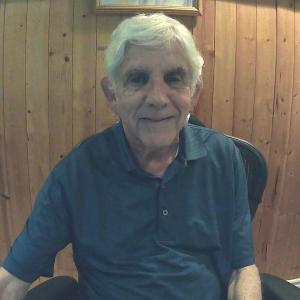
Reviewer & Author Interviewer, Norm Goldman. Norm is the Publisher & Editor of Bookpleasures.com.
He has been reviewing books for the past twenty years after retiring from the legal profession.
To read more about Norm Follow Here
Today, Norm Goldman Publisher & Editor of Bookpleasures.com is pleased to have as our guest, Michael Kasenow author of The Last Paradise. In addition to being a novelist, Michael is also a poet, scientist and currently a geology professor at Eastern Michigan University, where he teaches Environmental Science. He is the author of fourteen environmental science books that have been published internationally.
Good day Michael and thanks for participating in our interview.
Norm:
How did you decide you were ready to write The Last Paradise? As a follow up, what do you want your novel to do? Provoke thinking? Entertain?
Michael:
The confidence materialized. It comes with experience. I’ve written other stories and have learned from each attempt. The efficiency of language, characterization, it all fell into place. For the most part, when I wrote the novel—daily, it was an easy transition to move from my head onto the page. I stage each scene in my mind’s eye and then put it down. So it was easy, once I got going.
I want my novel to entertain and provoke thought—do both. All good stories should do that, the classics do. The reader should be taken into a different environment—time and place—entertained by conflicts, and the growth or tragedy of the characters. I don’t want to preach, but I do want the reader to think about situations; to reflect about consequences; to have a stake in the outcome of a character. To ask questions. Maxwell Hayes, the protagonist, does much that’s against the law—but is he right or wrong? When does law become evil? When should the law be ignored? Socrates asked those questions. But the story comes first and foremost. The reader must have a reason to turn the page.
Norm:
Where did you get your information and ideas for The Last Paradise? How much research did you do?
Michael:
As a geologist, I’ve taught about the tragedy of the Great 1900 Galveston Hurricane for some time now. That’s where I first became interested in the story—in the college classroom. The more I learned, the more I was intrigued. Eight thousand people died in that storm—the greatest natural disaster in US history. However, almost every book I read talked about the tragedy in terms of the middle and upper classes, yet, it was the poor that suffered the most. They always do. So I started to learn about the poor, where they lived, how they handled their existence in the third richest city in the US—at that time. Then it dawned on me that 1900 was knee deep in the age of Jim Crow—in the south—suddenly the storm became secondary—a metaphor—I focused in on the existence of the poor whites and blacks and how they survived during that oppression. The story is about these people, their hopes and dreams—their faith in a better future.
I did plenty of research. I’ve at least a dozen books about Galveston, its history, the Great Hurricane, on my book shelf—books written around 1900. A lot of the stories are redundant, some of it with obvious prejudice. You have to filter through that stuff. For example, some of the books discuss the looting after the storm and blame it on the blacks. Further research dispels that myth. The same thing happened during the Katrina Hurricane. And then there’s the web, you can Google or Yahoo many sites that carry the history of the hurricane, the Jim Crow south, and confirm facts. There are modern books with a better eye. Patricia Bixel and Elizabeth Turner have written a fine history, Galveston and the 1900 Storm. And Ellen Beasely, an historic preservationist, has written The Alleys and Back Buildings of Galveston. Both of these are excellent. Then there’s the architecture, the clothing—fashion, culture, style, pistols. These come from books I’ve collected. But you have to be careful as a writer. You don’t want to stuff the reader with history—you want to transplant them to a different time and place with different rules. But that’s the fun, the learning, the research—balancing the need of the story.
Norm:
Was your work improvisational or did you have a set plan?
Michael:
I did begin with an outline, chapter by chapter, but the outline is a guide, not a road map. As the characters developed, and their personalities evolved, the outline took detours, some of the characters played bigger roles, became more important, but I ended at the destination I was seeking.
Norm:
You include some very detailed dialogues in the book. Where did this dialogue come from?
Michael:
The dialogue comes from knowing the characters as well as I know myself. That comes with the evolving story. Before I write I paint the scene and write the dialogue in my head. It comes from the people I’ve known in my life and my travels, the work I’ve done, bartender, rancher, cab driver… I’m a good listener; I’d rather listen than talk. That’s how you get to know personalities. The dialogue comes easy, really, once I get going. I never have writer’s block, because I won’t sit down at the word processor until the scene is complete in my head. Sometimes I rest on the couch and dream; sometimes I bike ride in the country; but the story that’s inside of me finds a way out.
Norm:
Did you initially have a difficult time fleshing out your characters? As a follow up, how did you go about crafting the characters of Maxwell Hayes and his friend Newt Haskins?
Michael:
Maxwell and Newt came easy. There’s probably some bits of me in each. I understand their need to seek independence in a world that respects conformity. Today, at the beginning of the 21st Century, there’s little difference—just the technology. Most of us are trying to find our way in the changing landscape, especially with the economy collapsing. The storm we have to cut through is an economic storm, but it is still destructive, ruining families, killing people in different ways. There’s still bigotry, racism, sexism. The novel speaks to Americans today—in some ways it is about today—just set in 1900. I never tired of Maxwell and Newt, because they are good people, interesting, unpredictable, just lost and living outside the law—governmental laws, cultural rules—but not moral laws. They have their faults, and their methods are debatable in regard to outcomes, but they mean well, and at least from my point of view, they do the right things.
Norm:
It is said that if you want to write a good story or novel you need to create struggles of powerful descriptive individuals and not just issues. Through their accomplishments and travail, we very much comprehend the issues? Do you agree with this and how is it applicable to The Last Paradise?
Michael:
As I said earlier, the reader has to become a stakeholder in the characters. The reader has to care. Or why read on? And to do this, the writer has to develop powerful characters—powerful in their strengths, but also in their weaknesses, or they won’t be believable. This often leads to tragedy—either from controls in the environment or the carelessness of the character. It often comes down to a choice, which is what we all have to face in our lives. Maxwell is strong in regard to his insight and undisciplined morality. He’s old and wise enough to use his experience. His weakness comes from his cynical outlook in life, a broken past that he can’t get rid of. He’s a loner. Newt hides inside a bottle, hiding from a future that never happened, and he is seeking a purpose, one with meaning, a reason for going on. Isn’t that what most of us are doing? Boss Connor is powerful because of his wealth, but his weakness is greed and his need to control—that of course spawns evil and evil intent. Bishop and Elma believe in the American dream. They have faith and hope in a better future. They are good people, as is Fanny, who also seeks the same dream. Their weaknesses are cultural. Bishop and Elma are blacks living knee deep in the age of Jim Crow. Fanny is a prostitute, who only wants the best for her son, but sexism hampers her course in life. Jenny Connor is a pretty woman, and that is her strength, the beauty that she uses, but her beauty is a veneer, artificial. Her weakness is the need to seek wealth, at any cost, including the welfare of her daughter, Sara.
Norm:
What has your experience been like with self-publishing? Do you
recommend it over traditional publishers?
Michael:
I have a traditional publisher in regard to my science books, and I have a great relationship with Water Resources Publications. I write the books, they do all the publishing and promotion. So it’s an easy way for me. In regard to my literature, I have to do everything, the writing, promotion and selling. The promotion and selling, that takes time, it’s fun, but it takes time. It’s very difficult to break into the traditional literature market. Traditional publishers need to make a profit and agents need to pay their bills—so they’re adverse to taking chances on new writers. They follow established trends—and it’s all understandable. But you can’t let that defeat you. If you feel you’ve written a good book, self-publishing is a good alternative. But—you must be your own worst credit. You need to take money out of your pocket for editing and promotion. If no one knows you’re out there, your book won’t get read. I’ve paid for three blind critiques and two copy edits, because I want my book to be as professional as possible. My book has improved because of the critiques and edits. I listen to friends who are serious readers. When a reviewer picks up my book, I want it to be polished. That takes time, money and effort. But there is a joyful independence that comes with self-publishing. I am responsible for the decisions, but they are my decisions. And if I make a mistake, I can always drive down a different road. I am happy with the outcome of The Last Paradise. I’d compare it to anything on the market today. Also, self-publishing is more efficient. I don’t know why it takes traditional publishers two years to print a book, but with self-publishing, after the critiques and edits, you can get your product out there in six months. What every writer needs to know about writing and publishing is this: you are starting a business, and in any business, advertising and promotion, websites, reviews, a good product—it’s all part of being a success.
Norm:
How have you used the Internet to boost your writing career and will there be any unique ways you'll be marketing your book that is different from how others authors market their books?
Michael:
Norm, I’m new at this, so I’m learning. The new paradigm is independent publishing. We’re all trying to learn how to do this—even the traditional publishers. There are 500,000 books published every year in the U.S. So how do you get your book read? How do you go beyond reader’s fatigue? A good cover is nice, but there are 500,000 good covers printed every year. So I’m learning and keeping a record of what works, avoiding scam artists. There are great sites on the web, like yours, Reader Views, Rebecca’s Reads, Author Buzz, Author Nation, The Polka Dot Banner … Places where readers and writers meet. So those are good places to visit, to advertise. There are more literary awards for self-publishing and small presses when compared to traditional publishing. I’m entering my book where it’s appropriate. One prominent award can increase the reputation of a book. Sites for book reviews are being established. Web companies can do mass e-mailings (but avoid the spam companies). E-zines, like ForeWord and Kirkus Discoveries and your site, and those listed above, are extremely helpful. I do my best to look into the history of a site, its reputation, but once I’m comfortable, I go for it. I plan on doing a blog tour in the near future. I have a nice free gift shop on my website to induce visits. You don’t have to buy the book, just come and visit, poke around—download free stuff, free e-books. Read what I’ve written.
Norm:
How can our readers find out more about you and The Last Paradise?
Michael:
My website is michaelkasenow.com. My bio is listed there and so is a small portion of The Last Paradise, a peek into Chapter 1. Again, a visitor can download a free environmental e-book and a free poetry e-book; a free poster and art and other good stuff. It’s harmless and an easy site to navigate through. A synopsis of the novel is on the home page. It’s a comfortable place to learn about my writings. I can even be emailed from this site.
Norm:
Is there anything else you wish to add that we have not covered and what is next for Michael Kasenow?
Michael:
I’m currently writing an intelligent ghost story that takes place in New Brunswick, another exotic location. I spent a few weeks there a couple of summers ago and fell in love with the region. I like taking the reader to new places and by doing so, I go there too—a sense of place and time.
Thanks once again and good luck with The Last Paradise.
CLICK HERE TO READ NORM'S REVIEW OF THE LAST PARADISE
