
- Home
- AUTHOR INTERVIEWS- CHECK THEM OUT
- Meet Otis V. Goodwin III, author of Site 39, Blue Orb and Ethan-Site 39
Meet Otis V. Goodwin III, author of Site 39, Blue Orb and Ethan-Site 39
- By Norm Goldman
- Published November 6, 2009
- AUTHOR INTERVIEWS- CHECK THEM OUT

 Norm Goldman
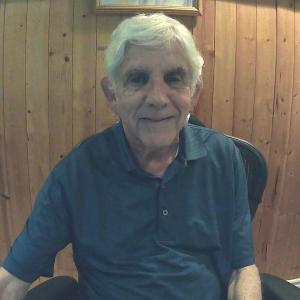
Reviewer & Author Interviewer, Norm Goldman. Norm is the Publisher & Editor of Bookpleasures.com.
He has been reviewing books for the past twenty years after retiring from the legal profession.
To read more about Norm Follow Here
Click Here To Purchase Site 39: Blue Orb
Click Here To Purchase Ethan: Site 39

Today, Norm Goldman Publisher & Editor of Bookpleasures.com is pleased to have as our guest Otis V. Goodwin III, author of Site 39, Blue Orb and Ethan-Site 39.
Good day Otis and thanks for participating in our interview.
Norm:
How did you get started in writing? What keeps you going?
Otis:
First, thank you for having this interview.
I think there has always been a tiny desire to say something meaningful through writing in my makeup. After attempting a short story in 1956 that did not turn out well, and another shot at writing in about 1982, I finally decided to get serious about writing in 2005. That time, I stayed focused and set out a story timeline and sequence that appealed to me. The result was Ethan- Site 39.
In retirement, though it’s a great life, there is so much to do that I still need to wedge in time to devote to writing and its ancillary requirements. My wife is an extremely important part of my life and always comes first. Our children are grown and scattered around the country. They constantly ask, “When is your next book coming out?” That, plus that tiny desire to say something meaningful keeps me going.
I have a fertile imagination. It is both a curse and a gift. Sometimes my imagination takes me into a story so far that I have difficulty capturing it all. At other times, multiple plots come to mind. Sorting and applying storyline logic is a necessary task.
Motivation arises at the strangest times. Recently, I was kitchen assistant to my wife, during a pork roast recipe “recital.” I recited; she prepared food. My only real task was to cut three 4-inch sections of a large, beautiful fresh leek to go into the roasting pan. I always have trouble killing anything. I started arguing with myself. “Why do we need to kill a leek? Because it’s food, dummy,” I answered. The end of that was that we had a nice pork roast dinner, and I had a new short story entitled. “Alium Johnson, Mother Leek” I sent the story to a short story contest almost immediately. I don’t expect a prize, but honorable mention would be nice.
New ideas keep me going. They crop up without warning, and if I don’t act on them quickly, they “burn out.” I have a bit of short-term memory loss, so I have learned to act on ideas quickly. I fear that if I don’t act on them, the new ideas might stop coming. Then where would I be? (Now there’s an idea for a new story!)
Norm:
Why have you been drawn to science fiction? As a follow up, what, in your opinion, are the most important elements of a good science fiction novel? Does it have a particular form?
Otis:
In 1943-1945, living in Seattle with my parents, the rented house on Capitol Hill had a basement chock full of books. There was a library at my disposal. The ones that appealed most were H. G. Wells and Jules Verne’s books. They certainly qualified as science fiction. I also ran across the “Roy Rockwood” series of sci-fi novels. In today’s terms, the latter seem quite ridiculous, and in some instances, downright racist. However, in that day and time, as a pre-teen, they were enjoyable, and were the foundation of lifelong enjoyment of good science fiction.
To me a good science fiction novel simply needs plausibility (not fantasy or fairy tales), a central story line, good characterization, a few surprises and good science. I read all I can find about latest discoveries in physics, astronomy, cosmology, chemistry and biology that may need to come into play in my writing. However, most of that is simply to give the characters a good ride through the story. I avoid graphic portrayals of sex and unnecessary violence; I think those things can detract from a good story.
I don’t consciously adhere to a particular form. My characters develop themselves and individual novels generally follow a logical progression that arises from the actions of the characters. It seems that each of my novels is a single piece of an evolving mosaic that I may have difficulty completing.
Norm:
Is your work improvisational or do you have a set plan?
Otis:
My short stories are improvisational. I will write about whatever strikes me. Once I wrote a short story about a small southern town where a hobo lost a shoe jumping on a moving freight train. The local kids saw it happen and ran to see if the hobo’s foot was still in the shoe.
So far, my novels follow a “from before creation-to-the end of everything” time line. My characters usually encounter surprises from someone or something rooted in a distant past, or even a past or separate universe.
Norm:
How has your environment/upbringing colored your writing?
Otis:
I was lucky to have the wonderful parents that brought me into the world. They always encouraged learning new things and stretching my mind. I was so interested in a variety of things, that I chose many college courses not directly on course to a degree. My AA came almost by accident. After learning I had almost met the elective requisites for graduation, I “challenged” four aeronautics courses, took all their exams and passed them. That sped up the process a bit toward the BA. My career overlapped my college attendance by 20 years. It started with three years as a bank teller, shifted to government employment as a buyer of electrical and electronic components, then advancement into contracting for missiles and rockets, with side trips to marine propulsion systems. Ultimately, I landed in military space programs where I settled until retirement.
Has this environment colored my writing? You bet it has.
Norm:
What would you say is your interesting writing quirk?
Otis:
My brain seems to “pop” story ideas into existence, like a new universe expanding out of a void. I suppose the sum of my experiences is always swirling around like a CD in a computer and something happens that triggers escape of a rational thought from the mental jumble into logical thought. I need to react quickly, or the thought is gone.
In addition, I let my characters drive most of the story in the basic setting I provide for them. Sometimes they “write themselves” into a corner. I wait for them to figure out how to escape their dilemma, but sometimes I need to help them a bit.
Norm:
Could you briefly tell our readers something about your Site 39 novels?
Otis:
Sure. One day, I started a novel that I planned as a futuristic “Tom Sawyer-Huckleberry Finn-Becky Thatcher sort of thing. Before I finished the first chapter, the character was sitting at a table in a farmhouse kitchen, thinking about his parents in an orbiting starship, tomorrow’s plowing task and drinking something like coffee many thousands of years in the future. He eventually did find a cave that was Site 39 and with his girl friend (and others) explored it. At that point, all semblance of a Mark Twain story vanished. The characters took over the story and guided my hands on the keyboard. The adventures they experience are realistic and, believe it or not, they discover a hidden civilization and a computer that has been repairing itself and growing for a very long time.
They discover, in the second novel, that an earth-shattering tragedy of 5,000 years ago was not a chance asteroid encounter, but was the result of a malevolent act. The pending third novel deals with the Earth’s only moon colony at the time of the same disaster on Earth, and their attempts to survive with no assistance from Earth. The pending fourth novel centers on children of the first novel’s characters.
Norm:
Do you have a secret or formula in keeping the intensity of the plots throughout your narratives?
Otis:
I like to start small, and then build several threads of activity that blossom into some kind of action at unexpected times. It’s not a secret. In the Site 39 Series, most actions center on individuals who don’t know that they are joined by a particular DNA thread. The DNA was implanted by an ancient alien species in some of the first pre-humans to evolve on Earth. The alien DNA implant leads the bearer to choose a mate carrying the same DNA. That thread establishes a continuity of motive and thought between humans bearing that DNA, with the Aliens as they attempt to assure their own survival in a new, strange (to them), and not quite compatible universe. All of the threats, the solutions, the characters and the plot, have a line of continuity novel-to-novel. There is an occasional “flashback” to provide backstory regarding a particular event or situation.
Norm:
What was one of the most surprising things you learned in
creating your books?
Otis:
I learned that I enjoy writing, something that was a drudge in high school, a labor during my career, but is fulfilling now. I also learned that my stream of thought may seem perfectly logical as it pours onto the screen, but in reading sometimes seems jumbled and flawed. The amount of rearrangement of blocks of text in the editing process was daunting at first, but now I accept it as one of my quirks.
Norm:
What do the titles of your books represent and why did you pick these titles?
Otis
I needed a base of operations for kicking off the series, one that could endure earthshaking events. I checked, to the extent I could, to assure the geographical area I chose was geologically stable, not occupied by any real government site, nor was there one I could fine numbered 39. I picked an actual spot, known only to me and my wife, and named it Site 39. Once that was done, I could allow my imagination to run wild and let one of my revolutionary war era York family characters meet a descendant of a Incan goddess there with all sorts of historical things and cosmologically important events to follow. Each book has a connection to Site 39, and will have the location in the title, unless I destroy the Earth in a future story.
I chose the name “Ethan,” for the same reason Mark Twain chose “Tom Sawyer.” I chose “Blue Orb” because a giant blue orb is a principal component of the second novel. The cover depiction of the blue orb is from a digital photo of Abigail’s favorite ball. Abigail, a beloved miniature schnauzer, went to the final puppy farm this year, and her blue ball has an honoured location on the bookshelf with “Site 39, Blue Orb,” the book.
Norm:
Can you tell us how you found representation for your book? Did
you pitch it to an agent, or query publishers who would most likely
publish this type of book? Any rejections? Did you
self-publish?
Otis:
I have no representative. I looked long and hard at the agent/publisher process and found it generally unsuitable for one in my situation. It is unlikely, in my opinion, that the process of finding an agent, satisfying the agent, finding a publisher, satisfying the publisher, etc. would produce results for anyone but my heirs.
I chose the self-publish route. For the first novel, Ethan – Site 39, I chose a very fine print on demand publisher, who made a beautiful book, but I made a mistake. The publisher declined my request to set the retail price in a range with the bulk of sci-fi novels. Thus, sales were less than satisfactory and we both suffered the consequences. I have moved the book to a different publisher with more practical pricing policies. The second novel, Site 39, Blue Orb is a direct sequel to “Ethan” and continues the story line. The third and fourth novels are under construction.
Norm:
Where can our readers find out more about you and your books?
Otis:
Amazon.com has a great listing of Ethan- Site 39. It has several reviews. Site 39, Blue Orb is there too, it is awaiting a review to be posted. Several other web sites have listed the books, including “The Deepening.” I frequently receive Google notices that another outlet, including some overseas, is listing or stocking my books. My own simplistic little website is www.site39series.com. I would be delighted to correspond with readers and invite contact at 2sito@comcast.net.
Norm:
What is next for Otis V. Goodwin III and is there anything else you wish to add that we have not covered?
Otis:
Well, our next puppy was born on October 10th. We can bring it home in early December, a Christmas puppy. It’s a Border Terrier. Other than being a new parent to a puppy, I will continue writing about the characters and adventures connected to Site 39 and a very special DNA thread.
Norm:
Thanks once again and good luck with all of your future endeavors