
- Home
- AUTHOR INTERVIEWS- CHECK THEM OUT
- Meet Interrnational Best-Selling Author Kevin J. Anderson
Meet Interrnational Best-Selling Author Kevin J. Anderson
- By Norm Goldman
- Published September 2, 2009
- AUTHOR INTERVIEWS- CHECK THEM OUT

 Norm Goldman
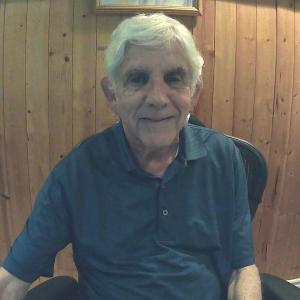
Reviewer & Author Interviewer, Norm Goldman. Norm is the Publisher & Editor of Bookpleasures.com.
He has been reviewing books for the past twenty years after retiring from the legal profession.
To read more about Norm Follow Here
Click Here To Purchase Kevin J. Anderson's Books
Today, Norm Goldman Publisher & Editor of Bookpleasures.com is
honored to have as our guest, Kevin J. Anderson. Kevin J. Anderson is
the award-winning author of more than 100 novels, 48 of which have
appeared on national or international bestseller lists. He has over
20 million books in print in 30 languages. By any measure, he is one
of the most popular writers currently working in the science fiction
genre.
Good day Kevin and thanks for participating in our
interview.
Norm:
What do you think over the years has driven you as a writer? Why have you been drawn to the science fiction genre?
Kevin:
I have always loved telling stories, imagining new worlds, new
adventures.I grew up in a small town in Wisconsin and was drawn to
tales set in exotic places, Fantasy or SF universes. That was
what I was reading in books and comics, that was what I watched on TV
or in the movies. My mind kept coming up with new stories, and
I had to write them down. Fortunately, I can make a living at
it.
Norm:
As a follow up, are there aesthetic
advantages and disadvantages peculiar to this genre? Does it have a
form?
Kevin:
SF or Fantasy has unlimited potential,
vast scope, a wide-open playground of the imagination. But you
can¹t just make everything up -- so much world-building is involved.
In a mainstream story, a writer can start with the modern
world, a familiar city, a set of characters everyone can relate to;
in a science fiction story, a writer must create everything from the
world, the future, the government, the history, the culture, the
language, the biology -- everything. So, you have a lot of
amazing freedom as a storyteller, but there¹s a lot more work
involved.
Norm:
Is your work improvisational or do you have a set plan?
Kevin:
I
always plan and research my novels very meticulously before I begin
writing. I am most comfortable with large-scale epic stories -- such
as my Terra Incognita fantasy series or my Saga of Seven Suns SF
chronicle. A hundred chapters or more, multiple storylines,
many point-of-view characters. To write something like that
without a plan ahead of time would be like building a giant
skyscraper without drawing a blueprint.
Norm:
In
fiction as well as in non-fiction, writers very often take liberties
with their material to tell a good story or make a point. However,
how much is too much?
Kevin:
I try to do my research
thoroughly before I start writing, so I know what the parameters are.
Sure, some ³liberties² are taken for granted in science
fiction‹for instance, writing a galactic empire story practically
requires the use of faster-than-light travel, which is supposed to be
impossible, but without it there wouldn¹t be much of a story. You
need to be consistent in your own universe, follow your own rules,
keep everything straight.
Norm:
What do you see as the
influences on your writing?
Kevin:
I read a lot,
particularly my favorite writers -- Frank Herbert, Larry McMurtry,
James Clavell, Dean Koontz -- as well as nonfiction on various
subjects that are relevant to the novels I¹m working on. I
also love to travel, to hike, to see and experience new things. I do
most of my first-draft writing while I¹m out in the mountains on
trails.
Norm:
Where do you get your information or
ideas for your books?
Kevin:
Ideas are everywhere; you
just have to know how to see them, to view the world (or the news, or
people you meet, or places you visit) from a perspective that makes
you ask ³What if?² and try to fit a story around it. Other kinds of
research depend on the particular story at hand -- I will try to read
books or articles, search the web, maybe talk to other experts in the
field.
Norm:
What was one of the most surprising things
you learned in creating your books?
Kevin:
I started
out writing short stories, and I spent years writing story after
story, and submitting them to magazines. Common wisdom was that
new writers should concentrate on short stories, and I published some
of them. However, it wasn¹t until I began working at novel
length that I really hit my stride. I very much enjoy working at the
500-700 page length, with many plotlines, a broad canvas, room to
explore my ideas and my universe.
Norm:
Do you feel
that writers, regardless of genre owe something to readers, if not,
why not, if so, why and what would that be?
Kevin:
Of
course writers owe the readers -- without an audience, the creator is
nothing. As an author, I am a reader, too. When we
publish a book, we promise something to the audience, and we have to
deliver or the readers won¹t be back. People have so many
entertainment options, I have to convince them that reading a book --
my book -- is a better choice than all of the other
possibilities.
Norm:
Do you have any advice for other
writers of science fiction?
Kevin:
Read a lot,
including outside the genre. Too many SF writers read only SF,
and so they are only creating leftovers. Keep up with politics,
current events, scientific discoveries. Then
write.
Norm:
What are you upcoming projects? Our
readers would love to hear about them.
Kevin:
THE WINDS
OF DUNE was just published, our tenth Dune novel in a row to hit the
New York Times bestseller list. Right now, I am working on my
next fantasy novel in the Terra Incognita series, THE MAP OF ALL
THINGS For the first book in the series, we did an
innovative crossover project, a rock CD that adapted one of the
storylines in the novel, from the supergroup Roswell Six; we¹re just
starting work on a second CD to tie in with the second novel. So,
keeping busy as usually.
Norm:
Where can our readers
find out more about you and your books?
Kevin:
My
website is www.wordfire.com. I¹m on Facebook, and you can
follow me on Twitter as The KJA.
Norm:
Is there
anything else you wish to add that we have not covered?
Kevin:
I
could go on for pages! But I should save my words for the novel
projects.
Thanks for chatting with me.