
- Home
- AUTHOR INTERVIEWS- CHECK THEM OUT
- Meet Nicholas Winer Auther Of The Tethered Goat
Meet Nicholas Winer Auther Of The Tethered Goat
- By Norm Goldman
- Published August 20, 2009
- AUTHOR INTERVIEWS- CHECK THEM OUT

 Norm Goldman
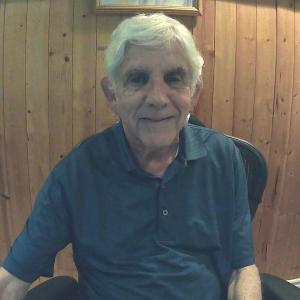
Reviewer & Author Interviewer, Norm Goldman. Norm is the Publisher & Editor of Bookpleasures.com.
He has been reviewing books for the past twenty years after retiring from the legal profession.
To read more about Norm Follow Here
Click Here To Purchase The Tethered Goat
Today, Norm Goldman Publisher & Editor of Bookpleasures.com is pleased to have as our guest, Nicholas Winer author of The Tethered Goat. Nicolas spent twenty years as an aid worker in Africa, and he worked for Oxfam in Ethiopia and Sudan.
Good day Nicolas and thanks for participating in our interview
Norm:
What was the timeline between the time you decided to write
the The Tethered Goat and publication? What were the major
events along the way?
Nicholas:
Somewhere in the region of 4 years I think. There were two enormous events that marked the road. The first was the need to make a living. There just wasn’t time to sit down and pretend to be a professional writer. I had to find quiet moments here and there, often late at night. The second was of course the realization of how little I knew about the craft of writing. As I began to put the first draft together I also began to see how cumbersome and labored it was. It took me 4 drafts in all to get the book to where it is now. It has been a fantastic learning process. It’s probably a truism to say that the perfect book doesn’t exist but having achieved a single book after 4 drafts I’m perhaps more aware of its faults than its merits. Writing is an evolutionary challenge of sorts. Quite where on Darwin’s tree of writing I am I can’t say but I’m enjoying scrambling up through the branches.
Norm:
What motivated you to write the book?
Nicholas:
Hard one. Some of it is just ego of course! The real push came when I was offered a job on the set of a Paramount Studio film called Beyond Borders. It starred Angelina Jolie and Clive Owen and was directed by Martin Campbell. The standard Hollywood big budget thing. The film was loosely, very loosely, based on an aid worker I had known during the Sudan and Ethiopia crisis of the 80s and who was later killed in Chechnya. I was invited to be the Director’s consultant. The Executive producer, Dan Halsted, had actually spent some time in a soup kitchen in India and knew the distance between Hollywood and the sort of lives portrayed in Slumdog millionaire. We talked a lot. He had a dream that a relief worker really could be a success as the star of film. Sadly it wasn’t to be but in the meantime he’d asked me to write a series of vignettes of some of my experiences as a relief worker in a famine stricken war zone because he had dreams of a follow on TV series. It was the start for me.
Norm:
Was The Tethered Goat improvisational or do you have a set plan?
Nicholas:
I had no plan as such but I did have things I wanted to say. At its heart the story is about assumptions. The aid worker and his journalist girlfriend believe they are in control of their destinies while diplomats from Western Embassies believe they can manipulate a civil war to their advantage. Below the surface are ordinary African characters whose quests to survive are the actions that really determine the fate of the assumptions made by the protagonists. The extraordinary struggles of the ordinary are what I wanted to display. The heroics of some, not all, aid workers are nothing compared to the situations that confront those trying to lead normal lives in abnormal situations. Tesfaye, my real hero – the hidden hero, took a long time to come to life as the story evolved and he’s a character to have a love-hate relationship with.
Norm:
How has your education informed your writing?
Nicholas:
Education in the schooling sense was a long time ago. There have been a host of real life educational experiences since that have probably been more informative. Being a child in the 60s in an era of overland travel probably had as much to do with my desire not to sit still and find a safe job in a well paid lawyer’s office as anything else.
Norm:
How much real-life did you put into your book? Is there much “you” in there?
Nicholas:
The first chapter is autobiographical. It’s 90% the way it
happened. I was given my part permit to travel by the Minister
of the Interior in his huge office. Behind his window was
the courtyard from which those living nearby could hear the night
time screams from the torture cells. His office with its
crimson, velvet drapes and soft baroque music was probably the most
surreal moment in 20 years of field work. For his own private reasons
he wanted me to expose one more little crack in the regime. He
knew I’d be arrested and that not much would come of it. By the
time I got back he’d fled Ethiopia and was
safely in Canada.
One more little event in which the real players are those below the surface of the media radar screen and not the valiant aid workers exposing wrong doing. The other key bit was my frustratingly useless attempt to get anyone to take any interest in the appalling torture and abuse of South Sudanese ex fighters at the hands of the Ethiopian security apparatus. Gatwech’s story was one of far too many such stories. The ‘me’ in there is a mixture of course. It’s not me as I thought I was at the time but more how I look back on myself with hindsight.
Norm:
Did you do any additional research when writing your book, aside from your own experiences, journals, records, etc?
Nicholas:
Not much additional at all. I was lucky enough to be asked to go back to Ethiopia in 2004 by Refugees International so I was able to smell and touch some of the streets and scenes again.
Norm:
It is said that writers should write what they know. You
clearly know something about Africa. Were there any elements of
the book that forced you to step out of your comfort zone, and if so,
how did you approach this part of the writing?
Nicholas:
No, I can’t say I stepped outside of any sort f comfort zone. The real world out there is a fascinatingly complex weave of every emotion and action possible. To live alongside that is a privilege.
Norm:
Is there some kind of a message in The Tethered Goat that you want your readers to grasp?
Nicholas:
The idea that we control much of our destiny or make informed decisions is a fallacy we should learn to discard so that we can see how interwoven our lives really are.
Norm:
What would you say is your protagonist Mark’s biggest strength? His greatest weakness?
Nicholas:
I think his, and thus my, biggest strength and weakness was a trusting naiveté.
Norm:
Where can our readers find out more about you and The Tethered Goat?
Nicholas:
I have a small website at www.nicholaswiner.com with links to retailers and some background. My book is searchable on Amazon if anyone wants to read a little of it before deciding whether they want to buy.
Norm:
What is next for Nicholas Winer and is there anything else you wish to add that we have not covered?
Nicholas:
I’m writing a book that brings a Palestinian refugee girl from Gaza into the life of an indolent and rich young Spaniard to weave together a story of immigration and a clash of cultures. The two characters are posted on a website for artists called TailCast (www.tailcast.com). The heroine’s introduction is called ‘Little Wing’ and the Spaniard’s is called ‘Spin Out’. I’d love to know what readers think of my two new characters.
Thanks once again and good luck with all of your future endeavors
Click Here To Read Norm's Review Of The Tethered Goat
Click Here To Purchase The Tethered Goat