- Home
- Biographies & Memoirs
- Walking Into a New Self in London: Rebecca Knuth Talks London Sojourn: Rewriting Life After Retirement
Walking Into a New Self in London: Rebecca Knuth Talks London Sojourn: Rewriting Life After Retirement
- By Norm Goldman
- Published January 28, 2026
- Biographies & Memoirs

 Norm Goldman
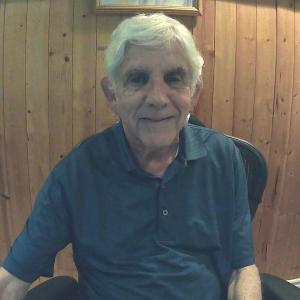
Reviewer & Author Interviewer, Norm Goldman. Norm is the Publisher & Editor of Bookpleasures.com.
He has been reviewing books for the past twenty years after retiring from the legal profession.
To read more about Norm Follow Here
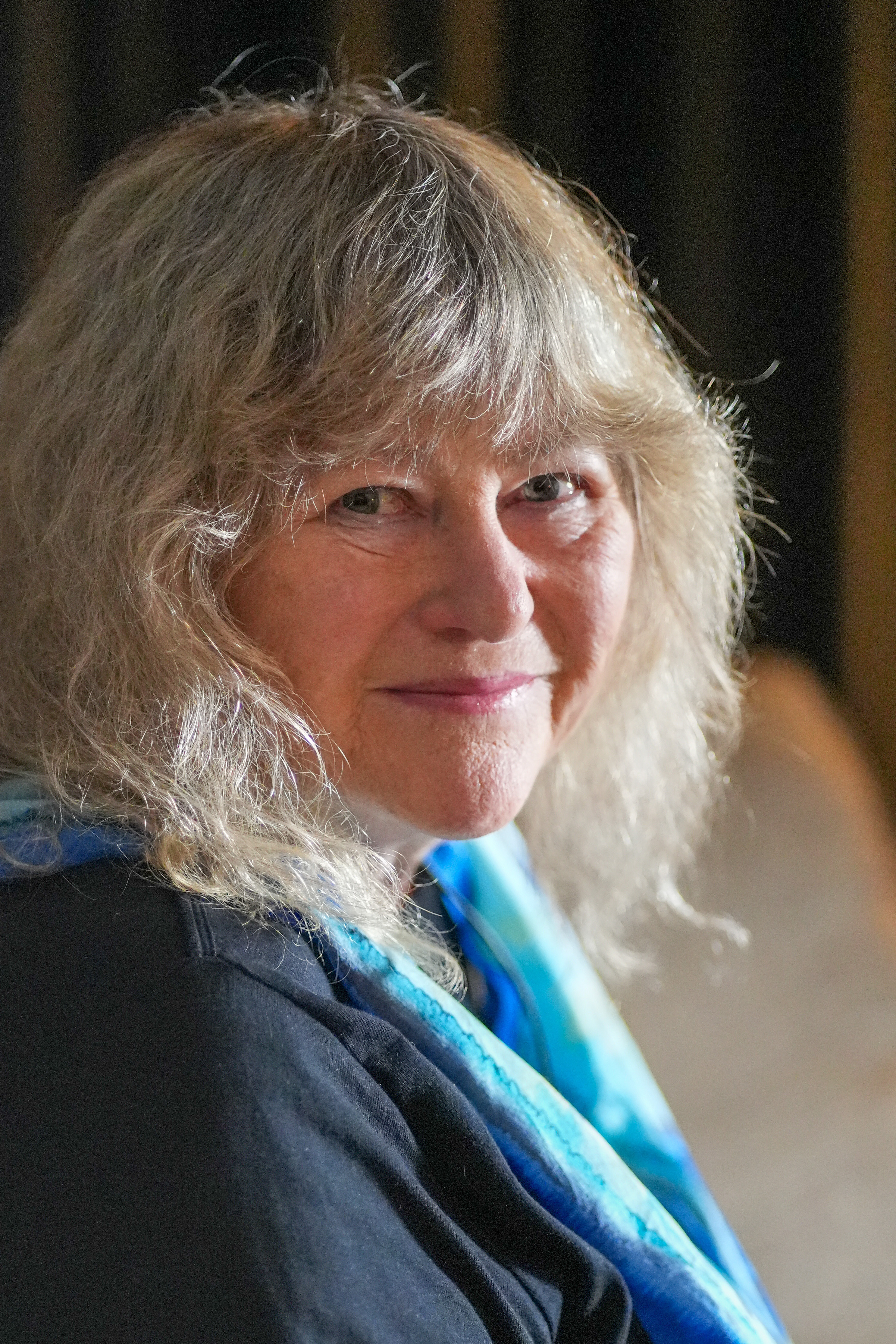
Rebecca Knuth photo copyright to Sari Singerman
Today, we have the pleasure of speaking with Rebecca Knuth on bookpleasures.com.
A retired professor from the University of Hawaii, Rebecca is renowned for her expertise in censorship and cultural destruction, which she extensively explored in her groundbreaking work, Libricide.
This book documents the
regime-sponsored destruction of books and libraries throughout the
20th century.
After her distinguished academic career,
Rebecca made a bold decision to transition to creative nonfiction.
This courageous move involved earning a third master’s degree and
immersing herself in London’s vibrant literary scene. It reflects
her determination and passion for literature. She chronicles her
experiences in London in her memoir, London Sojourn: Rewriting Life
After Retirement, a journey of inspiration that we will delve into
today.
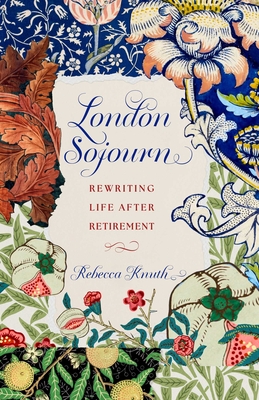
Her memoir is a vivid exploration of her personal and
professional renewal in one of the world’s great literary capitals.
It symbolizes not just a geographical shift, but also a profound
redefinition of her relationship with literature.
Rebecca now
resides in Portland, Oregon, where she continues to contribute to the
writing community.
Norm: Good day, Rebecca, and thank you
for participating in our interview.
You begin your memoir
describing yourself as a “battered academic,” feeling emotionally
exhausted and creatively stifled. Can you share the moment—whether
personal or professional—that made you realize you needed to step
away from academia and seek a reinvention? Did you have any fears
about leaving behind your identity as a professor? How did you
navigate those fears as you started your new life in
London?
Rebecca: A regular faculty meeting lasting four
hours left me devastated. Alienated from an increasingly
bureaucratized university, chaffing from a system that I once loved,
I was ready to move on.
I had reinvented myself
before and trusted in my instincts. I overcame angst by concentrating
and making small adjustments and remaining committed and
positive.
Norm: Your journey in London is characterized by
a transformative embrace of vulnerability—becoming a student again,
learning new skills, and building a new social circle. This
significant change in your approach to life and learning profoundly
altered your sense of self. Could you explain how the transformative
power of vulnerability influenced your journey?
Were there times when you felt like an imposter, especially in your creative writing or tour guide courses? How did you overcome those feelings?
Rebecca:
Vulnerability opens the door to change. Many professionals,
entrenched in an identity that holds doubt and feedback at bay, are
loathe to give up their stature and identity. But, as described in
London Sojourn, I had stepped out of my comfort zone before and
repeatedly reinvented myself. I knew that my life had been enhanced
by risk-taking.
I upended the imposter
syndrome by confidently acting “as if” I were already a student,
guide, or popular writer and already knew how to live the nonfiction
life I was pursuing. I just had to ride out feelings of
vulnerability—after all, one didn’t die from them—and the end
goal (actualization) was worth a little psychic discomfort.
Norm: Tony, your longtime friend in London, is described
as a steady and supportive presence throughout the memoir. His
friendship significantly influenced your experiences and helped you
process your transformation. Can you elaborate on how his friendship
affected your journey?
In what ways did your
relationships with classmates and neighbors in London challenge or
reinforce your evolving sense of identity?
Rebecca: Tony
got me out and about and supplied a lens to view Britain. As we
talked things through, I could contrast his pre-retirement life (his
clinging to what was) with my adventure. I bonded as well as
differentiated myself. He accepted me and had nothing vested in
possessing or directing my development. My classmates and neighbors
accepted me as well and that made reinvention possible.
Norm: You mention
that your research on silenced women writers serves as a reflection
of your own life. How did studying Jane Austen, the Brontë sisters,
and Virginia Woolf help you clarify your own story? Was there a
specific moment or discovery in your research that marked a turning
point in your feminist awakening?
Rebecca: The lives of
famous women writers taught me that beliefs about femininity have
denied women writing and public presence. I was particularly struck
by Virginia Woolf’s comments typifying both Charlotte Bronte and
George Eliot as fighters. Women writers, including me, have had to
fight to be heard.
Norm: By the end of the
memoir, you’ve integrated your academic, creative, and emotional
selves. How do you define your “true self” now compared to who
you were at the beginning of your journey?
Do you believe
this integration can only occur through a significant life change, or
can it also be nurtured in smaller ways?
Rebecca: My
experience in London and writing this memoir clarified my entire life
journey. I learned that I have engaged in a life-long fight to be
heard. While London signaled a quantum leap forward in integrating my
life, I have always been growing into my true self and am still
engaged in defining myself even in my Seventies, still
growing.
Norm: The quest for a new voice is central to your
memoir. What was the most challenging aspect of transitioning from
academic writing to creative nonfiction, and how did you discover
your authentic voice?
Did you ever worry that your creative
writing wouldn’t be considered “serious” enough? How did you
reconcile your academic background with your new creative
aspirations?
Rebecca: By leaving academia, I opted out of
a rigid writing system where academic gatekeepers monitored what was
published and how it must be written; writers had to keep
themselves out of their work. In London I began taking myself
seriously (instead of the system) and developed a voice. I had to
show readers who I was, rather than maintain objectivity and
dispassionate analysis. I began to express myself freely and use my
academic background (research skills and content knowledge) to
buttress rather than stifle creativity. The most challenging
part was learning to tell stories and substitute a narrative arc for
standard academic templates.
Norm: Your idealized vision of England was gradually replaced by a more complex, multicultural reality. How did your expectations of “Englishness” change as you lived in London?
Did you ever feel like
an outsider in London, and how did that shape your sense of belonging
or home?
Rebecca: I had to update my reading-acquired
sense of England as Agatha Christie and Jane Austen, villages,
Oxford, and fair play. But I still think many of the behaviors and
beliefs of a tolerant and diverse Englishness, now encompassing
globalism, are worth holding dear.
Norm: The theme of reinvention at any age is powerful in your memoir. What advice would you give to someone who feels it’s “too late” to start over or try something new?
How did your age and
life stage influence the way you approached your reinvention? Were
there unique challenges or advantages to starting over in your
sixties?
Rebecca: I am lucky that retirement and financial
security made this relocation and experiment possible. Also, optimism
and giving myself permission to seize opportunities has been crucial
to my small or large reinventions.
Age was a decided
advantage in that I came to London with significant life experience,
but it was a disadvantage when my relentless pace, which I was
physically incapable of sustaining, exhausted me. Ironically, I came
to appreciate peace and reflection over constant stimulation.
Norm: Your memoir blends personal anecdotes, travelogue,
and literary criticism. What inspired you to use this hybrid style,
and how did it help you tell your story? Were there moments when you
struggled to balance the personal and the intellectual in your
writing? How did you decide what to include and what to leave
out?
Rebecca: My memoir, like most, dwells on what
preoccupies me. London Sojourn began as a diary, but I soon opted for
chapters, a narrative arc, and themes. I arrive at a hybrid style
incrementally as a way to present the variety of insights I’d
gleaned from books and experiences.
I struggled with voice, lightening up, and freeing myself from academic “seriousness” and detached analysis. I had to make everything personal and leave out extraneous details no matter how much I loved them. They were just noise. My rule of thumb was to include only that which supported my themes and narrative.
Norm: You use
flashbacks to provide context for your transformation. How did
revisiting your past help you make sense of your present? Were there
any memories or experiences that were particularly difficult to write
about? How did you approach those moments with honesty and
compassion?
Rebecca: A memoir often involves a quest in
which the subject begins in one state, encounters challenges,
transforms, and returns home–the usual hero’s quest. London
Sojourn follows this trajectory but recounts just one of the multiple
quests that defined me. Flashbacks helped me tease out how I’d
become who I was and how the city had facilitated that.
I had to make sense of my parents and programming. The most difficult thing to write about was my mother. I was still separating from her and her helplessness induced sadness and guilt. The feminine mandate of self-sacrifice is weighty. I tried to be supportive of myself, to remain emotionally open, and survive my choices.
Norm: While the memoir
ends with a sense of closure, it also leaves the idea that
reinvention is an ongoing process. How do you see your journey
continuing now that you're back in the U.S.A.? Is your memoir a story
of arrival, or is it more about the journey itself?
Rebecca:
London Sojourn is an account of a life in process. I evolved and then
was tasked with returning “home” and translating that into
meaningful living. Life tends to be cyclic: a series of change
points, then stasis, then movement, then stasis, and so on. Returning
home from London heralded a new period of stasis in which I
consolidated my life and writing style. But then I began defining
myself as old, as being at a potential dead end, and stasis had to be
upended yet again. I rolled back the years with another
transformation.
Norm: Your prose is clear, reflective, and
accessible. How did you develop this style, and how did it evolve as
you wrote the memoir?
Did you have any models
or mentors who influenced your writing style? How did your creative
writing course shape your approach to memoir?
Rebecca: My
academic style was heavy and dense. I had two thoughts on rereading
Libricide recently: first, “what a brainiac I was” and, second,
how heavy going it was.
The London writing course introduced me to the basic principles of creative nonfiction. Since then, wonderful editors have pushed me hard, and my current style reflects years of writing classes, conferences, books on writing, and practice. I wrote and rewrote three books, including one about a historical serial killer (coming out in 2027) and most notably, London Sojourn.
I’ve recently put my
acquired writing style to work in unlocking content unearthed as a
specialist in the violent destruction of books and libraries. The
book on Nazi book burning I’m writing continues my fight against
silencing and to make knowledge accessible.
Norm: As we
conclude our interview, where can our readers find out more about you
and London Sojourn: Rewriting Life After Retirement?
Rebecca:
I have a WEBPAGE: but readers can find me in London
Sojourn. I poured myself into the memoir and it is as true as I can
make it.
Norm: Thanks once again and good luck with all of your future endeavors