
- Home
- AUTHOR INTERVIEWS- CHECK THEM OUT
- Philip Caputo on “Wandering Souls:” Stories of Loss, Redemption, and the Human Spirit
Philip Caputo on “Wandering Souls:” Stories of Loss, Redemption, and the Human Spirit
- By Norm Goldman
- Published November 21, 2025
- AUTHOR INTERVIEWS- CHECK THEM OUT

 Norm Goldman
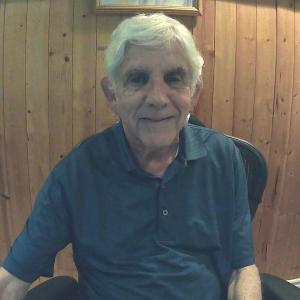
Reviewer & Author Interviewer, Norm Goldman. Norm is the Publisher & Editor of Bookpleasures.com.
He has been reviewing books for the past twenty years after retiring from the legal profession.
To read more about Norm Follow Here
Bookpleasures.com is excited to have Philip Caputo as our guest.
Philip is not just an acclaimed novelist, journalist, and Pulitzer Prize–winning reporter, but also a literary giant with a distinguished career spanning more than 5 decades.

Born in Chicago in 1941 and educated at Purdue and Loyola Universities, he served three years in the U.S. Marine Corps, including a 16-month tour in Vietnam. This experience shaped his landmark memoir A Rumor of War, widely regarded as a classic of war literature. Since then, Philip has authored 18 books, including novels, nonfiction, and memoirs, and has contributed incisive articles and essays to leading publications such as The New York Times, Esquire, and National Geographic.
His work, which often delves into universal themes of conflict, morality, and human resilience, has earned him numerous honors and a lasting place in American letters.
With a career that has taken him from the battlefields of Vietnam to the front lines of journalism and into the heart of American storytelling, Philip remains one of the most compelling voices of his generation, thanks to his unique approach.
Today, we will discuss Philip's latest novel, Wandering Souls, a collection of stories that delve into the aftermath of war and the human struggle for redemption, with him.
Norm: Good day, Philip, and thanks for taking part in our interview.
The initial story, Wandering Souls, is compelling. What was the genesis of the central, almost mystical connection between the narrator and the lost soldiers
Were you drawing on real accounts of "wandering souls" from Vietnamese culture, or was it more a narrative device to explore themes of guilt and atonement?

Philip: Yes, wandering souls was a device to explore those themes, which have obsessed me throughout my career, but it was meant on a more literal plane.
There is a mystical connection among warriors in battle, call it comradeship if you will. I drew upon that as well as what I had learned about “wandering souls” in Vietnamese religious traditions and culture. That idea struck me when I read or heard about missing Americans in Vietnam.
The chance of becoming separated from your comrades or lost was terrifying to GIs, the southeast Asian jungles were spooky, scary, filled with dangers like tigers and venomous snakes, quite aside from enemy fighters.
Norm: The collection's title comes from the first story, but the theme of people haunted by the past resonates through every story. How did you approach weaving this common thread through such different settings and characters from Vietnam to the African savanna to a university campus?
Philip: I wrote these stories over a span of five or six years, without intending to link them thematically. It was only when I finished the last one that I saw a connection and decided to publish them together.
Norm: Many of your characters are seasoned, somewhat world-weary men facing a final test or revelation. What is it about this particular stage of life that you find so rich for exploration?
As a follow-up, these men often seek answers or redemption in physically demanding or dangerous situations. Is there a sense that the body must be tested to resolve the troubles of the mind?
Philip: I guess you could say that I am seasoned and somewhat world-weary. That happens when you’ve lived as long as I have, and had the experiences I have had. As for the link between body-mind, I can only say that most of the things I’ve done have involved arduous physical endeavors, so I’m familiar with them, and write from that familiarity.
Norm: The prose throughout is exact, whether describing the claustral jungles of Vietnam or the rolling deck of a ketch. How does your process differ when writing about environments you've experienced firsthand versus those you've researched? In addition, your descriptions of the natural world are never just a backdrop; they actively shape the characters' psychology. How do you achieve that symbiotic relationship between setting and character?
Philip: The relationship isn’t something I try to achieve, in the sense that I’m conscious of it. It arises from my nature. I don’t do a lot of research, confining it mostly to getting facts right.
Norm: In “Wandering Souls,” the narrator makes a decision that fundamentally alters the official record and a family's understanding of their history. This act raises profound questions about truth versus comfort. As a journalist and a novelist, where do you personally draw the line between historical accuracy and humane deception?
Philip: Well, as a journalist I’ve always striven for accuracy. But as a novelist, I try to imagine what makes sense for a character I’ve created. In the title story, I thought that the narrator would, as a compassionate human being, elect to spare the family of the missing soldier from a painful truth for which there was no remedy.
Norm: "A Near-Death Experience" presents a fascinating paradox: Lambert's most vivid experience of life comes from dying. How did you develop the concept that a confrontation with death could be the ultimate catalyst for feeling truly alive, even if it leads to self-destruction?
Philip: I’ve been close to death several times in my life. In fact, I once has a near-death experience much like the one described in this story. It’s almost a cliche but nevertheless true that on the doorstep of death our sense of life becomes vivid and intense. I don’t know why, you’d have to ask a psychologist to answer that question.
Norm: The character of Captain Wolfe in "Wandering Souls" is a terrifying figure who corrupts his men. He's described as having a "talent" for seeing the killer in ordinary soldiers. Were you basing him on any specific historical figures or accounts of command dysfunction in Vietnam? As a follow-up, Wolfe's manipulation seems to turn the war into a kind of dark cult. Was your intention to show how the isolation and violence of combat can create a moral vacuum where a psychopathic leader can flourish?
Philip: Captain Wolfe is a composite character, made up of traits I observed in certain kinds of leaders I have met. They are “inspirational” in a dark way, tapping into the violence that lurks in almost all men, and perhaps, in some women as well. You state it perfectly; the isolation and insane violence of combat often destroys morality, allowing psychopathic personalities to flourish and dominate others.
Norm: “The Deliverer” is a masterclass in slow-burn tension. The discovery of the jade idol shifts the story from a simple sea tale to a moral thriller. At what point in writing did you know that Tyner was smuggling the artifact, and how did you decide on the fire extinguisher as the hiding place?
The story's ending is starkly ambiguous. Kirby justifies Tyner's death with "It was us or him," but the series of misfortunes suggests Tyner was a "Jonah." Are we meant to see his death as a moral failure by Kirby or a kind of karmic justice?
Philip: To answer your second question: Karmic justice. Kirby is the agent of that justice and sees himself as such. I knew that Tyner was smuggling the artifact before I began writing. In the process of composition, I asked myself where I would hide it if I were on board that vessel. I did a little research and hit upon the fire extinguisher. I liked the irony that the extinguisher malfunctions as a result of his actions, and contributes to the fate of the ship as well as of Tyner himself.
Norm: Food and ritual play a significant role, especially in "Wandering Souls" with the Festival of Wandering Souls and in "Coils of the Past" with the communal dinners. How important was it for you to ground these fraught, psychological stories in the concrete, sensory details of local customs?
Philip: Very important. Concrete realities are the fiction writer’s raw materials. Without them you have arid abstractions.
Norm: Animals are central to several stories, often as symbols or agents of fate: the fer-de-lance and the jaguar in "The Deliverer," the lioness and the elephant in "A Near-Death Experience," the python in "Coils of the Past."
What draws you to use the natural world in this way?
As a follow-up, in "A Near-Death Experience," the elephant's death at the hands of poachers directly mirrors Lambert's own fate. Was this parallel intended to suggest that Lambert, in his reckless pursuit of intensity, has become just another casualty of a violent, indifferent world?
Philip: I’ve been a hunter and outdoorsman most of my life, so I’m naturally drawn to the natural world. It’s familiar to me. Your follow up: That’s a valid conclusion, but I did not consciously intend it. I’ve found that a writer’s work often has layers of meaning to his or her readers even though he or she is unaware of them.
Norm: "Ezra's Door..." is a departure in tone, set in an academic setting. What inspired you to write a story about the search for a literary relic, and how does Langford's quest for Ezra Pound's door connect to the broader themes of being haunted by the past?
Philip: I had spoken at Wabash College many years ago, and heard the story of Ezra Pound’s door. It lay in the back of my mind for all that time, and suddenly woke up while writing this book. I suppose, at my age — 84 — one is drawn to hauntings from the past.
Norm; Where can our readers find out more about you and Wandering Souls?
Philip: MY WEBSITE contains some biographical information. Or you can simply google my name. If you mean Wandering Souls as a religious theme, I would look up anything concerning Vietnamese culture or Buddhism.
Norm: As we wind up our interview, with a career spanning memoir, fiction, and journalism, how did the creation of Wandering Souls feel different? Did you find a unique freedom in being able to explore so many other lives and dilemmas within one book? As a follow-up, having written the modern classic A Rumor of War, does returning to the themes of Vietnam and its aftermath in a work of fiction like Wandering Souls allow you to explore dimensions of the experience that nonfiction could not?
Philip: The Vietnam War remains the most significant thing that ever happened to me. It was, for me, what going to sea was for Conrad and Melville. Creating fiction of any kind is profoundly different than journalism, which binds you to the facts, and facts do not always lead to truth. I think I’ll leave it at that.
Norm; Thanks once again and good luck with all of your endeavors
FOLLOW HERE:
Facebook, Twitter/X, Instagram