
- Home
- AUTHOR INTERVIEWS- CHECK THEM OUT
- Unearthing Indigenous Resilience: Greta Uehling Discusses her latest tome "Decolonizing Ukraine: The Indigenous People of Crimea and Pathways to Freedom."
Unearthing Indigenous Resilience: Greta Uehling Discusses her latest tome "Decolonizing Ukraine: The Indigenous People of Crimea and Pathways to Freedom."
- By Norm Goldman
- Published November 21, 2025
- AUTHOR INTERVIEWS- CHECK THEM OUT

 Norm Goldman
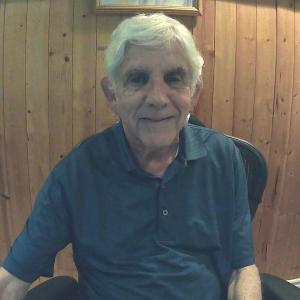
Reviewer & Author Interviewer, Norm Goldman. Norm is the Publisher & Editor of Bookpleasures.com.
He has been reviewing books for the past twenty years after retiring from the legal profession.
To read more about Norm Follow Here

Bookpleasures.com is honored to welcome Greta Uehling, a distinguished cultural anthropologist whose work sits at the unique intersection of Indigenous and Eastern European Studies.
Currently serving as a Teaching Professor in the Program in International and Comparative Studies at the University of Michigan, as well as Associate Faculty for the Center for Russian, East European and Eurasian Studies, Greta brings a wealth of academic and practical expertise to the conversation.
She is the acclaimed author of three significant works: Beyond Memory: The Deportation and Return of the Crimean Tatars (2004), Everyday War: The Conflict over Donbas, Ukraine (2023), and her latest release, Decolonizing Ukraine: The Indigenous People of Crimea and Pathways to Freedom (Rowman & Littlefield, 2025).
Beyond her academic contributions, Greta has applied her insights on displacement and human trafficking as a consultant for major organizations, including the United Nations High Commissioner for Refugees.
Norm: Your book, Decolonizing Ukraine: The Indigenous People of Crimea and Pathways to Freedom highlights the resilience of Crimean Tatars amid the trauma of deportation and recent occupation.
How did this resilience manifest in everyday life and community practices? Can you share a particularly striking personal story from your interviews that illustrates this resilience?

Greta: Resilience revealed itself in everyday life through the ways ordinary people, suddenly thrust into extraordinary circumstances of hardship, exile, and displacement, made the best of it.
My interviews with displaced people are filled with descriptions of how they went back to school, started businesses, or immersed themselves in creative pursuits.
A woman whose only place to sleep was a benevolent stranger’s couch told me the best words to describe her daily experience were “joy” and “wonder.”
That might surprise you, but she had also experienced Ukrainian generosity and landed a teaching job in displacement that would soon enable her to afford a place to live.
In this way, many internally displaced people described their situation as profoundly unfortunate yet also transformative.
Perhaps the most striking story of resilience can be found at the Crimean barricade set up near the administrative boundary lines between government-controlled Ukraine and Russian occupied Crimea.
At a time when many Ukrainians were resigned to the Russian occupation of Crimea, a group of activists led by a Crimean Tatar dragged tires across the roads to Crimea, stopping the illicit flow of goods and making the occupation more costly for Russia.
They also established a cadre of people called the Askeri to monitor alleged border guard improprieties at the new administrative boundary lines. I think the activities at the administrative boundary lines show they not only had a strategic vision but the courage to carry it out. The book explores how they managed the risks – and their own fears – to maintain this encampment.
Norm: How do you conceptualize “decolonization” in the specific context of Crimea and Ukraine? In what ways does this concept challenge or expand traditional understandings of post-colonialism?
Greta: I understand decolonization as a multifaceted process of dismantling the legacies of colonialism- politically, culturally, economically and psychologically.
This requires revisiting the historical narratives that allege Crimean Tatars, and other Ukrainians were arch enemies historically and the portrayals of the Crimean Tatars as violent, unruly, and uncivilized.
While the usual subjects in studies of decolonization are nation-states and societies as a whole, my book turns attention primarily to individual subjects.
As such, the book is really about decolonizing oneself. In Decolonizing Ukraine, I focus less on symbolic changes such as renaming streets or replacing monuments although this, too is important, and more on the inner work required to shed colonial patterns of thought.
This is crucial considering what scholars of colonialism like Franz Fanon have persuasively argued, which is that a significant legacy of colonization is that a formerly colonized people internalize the negative beliefs of the colonizer about themselves.
Ukraine is in the position of being both colonized by Russia and among the powers that dominated the Indigenous people.
An additional step is therefore for Ukraine to rectify how it has treated its Indigenous people.
I prefer the term decolonizing over postcolonial because Ukraine there is still a lot of work to be done, some of which can’t begin unless Crimea is returned to Ukrainian jurisdiction.
Norm: The Soviet deportation of Crimean Tatars in 1944 looms large in your work. How does this historical trauma continue to shape Crimean Tatars’ political identity and strategies today?
How is this collective memory preserved and transmitted across generations?
Greta: The 1944 deportation, called the Sürgünlik, in Crimean Tatar, is truly a central event structuring Crimean Tatar collective identity.
It’s not only a historical trauma but a political touchstone that motivates their struggle for recognition, and the restoration of their rights.
My first book, Beyond Memory: The Crimean Tatars’ Deportation and Return shows how in the absence of an official historical narrative, the Crimean Tatars developed an oral history that was passed down within families.
Commemoration rituals are another important component: every year Crimean Tatars observe May 18 as a day of mourning and commemoration.
Gathering on that day is symbolically significant and provides a source of community cohesion.
The legacy of deportation also strengthens their focus on Indigenous recognition. The deportation reinforced their understanding of themselves as a distinct Indigenous people with ancestral ties to Crimea, a claim that has become central in their appeals to both the Ukrainian government and international institutions.
Because they developed as a group on the Crimean Peninsula, had a fully developed state prior to colonization, and have no other homeland, they mustn’t be conceptualized as just another minority on the Crimean Peninsula.
Finally, this historical trauma informs their deep skepticism toward Russia and a preference for alignment with Ukraine.
They have long supported Ukraine because it held better prospects for human rights and democratic governance. They were also among the first to demonstrate against the Russian occupation of Crimea.
Norm: You discuss how Russian occupation extends beyond military control to social fragmentation. Could you explain how this tactic plays out on the ground?
What have been the consequences for inter-community relations and social networks?
Greta: Your readers will likely be familiar with Russia’s hybrid tactics whereby the occupation was carried out not just with conventional military forces, but activities like misinformation, surveillance and inserting their own loyal cadres into government positions.
What my research contributes to this understanding is that disrupting how people thought and felt about one another was also a hybrid tactic.
The majority of the people who were displaced from occupied territories spoke of the end of friendships and new tensions in family relationships.
The tactic is quite explicit in encouraging young people to inform on parents who may have pro-Ukrainian sentiments.
Loyalty to Ukraine, the legitimate authority, was paradoxically deemed “betrayal,” and betrayal of Ukraine came to be considered “patriotism” after Russian occupation.
The authorities have even set up a hotline for reporting on friends and neighbors who make anti-war or pro-Ukrainians statements.
As a more specific example I can offer is that of a man I met sifting through clothing at a humanitarian shelter. He told me his father disowned him because he did not vote for joining Russia in the referendum.
The disagreement led him to flee for Ukrainian government-controlled Ukraine. Had he not experienced this rift with his father, he would have been in a position to inherit a home and property.
Thus, these tactics have significant material stakes.
According to my research, the disintegration of relationships on political was a strong predictor of displacement from Crimea.
Another example from Decolonizing Ukraine is a woman named Oksana. After occupation, her fiancé and his parents were very pro-Russian and began to denigrate her Ukrainian heritage.
She decided she no longer had a future with that family, or in Russian dominated Crimea. In short, these forms of social ostracism helped secure compliance with Russian control of Crimea.
It was yet another way to maintain at least a semblance of unanimity in favor of Russian control.
Norm: You describe a new social cohesion emerging among diverse ethnic groups in Ukraine after 2014. What forms does this cohesion take, and what role do Crimean Tatars play in it?
How might this evolving cohesion influence Ukraine’s future political landscape?
Greta: New forms of social cohesion is among the most significant post-revolutionary developments in Ukraine.
Decolonizing Ukraine therefore explores the question of how the Crimean Tatars, who in the past were vilified and demonized as the marauders of the steppe, were able to transform how they were viewed by other Ukrainians.
A big piece of the puzzle is the discovery of common values. Crimean Tatars and other Ukrainians discovered that they shared their highest value, freedom and a political commitment to transparent accountable governance of their country.
A chapter of the book is titled “Claiming Freedom” because it became a defining feature of their identities and facilitated a shift toward a civic form of national identity that is capable of encompassing culturally, linguistically, and religiously diverse groups.
If the Russian occupation of Crimea led to the disintegration of social networks and increased suspicion of Crimean Tatars in occupied Crimea, the opposite has been true in government-controlled Ukraine.
It is important to mention that the Ukrainian government has taken important strides here recognizing the Crimean Tatars as Indigenous, registering the 1944 deportation as a genocide, and establishing a Crimean Platform for dialogue on Crimean issues. President Zelenskyy also appointed a Permanent Representative of the President to Crimea.
An important dimension of this was stronger identification with “Ukrainianness.” As one woman phrased it, she may be Crimean Tatar in her heart, but she is Ukrainian in her head because that is the locus of her political identity.
This is significant for people of Russian, Ukrainian and Crimean Tatar ethnicity who fled Crimea. Because Crimea had such a strong regional and local identity, people in Crimea told me they didn’t always think of themselves as citizens of any state. With displacement to the continental parts of Ukraine they had opportunities to re-discovering their “Ukrainianness.”
The cover of the book provides a visual metaphor for this. It utilizes the plant motifs that are found in both Crimean Tatar and Ukrainian culture.
The design reflects an idea explored throughout the book that when we think about modern Ukraine, it is important to see Crimea and Crimean Tatars as part of the whole.
Norm: Gender is often overlooked in conflict studies. What gender-specific impacts or roles did you encounter among Crimean Tatars in both occupation and displacement?
Are there particular narratives of women’s experiences that you think deserve wider attention?
Greta: Yes. Among Crimean Tatars, the gendered dimensions of both occupation and displacement are profound yet often overlooked.
Muslim women in particular have carried an enormous burden, as men are disproportionately targeted for arrest and political persecution.
When husbands or sons are detained, women suddenly become the sole providers and caretakers for large families—a catastrophic disruption in a social structure where women were already primarily responsible for managing the household and raising children.
Yet this hardship has also produced remarkable forms of resilience.
Crimean Tatar women have built informal networks of solidarity, organizing mutual aid to support the families of political prisoners and sustain community life under occupation.
Many have taken on roles as activists, documentarians, and human rights defenders, ensuring that stories of repression reach the outside world.
These women’s narratives—of both everyday endurance and active resistance—deserve much wider attention.
They reveal not only the gendered toll of Russia’s occupation but also the central role women play in preserving Crimean Tatar identity, culture, and political agency in the face of systemic repression.
Norm: Where can our readers find out more about you and Decolonizing Ukraine?
Greta: In connection with publishing Decolonizing Ukraine, I have received many requests for talks and have been invited to many podcasts.
It has been a pleasure to share the findings of my research at both talks I have given in person and online. Your readers can find the full episodes at my WEBSITE
They will have access to short clips that I post on my social media, especially Bluesky: @uehling.bksy.social or Instagram: greta.uehling.
Norm: As we wind up our interview, what future research or advocacy work do you see yourself pursuing related to the themes of indigenous identity, decolonization, and conflict in Ukraine?
Do you plan to continue working closely with Crimean Tatars or expand to other indigenous groups in the region?
Greta: Yes, I plan to continue working with Crimean Tatars although opportunities are somewhat limited by the fact that it is dangerous to travel to Ukraine right now. Hopefully, the war will end soon, and Crimea will return to Ukrainian jurisdiction.
In the meantime, I am participating in an initiative that seeks to support Crimean Tatar political prisoners with Letters to Free Crimea which is an initiative of the Mission of the President of Ukraine in the Autonomous Republic of Crimea, PEN Ukraine and the “Zmina” Human Rights Center.
Those who communicate from behind bars consistently say that letters from the outside world are a lifeline — a sign that they are remembered, and perhaps less alone. Even a short message can help them endure the isolation of unjust imprisonment.
Most of these prisoners are serving long sentences for activities Americans take for granted: expressing their opinions, attending a public gathering, or sharing factual observations about life under occupation. They are paying a very heavy price for exercising their civil rights.
If your readers are moved to help, there are nearly 200 political prisoners in Russian custody. Taking a few minutes to write a letter is a small act of kindness that carries enormous meaning. It tells a prisoner that the world is still paying attention, and that their contribution has been valued.
You can find all the relevant information with instruction on how to write and send letters, as well as the list of the political prisoner on the following links:
https://ppu.gov.ua/en/press-center/lysty-do-vilnoho-krymu/
https://ppu.gov.ua/en/lysty-do-vilnoho-krymu/
Norm: Thanks once again and good luck with all of your endeavors
FOLLOW HERE: