
- Home
- AUTHOR INTERVIEWS- CHECK THEM OUT
- Storytelling with Heart: Robert Inman Brings Villages to Life
Storytelling with Heart: Robert Inman Brings Villages to Life
- By Norm Goldman
- Published May 6, 2025
- AUTHOR INTERVIEWS- CHECK THEM OUT

 Norm Goldman
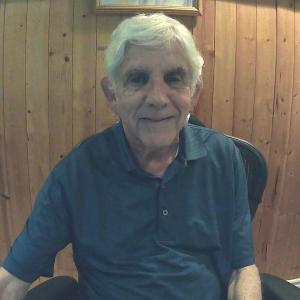
Reviewer & Author Interviewer, Norm Goldman. Norm is the Publisher & Editor of Bookpleasures.com.
He has been reviewing books for the past twenty years after retiring from the legal profession.
To read more about Norm Follow Here
We’re delighted to
welcome Robert Inman to Bookpleasures.com for an in-depth
conversation about his latest novel, Villages.

An acclaimed storyteller and native of Elba, Alabama, Robert is a Phi Beta Kappa graduate of The University of Alabama, where he earned his Master of Fine Arts in Creative Writing.
Over the course of his distinguished career, he has authored six novels, penned six television movies, and written eight published stage plays, all while drawing on his early experiences as a journalist and columnist.
Norm: Good day Robert and welcome to Bookpleasures.com
What inspired you to create the character of Jonas Boulware, and how did you approach writing about his experience as a young combat veteran returning home?

Robert: Norm, thanks so much for the opportunity to talk about my story.
I’m a Vietnam-era Army veteran, and though I never served in combat, I have friends who did, and what they told me about the experience was the germ of what became Villages.
It – and America’s conflicts since – are insurgencies, where the enemy doesn’t wear uniforms, and may take the shape of an innocent-looking civilian with explosives strapped to their chest, or a roadside bomb.
It means that death can come at any moment and from any direction, so survival depends on a pervasive hyper-vigilance.
That, and the horror of war itself, make a profound change in the mental and emotional makeup of those who fight, and stays with them long after the war zone.
My central character, Jonas Boulware, brings those psychic scars home with him, and his quest is to find a “new normal” he can live with.
Norm: How did your own upbringing in a small Southern town influence the depiction of community, family, and tradition in Villages?
Robert: I wouldn’t be the writer (or person) I am without having grown up in a small Southern town.
I’m the oldest of 12 grandchildren from a rowdy, story-telling Southern family where embellishment was a given.
The town of about four thousand (then and now) was an environment where you could observe people in the same place over time.
I learned early on that if I kept my mouth shut and my eyes and ears open, I could learn a lot about what makes human beings tick.
There were also a lot of people who cared about me and encouraged me. I’ve been writing about Elba folks from the beginning.
Norm: Each supporting character-Gladys, Rodney, Doc, the Lieutenant, Lyric, and Ben-has a distinct influence on Jonas.
How did you develop these relationships, and what do they represent in his process of healing?
Robert: Jonas appeared to me as a person who is attracted to genuine people, folks who will look you in the eye and deal straight-up with you, and who care about you, warts and all.
Doc, Lieutenant, Fred Wesley, and Lyric are genuine. There’s no put-on about them. They’ll tell you the truth about yourself, even when you don’t want to hear it.
I love those characters. They’re the kind of people I like having as friends, and Jonas does too. They’re crucial to his re-discovering his true sense and using it to heal his wounded body and spirit.
Rodney and Gladys, his parents, lack genuineness. Rodney is emotionally abusive; Gladys doesn’t stick up for Jonas, and she’s hobbled by a long-ago family scandal.
It’s a key part of Jonas’s journey that must find a way to deal with his young past and come to some sort of peace and reconciliation with it.
Norm: The novel explores the lasting effects of PTSD. How did you research and prepare to authentically portray Jonas’s psychological struggles?
Robert: My own military experience perhaps gives me a baseline to start, but I spent several years educating myself about PTSD and its effect on the lives of trauma victims – not just veterans, but anyone who has a soul-altering experience such as rape, domestic violence, accident, etc.
I’ve read everything I could find about it, but the most important things I learned were from the mouths of combat medics who had been there and returned altered.
Villages would not exist without them. I think Jonas’s story is a hopeful story. Millions of American suffer from PTSD.
The suicide rate among veterans, for example, is twice that of the civilian population.
But Jonas, telling me his story, says that though his entire perception of life has changed, he will persevere and hopefully thrive, that the courage he showed in battle can serve him well in his present struggle, and that love is essential to all.
Norm: Family secrets and unspoken truths play a pivotal role in the story. Why did you choose to make hidden histories such a central theme, and how do they shape Jonas’s journey?
Robert: A quick story: My father and three uncles served in World War Two, and all went in harm’s way.
They returned to our small Southern town to take up what you would call ordinary lives – working, raising families.
They had stored away their wartime experiences in trunks and footlockers in my grandmother’s attic, and as a young boy, I found them – photos, letters to and from wives and girlfriends, old K-ration boxes, medals, bits of uniforms, etc.
In rummaging through their things, it struck me how much of their lives they had stored away, the secrets and hidden histories that helped make them who they were.
We all carry the baggage of our pasts, and sometimes it makes us stoop under the burden. In all of my novels, the past informs the present and is a signpost on the road to the future.
How did we get where we are now? Well, here’s how.
Norm: The town of Copernicus feels almost like a character itself. How important was setting in shaping the story, and what does Copernicus symbolize for Jonas and his family?
Robert: Place has always acted as a character in my fictional work. I am a small town kid and a storyteller, and the place I’m from has a profound impact on forming the person I have become.
In Villages, the town of Copernicus shapes the lives of every person in the story.
Jonas’s mother, Gladys, is the daughter of a founding family, some of which made scandalous decisions that brought economic disaster.
Gladys is haunted by that, and her life revolves around making amends. Likewise, being of and from Copernicus shapes the lives of everyone who lives there.
Norm: Doc Frank Ainsley serves as both a mentor and a savior for Jonas. Can you talk about the inspiration behind Doc’s character and his role in Jonas’s recovery?
Robert: I was fortunate growing up to have friend/mentors outside my family who cared about me and taught by example how to have a meaningful life – a doctor, a local judge, a newspaper editor, a Sunday School teacher.
They all are part of Doc Ainsley, a composite of the older person who helps mold the younger. In Doc’s case, he carries the burden of a secret that shapes his own life and, in turn, his devotion to Jonas.
Norm: The process of coming home and finding it changed-or realizing you have changed-feels universal. What message do you hope to convey about homecoming and personal transformation?
Robert: I’ve never physically lived in my small Southern hometown since I went off to college, but in some crucial ways, I still live there.
I return as often as I can, but it exists vividly in my imagination, just as it was in the years I was growing up there.
It is physically altered today from my youth, but it is still a powerful force in defining who I am. One of the finest things any of us can possess is a good memory of home.
Norm: Where can our readers find out more about you and Villages?
Robert: My WEBSITE. It includes reviews, interviews, video, and lots more about the book and my writing life. It also includes first chapters from my earlier five novels, in case readers want to explore my work further.
Norm: Finally, what was the most surprising or rewarding part of writing Villages, and has the response from readers aligned with your expectations?
Robert: The most important thing to me in writing the book was to make sure it was honest and genuine.
I’m writing about PTSD and its impact on the human soul, and I want readers – veterans and everyone else -- to say, “Yeah, he got it right.”
Responses so far indicate I did okay. One of the best came from a nephew who is a combat veteran.
He said, “The more I read, the more I realized that it was a ‘snapshot’ of my life. It brought back so many memories.”
Follow Here To Read Norm's Review of Villages