
- Home
- AUTHOR INTERVIEWS- CHECK THEM OUT
- Railroads, Robber Barons, and Resilience: The Untold Story Behind Where Eagles Fly
Railroads, Robber Barons, and Resilience: The Untold Story Behind Where Eagles Fly
- By Norm Goldman
- Published March 20, 2025
- AUTHOR INTERVIEWS- CHECK THEM OUT

 Norm Goldman
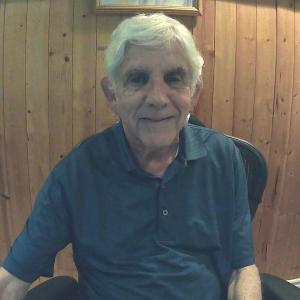
Reviewer & Author Interviewer, Norm Goldman. Norm is the Publisher & Editor of Bookpleasures.com.
He has been reviewing books for the past twenty years after retiring from the legal profession.
To read more about Norm Follow Here
Bookpleasures is thrilled to welcome our special guest, David A. Jacinto, author of Where Eagles Fly

The first in his family to attend college, he earned a civil engineering degree as a student-athlete at a top university, later becoming president of a successful engineering firm and serving as Chief Engineer for California during the 2001 energy crisis.
A sought-after speaker, David infuses humor and life experiences into his storytelling, always honoring his immigrant roots.
Despite his business and literary success, he considers his greatest achievements to be his marriage to Anne Gray, his four children, and his 13 beloved grandchildren
Today, he’s joining us to dive into the inspiration behind his latest novel, Where Eagles Fly.
Get ready for an inside look at his writing process, the themes that drive his storytelling, and what readers can expect from this captivating new release. Let’s jump in!
Norm: Good day David and thanks for taking part in our interview.
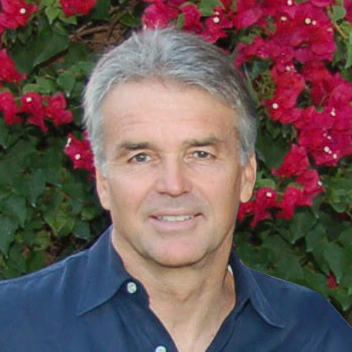
David: Where Eagles Fly is inspired by your ancestors' experiences. What specific stories or family legends influenced the novel, and how much of the book is directly based on true events versus creative embellishment?
There is a long answer to that question, but I’ll try my best to give you the short version. During the last week of my mother‘s life, who as far as I knew was an orphan, she told me about her birth family.
And she asked that when she passed away, she be buried in the cemetery where a plot had been set aside for her. It was a fascinating story.
When she passed away we buried her in that cemetery. I found the two largest tombstones in the entire cemetery where my great, great grandparents, Thomas and Annie Wright.
I was so fascinated I began a 2 1/2 year research project on their lives - both in England and here in the United States.
There are many incredible stories of their involvement in some of the most seminal events, in both England, book 1, and America, book 2, that I felt I must write their story.
The events, times, places and people in both books are real. What’s fictional is the interpersonal relationships between the players.
Norm: What kind of research did you undertake to accurately portray the 19th-century pioneer experience, and were there any surprising or unexpected historical details that reshaped the direction of your story?
David: I spent a considerable amount of time in England and Western America, personally walking through the mines and massive iron works sites where some of the most disastrous explosions occurred in the history of the United Kingdom.
I did the same in America, following the transcontinental railroad through Hell on wheels towns and the drama that surrounded the most transformational technological and sociological projects ever to occur in the history of America.
As you can see by the many exceptional reviews, both books are filled with fascinating stories.
Norm: How did your personal connection to this history influence the emotional depth of your storytelling? Did you find any particular moments difficult to write because of that connection?
David: To quote one reviewer, “…both the brutality and beauty of the story were brilliantly told and will touch the heart and soul of the reader.”
Of course, knowing these were my forebears made it sometimes difficult to imagine what both Tom and Annie must have gone through and the emotions they felt.
I did my best to write it so the reader could experience those emotions rather than just trying to tell the story. And yes, writing these two books has changed a lot about the way I look at my life.
Norm: The novel is filled with rich historical detail and a cinematic storytelling style. How do you balance historical accuracy with engaging narrative flow when writing historical fiction?
David: I laid out all the events, letters and descriptions in the mountains of information I had available to me. Then I did my best to weave a story line through those events, times, places and personal tragedies.
I tried my best to allow the reader to experience them as though she or he were there with Annie and Thomas. These were some of the most transformational events in England and América’s history, and they had a profound impact on not just the characters, but in some instances the direction of history. Some of these events changed the very nature of America as we know it.
Norm: Were there any particular scenes or characters that you struggled to develop? If so, what was the breakthrough moment that helped bring them to life?
David: Both books are mysteries of sorts. So I hesitate to tell you the details of any one particular event.
But having said that there was an event in 1869 that for the first time in history was transmitted around the world, on the newly installed transcontinental telegraph.
All the difficult to uncover details from the Union Pacific Railroad files, the letters and books written on the subject left a lot of unanswered questions about this robbery.
It wasn’t until I met with the family who had owned the 1000 acre ranch on the Wyoming property for more than 150 years that I was able to piece together all that happened.
I was so excited that when I arrived back at my hotel well after midnight, I wrote until three in the morning to get it all down on paper. I couldn’t sleep at all that night.
Norm: Given the epic scope of Where Eagles Fly, did you ever feel overwhelmed by the scale of the story? How did you manage to keep the pacing tight while covering so much history?
David: I started the process by outlining all the events, people, places, and things in order of their happening.
Then I wrote different segments of each book at different times. In fact, the draft of both books were substantially completed at the same time.
But I was so excited about the story I had a hard time keeping the other balls in my life up in the air. I spent every free moment researching and writing for almost 5 years.
Norm: Tom Wright undergoes a significant transformation throughout the novel. What do you see as his defining characteristic, and how does his journey reflect the broader themes of perseverance and ambition?
David: These are big questions. Tom was a brilliant, strong, determined character focused on accomplishing great things. And he did just that.
Norm: The story explores the fine line between ambition and survival. How do you think the challenges faced by the pioneers compare to modern struggles for a better life?
David:As one reviewer said, this is not just a story about two people and the challenges they faced in extremely fascinating lives. It’s the story of the American immigrant not so uncommon during the 18th, 19th and early 20th centuries.
Norm: The depiction of Indigenous people and the conflicts with settlers is a complex topic in historical fiction. How did you approach these portrayals to ensure they were authentic and respectful?
David: As with all elements in the story, I tried to tell the good and bad. The story of the Native Americans is tragic, but in some ways necessary for the American and immigrant settlers opening up the west in the 19th century.
Black Eagle and his family were real people. Tragically he would be killed by the US Calvary while fighting to preserve the Shoshone nation’s heritage.
Norm: The book captures the raw realities of exploitation and injustice in railroad construction. Why was it important for you to highlight these issues, and how do you think they resonate with modern readers?
David: Capitalism can be a wonderful thing and has elevated America like no other country in the history of the world. But there is a dark underbelly to unfettered greed possible with capitalism as well.
It was never more present than during the time of the 19 century Robber Barons. Where Eagles fly Free explores the dastardly deeds of one of the worst Robber Barons of 19th century America. Tom and Annie are intricately involved in some of those events, and of course that makes for great tension that keeps the reader turning pages.
Norm: Where Eagles Fly showcases both the glory and the dark side of railroad expansion. In your view, do you think the sacrifices of those laborers have been adequately recognized in American history?
David: Of course, there have been stories about the building of the transcontinental railroad. Steven Ambrose did a beautiful job in his book. But this story is unique.
It follows the lives of some of those people who actually laid the rails, blasted the tunnels and lost their lives building the greatest technological feat of the19th century.
Norm: Where can our readers find out more about you and Where Eagles Fly?
David: There have been numerous reviews that are online. Some of them are brilliantly written. You can see some of these reviews and a bit more about the history on my WEBSITE
Norm: As we end our interview, if readers could take away just one message from Where Eagles Fly, what would you want it to be?
David: This is the fascinating story of an unusual set of American immigrants that made this country what it is today.
Most of those who read this book will have immigrants in their own past that helped to make their lives what they are today. The story tells you a bit more about your own family heritage.
Thanks once again and good luck with all of your future endeavors.
Follow Here To Read Norm's Review of Where Eagles Fly