
- Home
- GENERAL FICTION REVIEWS
- By Any Other Name Reviewed By Ekta R. Garg of Bookpleasures.com
By Any Other Name Reviewed By Ekta R. Garg of Bookpleasures.com
- By Ekta R. Garg
- Published August 21, 2024
- GENERAL FICTION REVIEWS
 Ekta R. Garg


Reviewer Ekta Garg: Ekta has actively written and edited since 2005 for publications like: The Portland Physician Scribe; the Portland Home Builders Association home show magazines; ABCDlady; and The Bollywood Ticket. With an MSJ in magazine publishing from Northwestern University Ekta also maintains The Write Edge- a professional blog for her writing. In addition to her writing and editing, Ekta maintains her position as a “domestic engineer”—housewife—and enjoys being a mother to two beautiful kids.
View all articles by Ekta R. Garg
Author: Jodi Picoult
Publisher: Ballentine Books
ISBN: 9780593497210
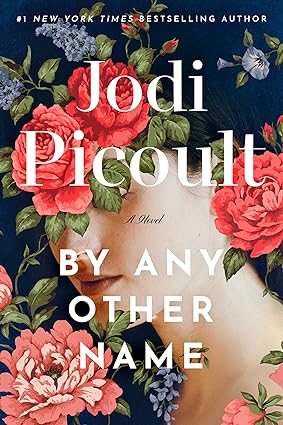
A failed playwright discovers she’s related to the 16th-century woman rumored to be the real talent behind Shakespeare’s work. The playwright decides to pay homage to the woman to work out her insecurities about her place in modern theater. Author Jodi Picoult turns out a surprisingly disappointing novel in her newest book, By Any Other Name.
Playwright Melina Green has spent a decade trying to rise above her most humiliating episode. When she was in college, Melina’s mentor encouraged her to enter a major competition. Winning the competition would have opened the most important doors for Melina in the theater world, a notoriously difficult place for women. A scathing review of her play by one of the harshest critics at The New York Times, though, takes her work out of the running for any kind of recognition.
Now, ten years later, Melina is living in New York City and pursuing her dreams the hard way. When she learns that she’s related to about Emilia Bassano, Melina knows at last here’s someone who would understand how she feels. Emilia Bassano was one of the ghostwriters who made Shakespeare famous.
Melina writes a script based on Emilia’s life to expose Shakespeare for the phony he was, but she can’t work up the nerve to submit her play to an upcoming festival. On a drunken night her best friend, Andre, submits the script under a male pseudonym, and the play is accepted into the festival. Except people think Andre wrote the play. Now, Melina is living Emilia’s experiences on the page as well as in real life.
In England in 1581, Emilia Bassano goes from being the ward of a courtier to the mistress of the powerful Lord Chamberlain who is in charge of all British theater productions. Through him, Emilia learns about the world of plays and playwrights, strikes up a close friendship with author Christopher Marlowe, and learns of an upstart named William Shakespeare who wants to earn a living from writing but can’t string a sensible scene together. She also begins working on her own writing in earnest.
Emilia strikes a deal with Shakespeare: she’ll write and let him use his name on the plays for a cut of the profits. Shakespeare agrees, and Emilia’s work rises to prominence even as she herself experiences some of the greatest hardships a woman can undergo.
Author Jodi Picoult’s attention to detail through the extensive research she does is second to none in every book she writes, and the same is true for Emilia Bassano’s story. The author shares in a note how she herself first heard about Emilia and then began digging into the woman’s life. Based on a careful review of Emilia and the events and people around her, Picoult builds a strong case for the courtesan being one of the people ghostwriting for Shakespeare.
The disappointment in the book comes in other areas, namely the writing itself. Information shared through the narrative is shared a second time in dialogue a few pages later without any additional information added. Emilia and other 16th-century characters speak in modern-day English in some scenes but then in more archaic speech in others. Melina’s entire story arc, given equal weight and importance on the page, feels severely underdeveloped and could have been dispensed with completely.
The shock comes in Picoult’s anger that sparks on every page. Given the author’s personal beliefs and publicized recent experiences, her frustration is understandable and justified. In fact, she’s used these feelings in the past to take on other hot-button issues like abortion and racism.
Picoult’s careful thoughtfulness in her research and development of characters shines in previous novels, offering a balanced, fair view of all sides. Here her characters are stereotypical, sometimes cardboard cutouts, that feel more like stand-ins on a fourth or fifth draft. The point she makes, often bluntly, is clear: Shakespeare was a cheat and a hack who doesn’t deserve recognition for anything other than being a thief.
Proving the veracity of any text that’s nearly 430 years old is an immense challenge, and, again, Picoult’s logic is sound. Her arguments, through Melina and Emilia, are heated enough to draw attention away from those sound arguments, however, leaving a hollow sense of vindication. Emilia gets her due through Melina, but Melina’s self-suppression feels in poor taste.
Those looking for a strong alternative to the idea that Shakespeare alone penned his work may want to check this out. Anyone wanting a book that is able to present the idea with Picoult’s famous even-handedness may want to check out some of her previous works instead. By Any Other Name by Jodi Picoult Borders on Bypassing it.