
Diverse Dimensions: John Moens' The World of 'Never Saw It Coming Reviewed by Norm Goldman of Bookpleasures.com
- By Norm Goldman
- Published May 17, 2024
- Fiction

 Norm Goldman

Reviewer & Author Interviewer, Norm Goldman. Norm is the Publisher & Editor of Bookpleasures.com.
He has been reviewing books for the past twenty years after retiring from the legal profession.
To read more about Norm Follow Here
Author: John Moens
Publisher : Woody Roberts
ISBN-10 : 1734657979
ISBN-13 : 978-1734657975
Embark
on a riveting literary voyage with John Moens' "Never Saw It
Coming," an enthralling anthology of short stories pulsating
with twists, turns, and unforeseen revelations.
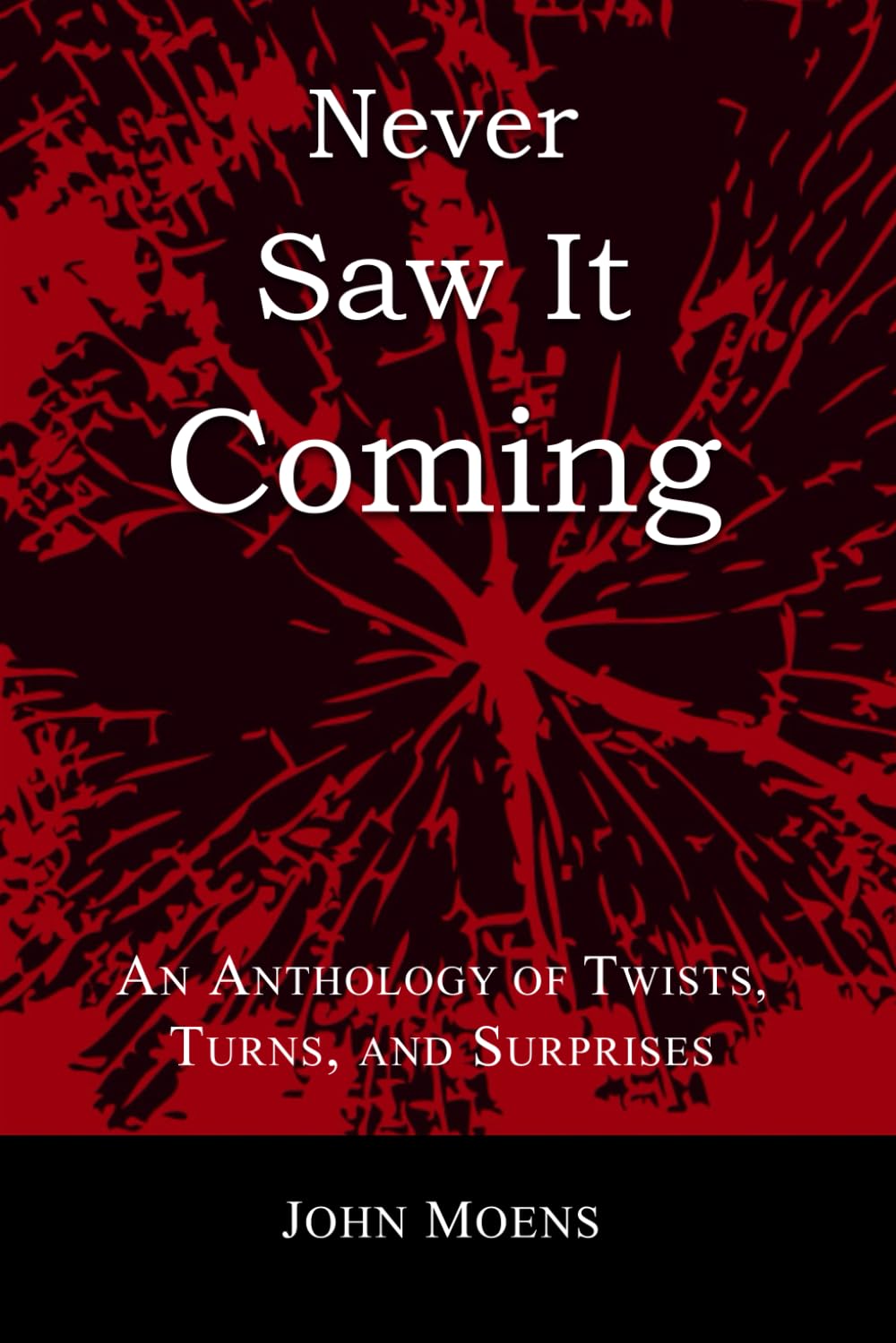
This collection is a masterclass in crafting surprise endings. Moens' ability to shift tones between stories is impressive, making it hard to believe they are written by the same author.
He is a "raconteur par excellence," infusing each narrative with a magnetic charm that guides readers through over fifty captivating stories segmented into five thematic sections: "The Journey," "Crime and Treasure," "Creatures Great and Small," "Not for the Faint of Heart," and "Conflict and Disaster."
Many of the stories teach valuable lessons with thought-provoking morals that are not always apparent at first glance. One such story is "USELESS." This tale centers on an injured horse supposedly mauled by a cougar. A farmer, eager to rid himself of the horse, convinces a young lad to take it away for fifty dollars—an offer he couldn't refuse.
Despite his lack of experience with horses and learning that cougars have not been seen in the area for centuries, the young lad decides to adopt the horse and nurse it back to health at Harvest Home Farm.
His friend, who referred him to the farm, warned that the owner might not be pleased with boarding an injured horse, which could not be written off as a tax deduction. Since the farm owner spent most of his time at his sporting goods store in the city, he was unaware of the horse's condition. The young lad chose not to inform the owner about the horse's injury until it healed.
Harvest Home Farm was leased to an organization providing vacation experiences for children largely confined to hospitals. This arrangement had multiple benefits: it provided additional funds for the farm owner, a charity tax write-off, and the satisfaction of contributing to a good cause.
When one of the children first saw the horse, she asked if it had been in an accident. The lad responded, “This happens to be a mare. That's a female horse.” The child replied, “I'm not an idiot. Everybody knows that. What's her name?” The lad asked, “What would you call her?” She answered, “Useless.”
As the story unfolds, it becomes clear that the horse was anything but useless. The mare defied expectations and stereotypes, proving that one should never judge based solely on appearances or initial impressions.
She found her purpose in bringing joy and comfort to sick children, highlighting the importance of companionship and its positive impact on mental and emotional well-being. This underscores the idea that every being has something unique to offer and can find their purpose given the right circumstances. Despite her past trauma, Useless persevered, bringing positivity and light into the lives of those around her, reminding us of the resilience within each individual even in the face of adversity.
This engaging story features a well-developed character and a compelling plot that immediately captured my attention. Moens cleverly weaves the moral seamlessly into the narrative, which becomes apparent only at the end.
It left me reflecting on my values and actions, prompting introspection. Ultimately, the story resonated because it balances entertainment with meaningful insight, making the moral both memorable and influential.
Moens has been writing short stories since childhood, driven by a love for storytelling rather than financial gain. As a history major at The Ohio State University, he began collecting interesting facts, which inspired several stories in this collection. With a glint of mischief in his eye and a profound storyteller's finesse in every gesture, John crafts a tapestry of tales that beckons readers into realms of intrigue and wonder.
“Never Saw It Coming” not only entertains but also encourages introspection, making it a must-read for anyone who appreciates the art of the short story.
Follow Here To Read Norm's Interesting Interview with John Moens