
Reviewer & Author Interviewer, Norm Goldman. Norm is the Publisher & Editor of Bookpleasures.com.
He has been reviewing books for the past twenty years after retiring from the legal profession.
To read more about Norm Follow Here
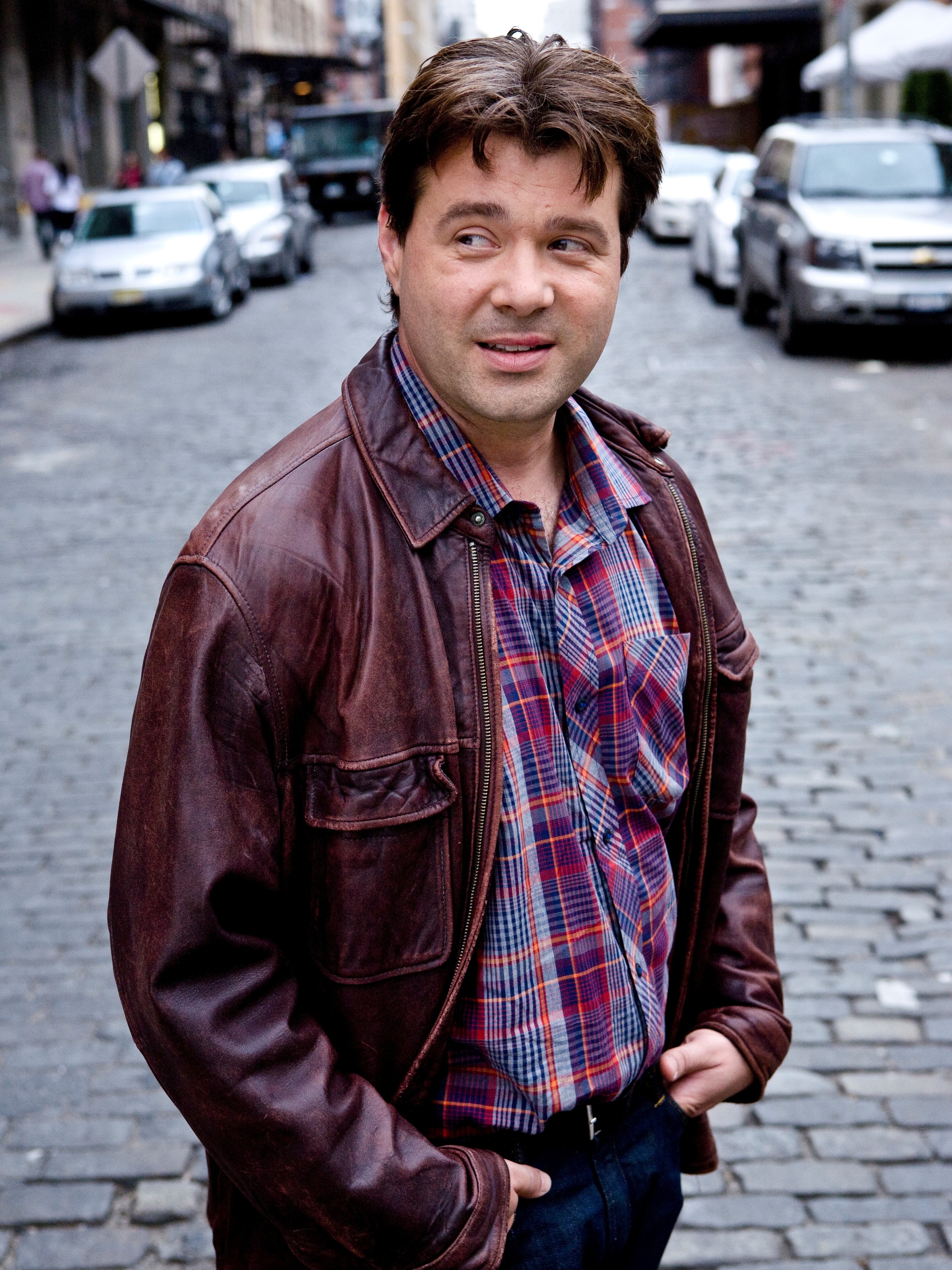
With a successful career spanning various media industries, Jamie has made a lasting impact on his ventures in film, television, and literature.
One of Jamie's most
notable achievements was directing and hosting the Emmy
award-winning PBS television series New York Originals.
Jamie has recently published New York City Yesterday and Today: Exploring the City's Tax Photographs.


With a successful career spanning various media industries, Jamie has made a lasting impact on his ventures in film, television, and literature.
One of Jamie's most
notable achievements was directing and hosting the Emmy
award-winning PBS television series New York Originals.
His imaginative persona was clear in the development of this captivating series, which later transformed into an engrossing book called Universe/Rizzoli, published by Universe/Rizzoli.
Jamie's affiliation with
Fox News as a former producer further showcased his ability to
create engaging content that resonates with audiences.
As a documentary filmmaker, Jamie reached new heights with his film Pulp Fiction Art: Cheap Thrills and Painted Nightmares, which received widespread acclaim and recognition with multiple "Best Documentary" awards.
His academic accomplishments, including a Bachelor’s Degree in Communications from Boston University and a Master’s Degree from New York University, have undoubtedly enriched his storytelling abilities, clear in his well-received works.
Jamie's literary
contribution to No Access New York stands as a testament
to his versatile creative expressions.
Jamie has recently published New York City Yesterday and Today: Exploring the City's Tax Photographs.
Norm: Good day Jamie and thanks for taking part in our interview.
Can you tell us about the inspiration behind New York City Yesterday and Today: Exploring the City's Tax Photographs and how your background as a former producer at Fox News and documentary filmmaker influenced its creation?
Jamie: Fox News was very good with letting young people “learn on the job.” We were encouraged to do passion projects and learn how to do research and producing at different levels and on different subjects.
I think this in part has helped me keep my antennas up for interesting subjects to cover in videos and books.
Norm: With 61 million
annual visitors to New York City, what motivated you to delve into
the historical aspect of the city? How do you think understanding
its history can enhance the experience of modern-day visitors?
Jamie: I am, like many, obsessed with all things old in New York City. I’m one of those people who laments when old signage or buildings come down, no matter how practical it may be for the circumstances.
As for enhancing the New York City experience, it does so for visitors and locals. For one, people are always fascinated with the “then and now” aspect of anywhere.
There is a connective tissue aspect to the past that comes with it. For locals, I am already hearing about people reading the book, then getting on the NYC Municipal Archives and looking up their ancestors and their own places of residences for themselves. (More on that later.)
Norm: New
York City Yesterday and Today seems to explore the concept
of change versus continuity in the city's landscape. Can you share
some specific examples from the book that showcase significant
changes or intriguing consistencies over time?
Jamie: There is a constant back and forth between how time has stood still to how everything changes, eventually.
Even when an entire city block has been razed and new buildings have been put up, manhole covers, street light positions and general layout of the land can still be seen as it was when these tax photographs were taken.
One of my favorite elements in the photos is when someone is seen leaning on a post or what-not and the post is still there. Again, it gives you that connective tissue to the past.
Norm: As the host of
the Emmy award-winning PBS television series New York
Originals, how did your experiences with visual storytelling
translate into the approach you took while curating the photographs
for this book?
Jamie: It is always best to keep everything simple and visual. Simple writing is great writing. Your job is to entertain, not make yourself look good.
One of the best compliments I have ever received was from a CBS News producer who told me my writing on New York Originals was really good.
For the viewer that wouldn’t mean as much because it is a visual medium. But producers know writing is the foundation for a good segment.
That and he complimented
me on not putting myself in the segments too much which is the bane
of YouTube’s existence.
Norm: The visual component of your book, juxtaposing historical tax photographs with contemporary ones, is expected to be enthralling. How did you go about selecting and pairing these images to create a seamless narrative of the city's evolution?
Jamie: First off, I had to visit every site in person. I just could not see if they would translate well for the book until I had the then and now photos in hand.
For every one photo that made the book, close to ten did not make the cut. (Not to mention the dozens I shot for each location just to get the angle right.
The only real guidelines was once I got the “Then and Now” photographs together was whether they had a “gee-wiz” appeal to them. Again, some did because there were so many interesting things in the original photograph that are not there anymore.
And
conversely, others were interesting because so much is still there.
Norm: How have tax photographs uniquely captured New York City's transformation, and what insights can readers gain about the city's history through these images?
Jamie:We look at these photographs with rosy nostalgia, which is fine but there is a lesson to be learned, particularly in these times that we live in where everyone feels aggrieved.
Yes, how quaint it must have been to have the local grocer on the corner and or the opportunity to play out in the streets at dark. However, we gloss over things like the signs in the photographs which tout places as air-conditioned or with hot water.
In other words, things
were not better or worse in the past, just different. We all need
to take the bad with the good in these confusing times.
Norm: Based on your expertise in documentary filmmaking, could you explain the unique hurdles you faced when transcribing the visual storytelling medium into a written rendition? How did you overcome these challenges?
Jamie: You have to write to the pictures, which is harder than it looks sometimes. Even harder - keep the writing short and simple.
You do not waste the
reader’s time trying to show them how smart and insightful you
are in your writing.Narcissism has killed
many a book.
Norm: New York City Yesterday and Today appears to bridge the gap between nostalgia and modernity. How do you think readers, both residents and tourists, will respond to the juxtaposition of past and present in your book?
Jamie: I have been
showing these photos to friends and family through the entire
process to get feedback. Everyone treats them kind of like a
puzzle. One’s eyes go back and forth, looking for the changes and
constants in the images.
Norm: Where can our readers find out more about you and New York City Yesterday and Today?
Jamie: www.newyorkoriginalsonline.com.
Also, be sure to check out the NYC Municipal Archives online. You
can literally get access to almost all the original 400,000 tax
photos on their site. (I do not have a direct website to give
because the NYC Municipal Archives are currently upgrading to a new
address. However, an internet search will easily direct you to the
current site available.)
Norm: As we wrap up our interview, could you share a personal anecdote or discovery from your research for this book that particularly resonated with you? Is there a specific photograph or story that left a lasting impression on you?
Jamie: I went into many
neighborhoods. I would be approached all the time about what I was
doing, which led to interesting conversations about the local
history, and sometimes, even more places to photograph for the
book. I learned people take pride in their neighborhood, no matter
how boring or rough it might be perceived to a visitor.
Norm: Thanks once again and good luck with all of your future endeavors