Reviewer & Author Interviewer, Norm Goldman. Norm is the Publisher & Editor of Bookpleasures.com.
He has been reviewing books for the past twenty years after retiring from the legal profession.
To read more about Norm Follow Here
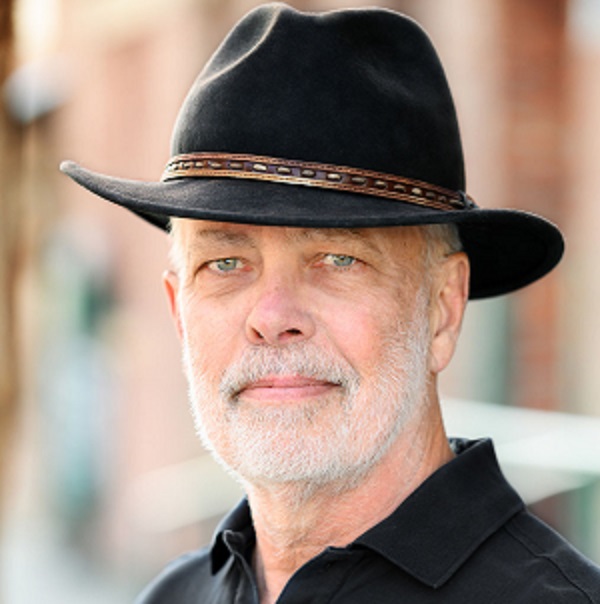
Bookpleasures.com is featuring Terry Tierney as our guest. Terry's versatility as a writer ensures that readers from all walks of life will be captivated by his work.
Born in South Dakota and raised in Minneapolis and Cleveland, Terry's journey has taken him on a diverse path, enriching his writing with unique perspectives.
Terry has captivated readers with his engaging stories and heartfelt poetry. His academic achievements include earning a BA and MA in English from SUNY Binghamton. This was followed with a PhD in Victorian Literature from Emory University.
Terry's extensive experience in academia led him to teach college composition and creative writing, where he nurtured the talents of aspiring writers.
Bookpleasures.com is featuring Terry Tierney as our guest. Terry's versatility as a writer ensures that readers from all walks of life will be captivated by his work.
Born in South Dakota and raised in Minneapolis and Cleveland, Terry's journey has taken him on a diverse path, enriching his writing with unique perspectives.
Terry has captivated readers with his engaging stories and heartfelt poetry. His academic achievements include earning a BA and MA in English from SUNY Binghamton. This was followed with a PhD in Victorian Literature from Emory University.
Terry's extensive experience in academia led him to teach college composition and creative writing, where he nurtured the talents of aspiring writers.
However, his story took an unexpected turn as he ventured into the realm of Silicon Valley startups, where he thrived as a software engineering manager.
This blend of literary expertise and technological prowess adds a fascinating layer to Terry's creative work.
Terry's stories and poems have been published in over seventy literary journals, earning him widespread recognition. His evocative work has been featured in esteemed publications such as Ghost Parachute, Fictive Dreams, Rust + Moth, Typishly, Valparaiso Poetry Review, The Lake, Third Wednesday, Puerto del Sol, and Poetry Northwest.
The recognition of his talent in poetry has been affirmed by his nomination for the distinguished Pushcart Prize.
Among his notable works is The Poet's Garage, a poetry collection that received critical acclaim and attention. Terry has ventured into the realm of fiction with his novel, Lucky Ride, captivating audiences with his interesting storytelling.
Join us in this interview
as we delve into the mind of Terry concerning his upcoming release of
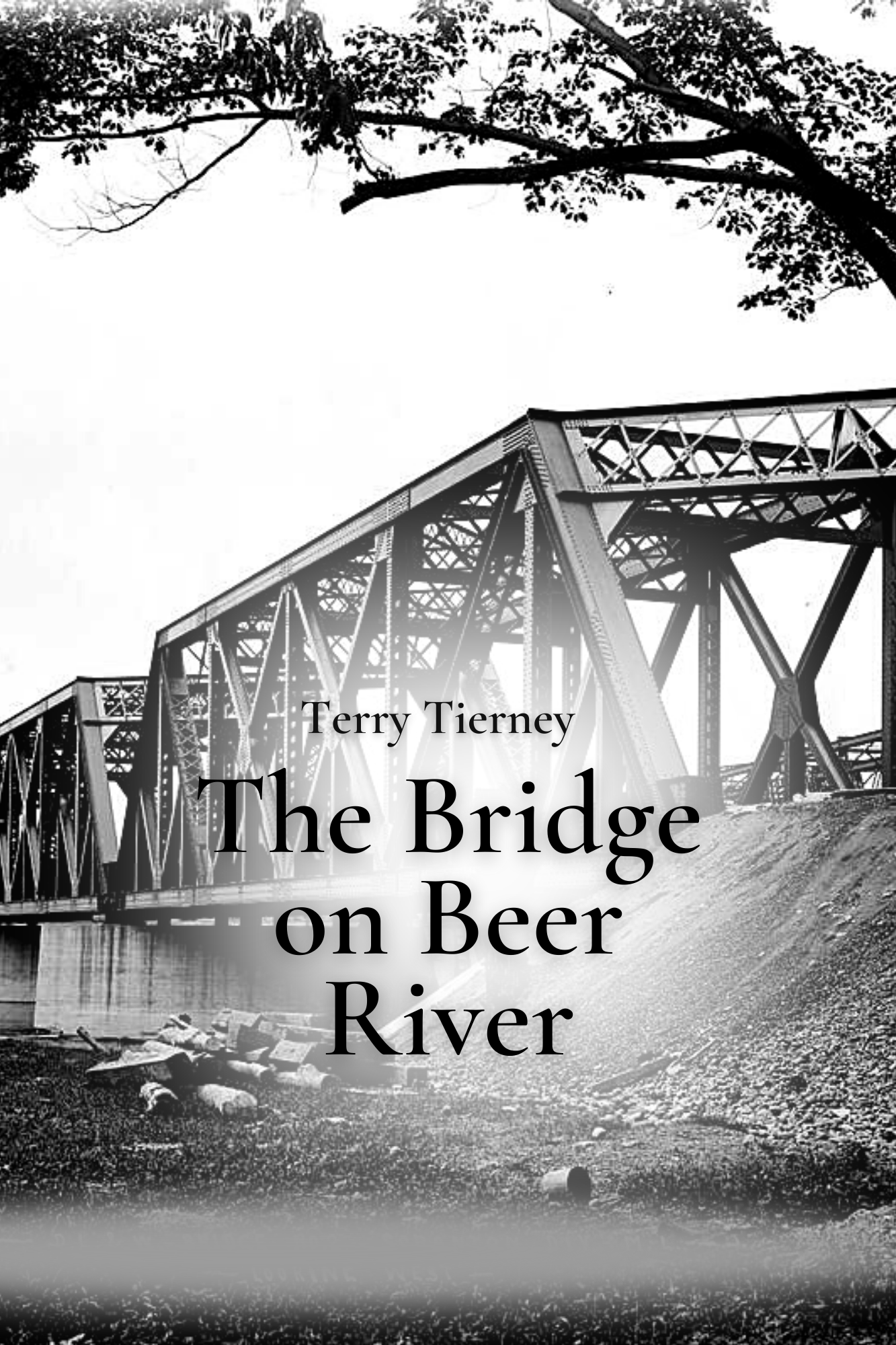
his second novel, The Bridge on Beer River.
Norm: Good day Terry and thanks for taking part in our interview.
Congratulations on the upcoming release of your second novel, The Bridge on Beer River. Could you tell us a bit about the inspiration behind the story and the character of Curt, the down-on-his-luck Vietnam vet?
Terry: Hi Norm, thank you for taking time to talk to me about my new novel.
The kernel of my concept for The Bridge on Beer River arose from my own experiences struggling to make ends meet after I was discharged from the military.
I moved to Binghamton, New
York with the hope of attending the state university, and I worked a
series of short term and part time jobs.
Sometimes those opportunities were scarce, but I was generally luckier than Curt. Even after I finally found a steady job, I saw many others around town who were not so fortunate.
When a friend of mine described looking through the window of a dive bar downtown and seeing a destitute, one-legged man dancing, the image resonated with me.
I realized there must be many stories of survival and resilience that deserve to be told, and the narrator should be someone like Curt who has intimate knowledge of the physical and emotional landscape of the decaying town and its more desperate residents.
A veteran and college
dropout with his own demons, Curt loses his construction job and
finds himself immersed in life on the edge as he tries to help others
and help himself.
Norm: As an author who transitioned into writing as a second career, what advice would you give to aspiring writers who are considering making a similar leap?
What challenges did you face during your transition, and what strategies did you employ to overcome them?
Terry: I’m surprised more people don’t ask me that question, though in my case the answer is a bit complex. I consider writing to be my first career.
When I first attended college, my goal was a career in journalism, and I eventually found myself seduced by literature and creative writing.
But newspaper jobs were sparse after I graduated, and I had bills to pay. Fortunately, I have a knack for technical work, and I continued writing in my spare time.
Now after several decades in Silicon Valley, I’m finally getting the chance to write full time, which is what I always wanted. I feel very lucky.
My advice to anyone who wants to write is don’t wait. Even if you need to support your family with a non-writing day job, continue to read and write.
At the very least, keep a journal when you can, so you will not be starting from scratch when you are free to write. It’s never too late to begin; look forward not backward.
My transition has been difficult at times but enjoyable overall. To enter the literary community and its state of mind, I joined several writing groups, attended open readings and conferences, and engaged in social media.
I learn whatever I can from established writers, and I work as hard as I ever did in my tech jobs. That said, I admit I sometimes feel my literary career is thirty years behind schedule, but I’m catching up.
Norm: In your previous works, such as Lucky Ride, you drew on your own life experience to create interesting characters.
How much of your
personal background and experiences influenced the creation of Curt
and the depiction of Reagan-era Binghamton?
Terry: Like most authors I fall back on my personal experiences with people and situations, but the scenes and characters in The Bridge on Beer River are not a direct portrayal of my life.
Although I lived through times when I had very little food until payday and I had to rely on friends to scrape together money for rent, the scenes in the novel are all invented.
The novel draws sensitivity from my experience, so in that way the stories could be true. Similarly, the characters, including Curt, share some aspects with people I know, but they are all composites and unique.
As the narrator, Curt expresses some of my attitudes toward employers, government, and other institutions. He has some attributes I envy and others I don’t.
I wish I had his courage and willingness to step into difficult situations to help others, for example, but not his tendency to violence and bingeing. I might enjoy having a beer with him, but I doubt we would become close friends.
Norm: The protagonist, Curt, seems to encounter many challenges and setbacks throughout the story. Can you shed some light on the thematic elements explored in the novel, particularly regarding alcoholism, work, and romantic relationships? What message or insights do you hope readers will take away from these aspects of the narrative?
Terry: Curt faces many of the same challenges we all face, but economic factors tend to inflate anxieties caused by employment, romantic relationships, and substance abuse, not to mention the continual economic distress that grinds you down and wears on your soul.
For the characters in The Bridge on Beer River, a hundred dollars or even twenty is a lot of money. Workplace problems, for example, take on a more ominous tone when you are living with the fear of losing your job and your home.
Similarly, you are not free to make the personal decisions you might wish, but you try to do the best you can.
And of course, alcoholism and other substance abuse issues might seem like an escape or even self-medication until they add to your list of problems.
Although economic issues make their challenges more difficult and poignant, the characters share the same human desires for love, safety, and joy we all do.
I hope readers will identify with them for their resilience and understand how their decisions are often made under pressure.
Like Curt, many people
live one paycheck away from homelessness and sometimes fall off the
edge. I would like remind readers that the less fortunate are more
like us than not.
Norm: Your sense of place and setting is praised as being strong and vivid in your writing. How did you go about capturing the decline of a rust belt city like Binghamton?
What did you do to capture the town's atmosphere and struggles accurately in your work?
Terry: I liked living in Binghamton for the beauty of its surrounding hills and forests, the rivers, and the historical architecture, even if many of the buildings were in sad states of decay.
Although I was fortunate to land a well-paying job, I could see that most of the major employers such as IBM, General Electric, Endicott Johnson, and Link Simulation where I worked were all under threats from globalization and evolving technology.
When I had a chance to transfer to California, I took it because I worried about my future. But I also realized that the problem was worse for people already living on the edge.
In Binghamton, as in similar rust belt towns enduring changes from industrial jobs to fewer technical jobs and the gradual disappearance of many companies, Reagan’s trickle-down economics meant trickle-down poverty.
The anxiety and pressures
were all around me. I imagined my characters like Curt and Artie, the
one-legged Korean War vet, trying to navigate the decline along with
characters who had even less to start with.
Norm: Where did the title The Bridge on Beer River come from?
Terry: The title arose from one of my characters. Curt develops a close friendship with Artie, who is a functioning alcoholic though he would never admit it.
He also tends to be rather chatty, and during the novel as the two are driving from Binghamton to Norwich and crossing one of the many old bridges, Artie refers to the Chenango River as Beer River.
I always listen when my characters speak to me. In this case, Artie’s description of the river while crossing the bridge felt like an appropriate symbol for Curt’s journey.
Bridges represent change from one place to another or one phase of life to another, and Curt faces a series of decisions when he tries to help his friends and rescue himself.
At times he seems to be drowning in Beer River, though his goal is to cross it. At other times he tries to carry others on his back.
Norm: Both your debut
poetry collection, The Poet's Garage, and your first novel, Lucky
Ride, received positive reception. How did those experiences shape
your writing process and prepare you for your second novel, The
Bridge on Beer River?
Terry: My journal publications and my books have encouraged me to continue refining my writing process, which includes focusing on editing and rewriting until I think a piece is ready for the world.
As I pursue my goal of improving as a writer, I am fortunate to know several established authors who are willing to share their skill and experience. Drawing on my writing community has been essential, and it will remain so.
Norm: Where can our
readers find out more about you and The Bridge on Beer River?
Terry: Please visit my WEBSITE, where you will find links to my latest publications, events, and occasional blog musings along with reviews of my books.
On my home page I have posted the synopsis and early praise for The Bridge on Beer River and links to the stories that first appeared in literary magazines.
Norm: What is next for
Terry Tierney?
Terry: Unsolicited Press will publish my poetry book, Why Trees Stay Outside, in October 2024. My first poetry book took forty years to compile, and I have joked that my next one will arrive in 2060, so I am ahead of schedule.
I also continue to write fiction, and I have completed the rough draft of what I hope will be my next novel, The Secret History of Dirt. Here is a brief working synopsis:
An amateur scientist with a passion for dirt uncovers a vast pattern of degraded soil threatening human existence in a novel narrated by his skeptical imaginary friend.
Norm: As we end our interview, what can readers expect from The Bridge on Beer River? Without giving away too much, what themes or emotions will they encounter within the story? Is there a particular message or impression you hope readers will come away with after reading your novel?
Terry: Echoing back to Aristotle’s Poetics, my ultimate intention in writing the novel is to entertain. Despite some of the darker themes, there is plenty of humor and the satisfaction of following characters when they confront and overcome challenges.
The Bridge on Beer River can be described as a rust belt romance in that the characters cling to the solace of romance, even a chance love affair, as one thing they might control in the face of economic and other personal and social challenges.
In addition to the theme of love, the novel examines friendship, economic pressures, urban decline, and substance abuse. Although characters often erupt with anger, we can only admire their humor and determination in the face of desperation.
Norm: Thanks once
again and good luck with all of your future endeavors