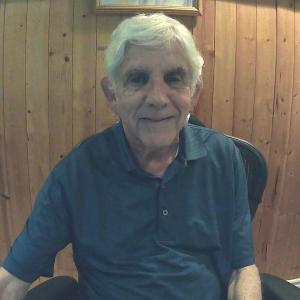
Reviewer & Author Interviewer, Norm Goldman. Norm is the Publisher & Editor of Bookpleasures.com.
He has been reviewing books for the past twenty years after retiring from the legal profession.
To read more about Norm Follow Here
Bookpleasures.com welcomes as our guest, singer/lyricist/choral director Sally Stevens. Sally has worked in film, television, concert, commercials and sound recording in Hollywood since 1960.
She sings the main titles
for The Simpsons and Family Guy and her
voice can be heard on hundreds of film and television scores.

Sally has put together choirs for John Williams, Jerry Goldsmith, Elmer Bernstein, and many others for film scores, and was choral director for The Oscars for 22 years.
In the earlier years she
toured with Ray Conniff, Nat King Cole and Burt Bachrach, and
she has also written lyrics for Burt Bacharach, Don Ellis, Dominic
Frontiere, Dave Grusin, and others.
Her short fiction, poetry and essays have been included in Mockingheart Review, The OffBeat, Raven’s Perch, Hermeneutic Chaos Literary Journal, Los Angeles Press, The Voices Project, and Between the Lines Anthology: Fairy Tales & Folklore Re-imagined.
Along with singing and writing, Sally's other passion is photography, and her black & white photographs of film composers have been included in exhibitions at the Association of Motion Picture & Television Producers headquarters in Los Angeles, and at Cite de la Musique in Paris, France.
Her memoir I Sang That: A Memoir from Hollywood has recently been published.
Bookpleasures.com welcomes as our guest, singer/lyricist/choral director Sally Stevens. Sally has worked in film, television, concert, commercials and sound recording in Hollywood since 1960.
She sings the main titles for The Simpsons and Family Guy and her voice can be heard on hundreds of film and television scores.
Sally has put together choirs for John Williams, Jerry Goldsmith, Elmer Bernstein, and many others for film scores, and was choral director for The Oscars for 22 years.
In the earlier years she
toured with Ray Conniff, Nat King Cole and Burt Bachrach, and
she has also written lyrics for Burt Bacharach, Don Ellis, Dominic
Frontiere, Dave Grusin, and others.
Her short fiction, poetry and essays have been included in Mockingheart Review, The OffBeat, Raven’s Perch, Hermeneutic Chaos Literary Journal, Los Angeles Press, The Voices Project, and Between the Lines Anthology: Fairy Tales & Folklore Re-imagined.
Along with singing and writing, Sally's other passion is photography, and her black & white photographs of film composers have been included in exhibitions at the Association of Motion Picture & Television Producers headquarters in Los Angeles, and at Cite de la Musique in Paris, France.
Her memoir I Sang That: A Memoir from Hollywood has recently been published.


Good day Sally and thanks for taking part in our interview.
Norm: What do you consider to be your greatest
success or successes so far in your various careers?
Sally: That’s kind
of a tough question, because I’ve been so blessed with so many
wonderful projects over the years.
But I would say that after about
20 or so years of just working as a singer, when I added Vocal
Contracting to my work, I am sure that’s what extended the activity
for so many years.
And it also gave me a closer working connection to the composers for whom I did choral contracting.
Norm: What has been your greatest challenge (professionally) that you’ve overcome in getting to where you’re at today?
Sally: We in the “session singing” world live in a very competitive world, so in the beginning, it was important to show up every time you got hired for something.
I was grateful to have been at the right place at the right time, able to show what I could do, but in that process I had to be away so much when my daughter was little.
That was more of a personal “challenge” I guess, but certainly a challenge. In addition, I think the challenge is to say “yes” to whatever you’re asked to sing, and believe in yourself enough to accomplish it successfully.
Norm: How did you get started in singing? Which singing engagement are you most proud of?
Sally: I started singing in my high school years – I knew about the world of session singing because my parents were both singers – not influential or vocal contractors and able to “hire” me, but did teach me so much about the world of singing.
I had an opportunity to record two songs I wrote, as the artist, for producers Herb Alpert and Lou Adler, when they were partners, very early on before they both had such tremendous successes in the business.
I loved that experience, and going later into more film work, I loved the opportunities to do solos in the underscore music, for films like Klute, Dirty Harry, and later, The Secret of NIMH.
I loved my travel years in concert with Burt Bacharach, and I was so thrilled to actually write a lyric for him for a song we recorded with the Houston Symphony.
Norm: You have authored a memoir, short fiction, poetry, music lyrics and essays. In your opinion, what is the most difficult part of the writing process?
Sally: For me, I think the most difficult part is editing; once it’s on the page, I’m often stuck with it! But I find that reading a piece out loud really brings to my attention what works and what doesn’t.
Aside from that, the biggest challenge is making myself focus on submissions – reading the journals and other resources, really targeting the poems and fiction pieces to the right publication.
Norm: You were a choral director for The Oscars for 22 years. What did this entail and how did you get the job?
Sally: It entailed putting together whatever vocal ensembles, or soloists, were needed for the broadcast, singing with those vocal ensembles, handling auditions if a number was to be on camera as for instance when we performed “Blame Canada” from the film South Park: Bigger, Longer, and Uncut, and there needed to be excellent singers who also could sort of “play” characters on screen.
It involved communicating with the musical director to understand what specifically was needed for the music to be performed in each broadcast.
I had done some film score work for Bill Conti, and he hired me to do the Choral Directing the first time I participated in that role.
I had sung with other contractors on past broadcasts but that was the first time I was “in charge” of the vocals.
I guess I did an okay job, because I was asked to continue for two decades in that role, even when Bill was not the Musical Director in a particular year.
Norm: What was it like to write lyrics for Burt Bacharach, Don Ellis, Dominic Frontiere, Dave Grusin, and others?
Sally: It was just
amazing! For Dominic, it was special because he trusted me enough to
give me my first opportunity to write for film. Dave Grusin and Don
Ellis followed, and Dominic and I did several other projects together
after our first work on On Any Sunday.
For Burt, I had played him some songs I’d written, and he had a concept to do an album about “life” from a woman’s point of view, a kind of journey in song. Eventually that concept shifted and just became individual songs by women lyricists. To this day I can’t believe I had the honor of writing a lyric for Burt Bacharach!
Norm: What motivated you to write I Sang That? How did you decide you were ready to write your memoir?
Sally: My second passion has always been writing, and I accidentally applied to the University of Iowa writer’s programs in 1998; I thought I had applied or requested information for the summer writing festival! Had to submit some writings, and I was accepted into the program but I just couldn’t stay away from Hollywood long enough to do it, so I began attending the writing workshops at the summer festival there, with some wonderful teachers – all genres – poetry, essay, fiction, memoir, “flash” fiction.
In many of the workshops as we got to know each other, what we did for a living, etc. folks would say “Oh, you have to write a book!”
So eventually it did begin to feel like a good idea. I just wanted to get the journey, the stories out there while I was still on the planet!
Norm: What were your goals and intentions in this memoir, and how well do you feel you achieved them?
Sally: My goal was to try to create a readable, enjoyable book, to share as much of the journey as pages allowed, to share information about our business – as session singers, people really know so little about what we do!
We don’t receive credit on film or TV work, most of the time…occasionally that happens, gratefully. But it’s kind of an invisible world, so I wanted to offer a peek into that invisible world!
Norm: What did you enjoy most about writing the memoir?
Sally: I have calendar books, journals, date books, etc. going back into the very early years – 1965-1969, 1972, etc. – and was amazed to look back on those years and remember some of the exciting times, the artists I worked with, the details.
I had some wonderful feedback from two fine writers I had done workshops with, which helped tremendously.
Both encouraged me to try to keep the moments alive, and to use my “fiction” voice as much as possible (the writing style, not the made-up part of fiction).
Norm: Could you briefly tell our readers a little about I Sang That?
Sally: The first couple of chapters really start in the present day; the pandemic gave me the chance to write those chapter, to ponder the winding down of the journey.
Then I dive back into early childhood and share a lot of family background, the later high school years, and then wind into the beginning of the actual work in the music business.
I write about the OSCAR years, about the Bacharach years, about the transition to Vocal Contractor, a bit about the early variety TV days – Danny Kaye TV Variety show, etc.
I write about the world of film scoring – what it’s like to be on a scoring stage creating the music that brings the emotions on the screen to life. And I write a bit about the dive into photography, some of my exhibits etc.
Norm: What is next for Sally Stevens?
Sally: I have a fiction, slightly longer than novella-length book, that is basically a literary writing piece but with a bit of magical realism.
It’s something I have been told is filmatic in nature , but each chapter is kind of a separate adventure with the main characters, so it’s a bit long for film unless a few chapters were focused on and chosen.
I would love to get that book published, and I would look forward to returning at the first opportunity to the little town of Iowa City, where the University of Iowa writing festivals I hope will resume perhaps this summer. After twenty years of attending, that little town began to feel like my home town! Also maybe get a collection of poetry together for publication.
Norm: As this interview comes to an end, if you could invite three singers (dead or alive) to your dinner table, who would they be and why? What would you ask them?
Sally: Oh, my goodness what a wonderful question to ponder! I think for sure Frank Sinatra. Maybe Sting… and for sure, my own dad Kenny Stevens!
I have learned in the last year thanks to a wonderful woman writer who writes about early Hollywood films, that he did many amazing projects – film, recording, etc. that I never knew about.
It was a part of his life that he had to step away from, when it was interrupted by going off to war in 1942; when he returned, the opportunities didn’t come back together.
The one film I did know was Broadway Serenade in which he played the romantic singing lead opposite Jeanette Mac Donald in the musical within the film.
I would love to hear those stories I never got to hear, and to share some of my own stories he never got to hear. It was he who kept encouraging me to consider doing some vocal contracting, and I owe him gratitude for what extended my working years by probably several decades!
AND could I possibly add Peggy Lee to that list? She was my idol as I was growing into being a singer, and the first woman I was to learn was writing lyrics for film scores!
Thank you so much for inviting me to be a part of this conversation with you Norm –it was wonderful to chat with you about the book!
Norm: Thanks once again and good luck with I Sang That.