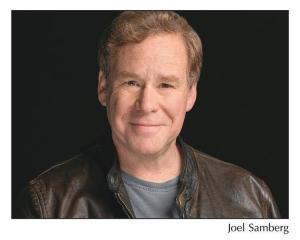
Reviewer Joel Samberg: Joel is an author, book editor, journalist, and corporate communications consultant with more than forty years of experience. He has written for Connecticut Magazine, Pittsburgh Magazine, New Jersey Monthly and dozens of others, and his nonfiction books have been on such topics as music, movies, and comedy. He is also the author of the 2019 novel, Blowin' in the Wind. You can learn more about Joel’s books and book editing service:You can learn more about Joel Here and Here.
“Rise and shine! Rise and shine!”
Those
iconic words, warbled by the mother of an old warehouse buddy, Tom
Wingfield, began my forty-year quest to write and sell a screenplay
based on my experience playing The Gentleman Caller in a community
theater production of The Glass Menagerie.
What I didn’t know then, and what I find excruciatingly hard to believe now, is that my heartfelt effort would result in a cease-and-desist letter from a Madison Avenue law firm.
“Rise and shine! Rise and shine!”
Those
iconic words, warbled by the mother of an old warehouse buddy, Tom
Wingfield, began my forty-year quest to write and sell a screenplay
based on my experience playing The Gentleman Caller in a community
theater production of The Glass Menagerie.
What I didn’t know then, and what I find excruciatingly hard to believe now, is that my heartfelt effort would result in a cease-and-desist letter from a Madison Avenue law firm.
I don’t
drink. Never did drugs. My arrest record stands at zero. Hell, I
can’t even get anyone to slap an unseemly label on me, like ‘nasty
pest’ or ‘cynical grouch.’
A boring life like mine stinks for
anyone who wants to be a writer. After all, doesn’t it often seem
as if you can’t be successful unless there are some
honest-to-goodness skeletons in your closet?
I have none.
But I do have a
cease-and-desist letter from a Manhattan law firm for writing an
original screenplay. Does that count? It’s not heroin, nor assault
with a deadly weapon. But it’s something.
On the other hand, the entire episode is so senseless and frustrating
that it almost makes me want to give up chasing my lifelong dream of
being a greenlit screenwriter. What’s the point? I mean, The
Simpsons was allowed to devote an entire episode to Marge starring
in a silly, mocking, musical version of A Streetcar Named Desire,
but my affable and deferential story about a community theater
putting on The Glass Menagerie is outlawed?
Doh!
“Menagerie,” my
screenplay, is about the fictional Bedford Avenue Playhouse in
Williamsburg, Brooklyn, a little theater group that literally and
figuratively sits in the shadow of Broadway, just across the East
River. The story follows a group of actors and crew members who work
against all sorts of personal and logistical odds to put on the
Tennessee Williams play, while also trying to live their lives, deal
with their families, and hold onto their ambitions. In some ways, the
four amateur actors who play Amanda, Tom, Laura, and The Gentleman
Caller reflect the characters they portray in the show (regretful,
unfulfilled, shy, ambitious). There is a sexist, foul-mouthed
lighting director, a costume designer who is at the end of her rope
(thanks to the foul-mouthed lighting director), a stage manager who
misses rehearsals because she volunteers too much, and a house
manager who, among other things, is a Randy Rainbow wannabe.
After copywriting “Menagerie” and registering it with the Writer’s Guild, I began to send it around. A motion picture finance firm in Los Angeles agreed to discuss it, but worried that the rights would be cost-prohibitive. That baffled me; why, I wondered, would rights even be involved? It’s not the actual play, but merely a pragmatic chronicle of an amateur theater group.
Still, as a nobody with no
track record, representation, or any connections in the business, I
decided to check it out. How cool would it be to report back to that
L.A. company that usage rights were not an issue at all?
Well, it turned out to be not so cool.
Through research, I was able to eventually get the screenplay over to a law firm that represents the copyright owner. The law firm sent me the cease-and-desist letter
It appears that what troubles them is the fact that several
lines from The Glass Menagerie are heard during rehearsals by
the Bedford Avenue Playhouse cast. I’m convinced that no one
actually read the screenplay in its entirely. I bet they merely
skimmed it to count how many lines from the play were there. As I
explained to them in several emails, had they absorbed the entire
narrative, they would have seen that “Menagerie” is neither an
adaptation nor a story based on the original play. It is the tale of
a group of people who live and work in modern-day Brooklyn, and a
tribute both to community stages and Mr. Williams’ canon as one of
amateur theater’s most enduring literary foundations. Why is that a crime?
The
law firm would not accept that justification for allowing “Menagerie”
to move forward. I begged for their rationalization. They provided
none. I referenced The Simpsons.
No response. I even revised
the screenplay with fewer rehearsal lines. No go. Though mine
represents just one small artistic endeavor out of millions, it sure
put a sour taste in my mouth about arts in America. Or more
specifically, business in America.
The
cease-and-desist order remains. And I’m still not famous.
I haven’t started drinking, either. But at least I can now be called a cynical grouch. Maybe that will help. I’ll still rise. But I may never shine.