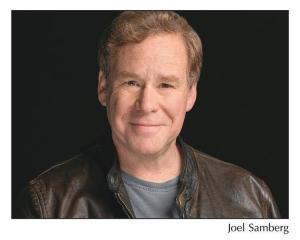
Reviewer Joel Samberg: Joel is an author, book editor, journalist, and corporate communications consultant with more than forty years of experience. He has written for Connecticut Magazine, Pittsburgh Magazine, New Jersey Monthly and dozens of others, and his nonfiction books have been on such topics as music, movies, and comedy. He is also the author of the 2019 novel, Blowin' in the Wind. You can learn more about Joel’s books and book editing service:You can learn more about Joel Here and Here.
Authors: Michael Asimow and Paul Bergman
Publisher: Vandeplas Publishing
ISBN: 978-1-60042-533-2
If I were a prosecutor, and this new book was on trial, I’d be tempted to nitpick in front of the jury. Ultimately, though, that shouldn’t matter much at all because almost all books about movies combine lists that simply must be finite and therefore will inevitably leave something out, and opinions that by definition are subjective, which inevitably will dismay a few people. So nitpicking is no big deal. Absolutely par for the course.
Authors: Michael Asimow and Paul Bergman
Publisher: Vandeplas Publishing
ISBN: 978-1-60042-533-2
If I were a prosecutor, and this new book was on trial, I’d be tempted to nitpick in front of the jury. Ultimately, though, that shouldn’t matter much at all because almost all books about movies combine lists that simply must be finite and therefore will inevitably leave something out, and opinions that by definition are subjective, which inevitably will dismay a few people. So nitpicking is no big deal. Absolutely par for the course.
I rest my case.
What’s more, since we’re talking about a book and not a trial, it’s worth mentioning that nitpicking will not and can not really affect the overall worth and appeal of the defendant (in this case, the book), no matter how much anyone objects. So go ahead and do your best Jack Nicholson when you shout to me, “You want to nitpick? You can’t handle a nitpick!”
Maybe I would cower under cross-examination. But when it’s my witness and I have the floor, my level of confidence is right up there with my cousin Vinny.
Here’s why I’m bringing it up in the first place. To quite a large number of people, movies are a very serious business. Even farces and comedies. We care about who wrote them, directed them, star in them, what worked, what didn’t work, what lines of dialogue we can quote, how the film affected us afterward, and on and on. Which is why so many of us have a section in our home libraries devoted to movie books: books about musicals, books that cover films on World War II and Vietnam, biographies of Hitchcock, Capra, Coppola, and Spielberg, books on bible movies and buddy movies… you name it. Each book has a different formula in terms of content, layout, design, even tone. But they all share a common denominator: they’re all about movies.
So, too, is this one, and its unique focus is that each movie discussed has as one of its most important story elements something to do with a trial by jury.
Simply by virtue of the fact that Real to Reel lists slightly over 225 of these movies, and provides such data as the casts, director, plots, awards won (and a couple of photos for good measure), it is our unanimous decision that it belongs in every movie lover’s library. But it is also important to point out that this book is not, in actual fact, intended for movie lovers as much as it is for students of the law—actual pre-law and graduate students, novice lawyers, and people who just find the legal professional riveting and want to find out as much as they can about it. Indeed, the subtitle of the book more or less gives that away.
Like most movie books, Real to Reel has its very own character. For one thing, the authors—two distinguished law professors who have authored or edited several other books and articles on legal topics—provide their own one- to four-gavel ranking system. They begin most sections with an “Opening Statement” that provides the film’s main theme. There’s a “Courtroom Closeup” for each movie that discusses what goes on in the story’s courtroom, along with a discussion of the difference between what happens in the film and what would probably have happened in a comparable real-life hall of justice if the same events unfolded.
As already stated for the jury, there are many reasons to include this comprehensive, well-researched, passionately discoursed, easy-to-skim-and-jump-around book in a home library, even if you’re not a law student. My guess, though, is that novices (that is to say, non-law students) will find plenty to nitpick. (I suppose that’s why I started this review the way I did.)
For one thing, even though there is much value in learning why something a character does in a movie should never be done in real life, devoting space to such arguments may, to some movie-loving readers, at least, seem to be a superfluous argument. Yes, Gregory Peck as Atticus Finch in To Kill a Mockingbird threw a drinking glass at defendant Tom Robinson to see which hand he uses to catch. And Henry Fonda as Juror #8 in 12 Angry Men purchased a knife after the trial and stuck it in the jury table to make a point. As the authors point out, if attorneys and jurors did things like that in real life, there might very well be hell to pay.
Without a doubt, that’s important for students of the law to know. But does that mean that To Kill a Mockingbird and 12 Angry Men should, for the sake of accuracy and to uphold American legal standards, have been written, acted, and directed in a slightly different manner? Absolutely not. They’re great movies regardless. And the authors do indeed acknowledge this. But sometimes even the mere suggestion that the story is ill-advised may make some wish that Real to Reel had additional clues (on its cover, perhaps) to entice more of its target audience and keep us movie geeks cautioned for some minor disillusionment.
Still, there’s enough between its covers to adequately engage both students of the law and devotees of the cinema. (There: I’m playing both sides of the courtroom!)
To be clear, despite my nitpicking, this book does not pretend to be what it isn’t, nor does it try to hide the fact that it is what it is. In fact, Vandeplas Publishing is noted for its catalog of law-centered titles (along with government and business), so it is more than likely that they’re already marketing the book to the proper demographic. In terms of this particular nitpick, they can probably rest their case with impunity.
The only thing they may not be able to rest so easily is the shout from movie lovers who nitpick not for what’s in it, but for what’s missing. True, there are in excess of 225 movies mentioned inside, but why not The Shawshank Redemption, The Fugitive, Vertigo, Counsellor at Law and another dozen or so other top films in which trials and lawyers and judges are essential plot elements? As previously noted, there must, of course, be a limit to the number of movies included. But those four are pretty darn big, popular movies. In both The Shawshank Redemption and The Fugitive, innocent men are found guilty. In the first, Andy Dufresne (Tim Robbins) is given two life sentences, and in the second, Dr. Richard Kimble (Harrison Ford) is sentenced to death. As an amateur with a casual interest in the intricacies of jurisprudence, I’d love to know how close some real-life cases came to imitating those fictional ones (or vice versa), and what the defense could have done differently to find Andy and Dr. Kimble not guilty.
What’s more, I care about the trials in those two films much more than I care about the courtroom subplot in Woody Allen’s Bananas, which gets half a page of its own.
Of course, based on what I said earlier, wanting to discuss ways to avoid Andy Dufresne and Richard Kimble going to prison (in which case we would have neither The Shawshank Redemption nor The Fugitive) would make me a gigantic hypocrite, wouldn’t it?
Yes, it would. So lock me up. I can handle the truth.