
Edgar
Scott is an economist-turned computer scientist. For over 20 years,
Edgar served as a Senior Database Administrator and Development
Operations Team Manager in financial, crypto-currency, and medical
industries, as well as with start-ups.
His experience has taught him
that people’s limited beliefs often keep them prisoners in a life
they don’t want to live. This theme resonates in his forthcoming
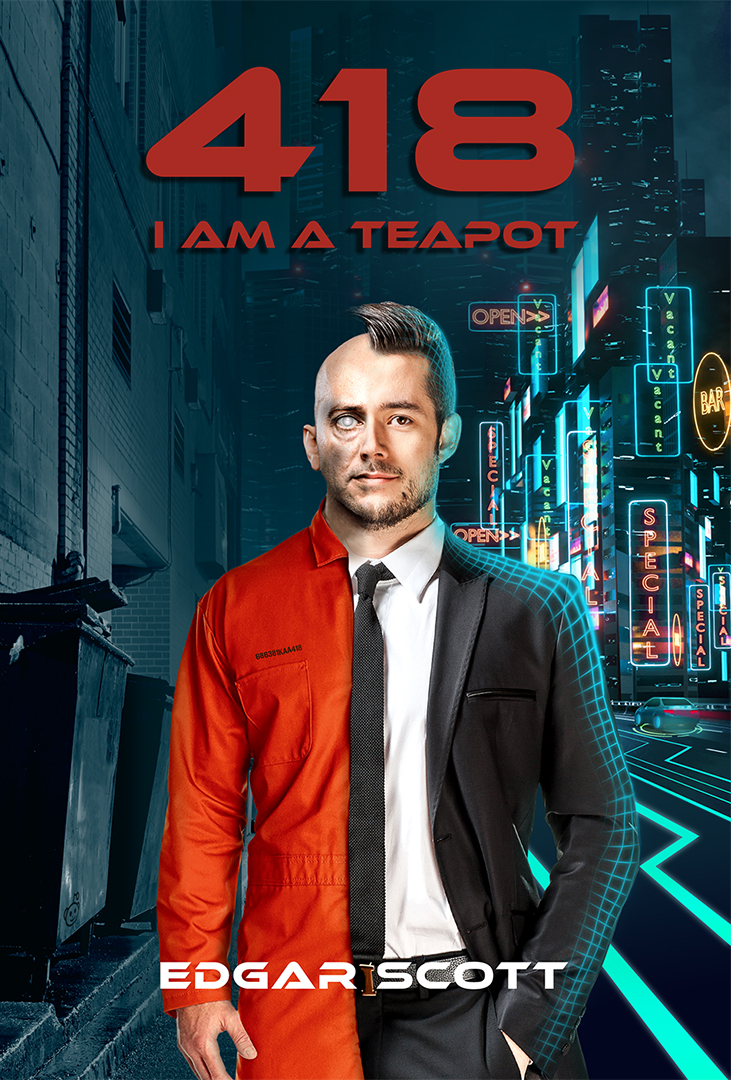
dystopian novel, 418.
Born in Houston, he grew up in Canada, and Scott now resides in South Florida with his wife where he explores the real cost of technology on humanity in the future.
Follow Here to find out more about Edgar Scott and his novel, 418:I AM A TEAPOT
How Do Writers Make the Unbelievable Believable?
Here is the question, how to do that? Many of us want to write something far out, compelling and exciting, but we find that every attempt leads us to something unbelievable and it isn’t long before we don’t even want to write this story. So, how do we get going?
Start by Going a Little Beyond What We Have Today
Let’s start with something believable that is just a little beyond what we have today. We have to have a base idea to build upon; technology (immersive internet) in my case, but it could be a social structure which subjugates women, like in “The Handmaids Tail”. Or a plane crash with where only the children survive (“Lord of the Flies”) or an allegory where all human kind is represented by classes animals on a farm. We must start with something we can relate to that thing we don’t have right now.
Learning Is a Process of Relating an Unknown to a Known
I wanted to take the above line and set it standing free as I believe it to be a fundamental truth in education. We have to start with a situation which is just a bit beyond what is known, but relatable, otherwise our readers are going to lose interest. I find it a great compliment when people tell me that 418’s dystopian world is not far removed from what we have today; excellent, I haven’t pushed the limits of believability too far.
The Immersive Internet in “418: I Am a Teapot”
Now that we have a base presumption to start with, we must see what other changes will then follow and understand why they are so. In my case, immersive internet, would likely directly stimulate your brain, implied a device in your head. One needs to interact with it, so it has memory and is programmable. Therefore, when you are on the immersive internet, you are programmable. If that’s the case, and the internet is so cool, would you ever come off of it? No! If we can program tasks, that you don’t even need to know how to do — like serving coffee or being a virtual teapot— what would we pay you? Virtually nothing. What if a whole class of workers are suddenly paid nothing? Economy grinds to a halt and technology stagnates. How then, do we continue to drive the economy? Increase the size of the unpaid working class. Now, we have a race to the bottom which is strikingly similar to what we see in many technological areas today.
Is Hope Eternal?
But the simplification of the labor and productive processes is not that compelling. I want to give you hope. Can there be hope in such a bleak world? The answer is yes because hope is eternal. In order to get the message across let’s relate it to something we all understand: Trying to improve our lot in life by crawling out of our economic class or avoiding an economic class demotion.
In my dystopia, and our world, a mechanism that is used to push people into the unpaid working class is dehumanization, so I must tell you a story of re-humanization. It is through recognizing humanity and not overriding it that we progress as individuals, society and as story writers.
Thank you for your time, I hope you enjoy reading my novel, 418: I Am a Teapot. Find out more on my WEBSITE