
Reviewer & Author Interviewer, Norm Goldman. Norm is the Publisher & Editor of Bookpleasures.com.
He has been reviewing books for the past twenty years after retiring from the legal profession.
To read more about Norm Follow Here
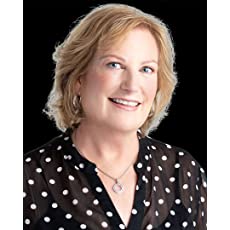
Bookpleasures.com welcomes as our guest Sara Winokur. Sara is a geneticist, researcher, and author of the mystery thriller Double Blind: The Icelandic Manuscript Murders.
She has a master’s degree in cytogenetics and a Ph.D. in molecular genetics. She has worked on DNA analysis of human genetic diseases and was part of the team that discovered the genes associated with Dwarfism, Muscular Dystrophy, and Huntington’s Disease.
Dozens of her articles have been published in scientific journals. Her research has appeared in Human Molecular Genetics, Nature Genetics, and Cell Stem Cell.
According to her website, eight years ago, after being diagnosed with ovarian cancer, Sara took a step back from research to focus on her health. She took the opportunity to reinvent herself by combining her passion for science with her love of reading and writing crime and historical fiction.
When asked about what her readers can expect from her novel, she revealed that her audience will be met with suspense, a learning experience, and thought-provoking writing. Sara is now cancer free.

Bookpleasures.com welcomesas our guest Sara Winokur. Sara is a geneticist, researcher, and
author of the mystery thriller Double Blind: The Icelandic
Manuscript Murders.

She has a master’s degree in cytogenetics and a Ph.D. in molecular genetics. She has worked on DNA analysis of human genetic diseases and was part of the team that discovered the genes associated with Dwarfism, Muscular Dystrophy, and Huntington’s Disease.
Dozens of her articles have been published in scientific journals. Her research has appeared in Human Molecular Genetics, Nature Genetics, and Cell Stem Cell.
According to her website, eight years ago, after being diagnosed with ovarian cancer, Sara took a step back from research to focus on her health. She took the opportunity to reinvent herself by combining her passion for science with her love of reading and writing crime and historical fiction.
When asked about what her readers can expect from her novel, she revealed that her audience will be met with suspense, a learning experience, and thought-provoking writing. Sara is now cancer free.
Norm: Good day Sara and thanks for participating in our interview.
What do you consider to
be your greatest success (or successes) so far in your various
careers?
Sara: I’ve been fortunate to two rewarding careers: a lengthy research career in science and now one as an author of fiction.
In my research career, perhaps my greatest success was in helping isolate the genes associated with Huntington’s disease and muscular dystrophy.
I started in the nineties which was a very exciting time to be involved; genetics and genomic technologies opened up a world of insight into human biology.
After being diagnosed with ovarian cancer, I took a step back and decided to reinvent myself. I consider my evolution into a different career—that of an author of mystery-thrillers— to be a success in its own right. I’m doing just fine nine years later, with no sign of cancer. For that, and for many other things, I am so grateful.
Norm: What has been your greatest challenge (professionally) that you’ve overcome in getting to where you’re at today?
Sara: In the course of my research, I met many individuals and families affected by the diseases were working on.
At times, you feel that the pace of science is not fast enough to help them, and this can be discouraging. However, these individuals are so incredibly inspiring and motivating. Although they do not wish to be defined by their affliction, you want to work 24/7 to alleviate their suffering.
Norm: How and what motivated you to become interested in cytogenetics and molecular genetics, and what is cytogenetics and molecular genetics?
Sara: I’ve always been interested in just how much fate plays a role in our lives. Yes, we have free will and a semblance of control over our lives but much of our existence is determined by fate: what country we were born in, the times we live in (and under the shadow of a pandemic), who are parents are, our genetic makeup.
I know the impact a simple glitch in DNA can have on one’s life. So, I made an early decision to understand human genetic disease in the hopes of ameliorating some suffering.
I started out in cytogenetics which is the study of chromosomes, the 23 pairs of huge strands of coiled DNA we have in each cell. Rearrangements of these can inform us as to potential birth defects and cancer diagnosis. Molecular genetics digs into our genetic makeup in a much more detailed fashion, that is, analyzing the molecular structure of DNA and its influence on determining our overall makeup.
Norm: How might the Covid virus mutate or impact our lives in the future? Do you believe there will be a vaccine in the near future and how safe will it be?
Sara: There is so much we are still learning about this virus. We know it belongs to a class of coronaviruses that historically don’t mutate as rapidly as many other viruses.
Yet we have identified Covid mutations as the virus continues to spread, some of which make the virus more contagious (not more deadly). I do believe that we will have an effective vaccine in the relatively near future, I hope by early 2021.
Several Phase 3 clinical trials are already underway so that is encouraging. If the virus does continue to mutate, however, we may be faced with a situation like we have for the flu, where a different vaccine is offered each year.
Of course, Covid will impact our lives in the future in other ways: many employees will continue to work remotely, perhaps we will see some migration from cities, doctor visits many be carried via telehealth, an exponential shift from brick and mortar to more online shopping, etc. The national debt incurred will have long-lasting effects as well.
Norm: How does it happen that someone with degrees in science come to write fiction? As a follow up, how did you become involved with the subject of Double Blind:The Icelandic Manuscript Murders?
Sara: After I left research, I decided to write a mystery involving genetics and how it affects our lives. Scientists don’t always do a good job explaining what they do to general public and I thought this would be a good opportunity to being in genetics in a fun and engaging way.
I’ve always been a big fan of Nordic noir. When I learned that Iceland has a DNA database containing the DNA of the majority of its citizens, I thought that might be a good place to start.
On my first visit to Iceland eight years ago, I was enamored by the kind of eerie, otherworldly landscapes and very remote farmsteads and thought well this is a great place for a mystery surrounding the disappearance of a young boy. I also felt well-equipped to write a mystery involving a forensic geneticist since I understand the science. One of the things I tried to do with this book is make genetics and science exciting and accessible as part of the mystery.
Norm: Are you a full-time or part-time A writer? How does that affect your writing?
Sara: I try to write each and every morning, even if for just for a couple of hours. This way, the story stays with you all day, whether you are consciously thinking about it or not. Often, I’ll be walking in the afternoon or even dreaming at night when a new idea pops into my head.
I’ll bring this insight to the story to my desk the following day. I find that I can avoid writers block most of the time by doing this.
Norm: Could you tell our readers a little about Double Blind:The Icelandic Manuscript Murders?
Sara: Double Blind: The Icelandic Manuscript Murders is a mystery-thriller about a forensic geneticist, Brynja Pálsdóttir, who uses the national DNA database to solve crimes.
Twenty years after her young brother vanishes from a fjord in North Iceland, a mysterious poem containing clues to his whereabouts drawn from a medieval manuscript lands on desk.
More poems arrive, but trouble is brewing a they’re now followed by deadly consequences. The stakes are ratcheted up until Brynja herself becomes the target.
Norm: What were your goals and intentions in this book, and how well do you feel you achieved them?
Sara: I’ve always been a passionate reader and writer. I love historical fiction and international thrillers. Perhaps what I love most about them is that I learn something new in a fun, engaging way.
One of my goals was to explore fields as diverse as medieval manuscripts, plant poisons, and DNA forensics and weave them together in a novel that immerses the reader as an active participant in solving the mystery. I feel I accomplished that.
Norm: Did you write the novel more by logic or intuition, or some combination of the two? Summarize your writing process.
Sara: Scientists are problem solvers. And so are writers. But there’s always this tug-of-war between the right and left brain, between the freedom of creativity and the precision of an analytic approach. So sometimes they battle it out.
The easy part of the writing process for me is the structure, the organization, putting the pieces of the puzzle together. As a scientist, that came naturally. But most importantly, the characters – their emotions, their reactions, their desires - have to ring true and relatable. That’s the part that I worked really hard at. Once the characters came to life, I knew I had a novel.
Norm: What has your other work taught you that you have been able to apply to the book?
Sara: I peppered the novel with my knowledge of genetics in what I hope is an accessible and intriguing way. The protagonist is a geneticist, so I used my background in science to infuse her with some of the challenges I encountered early on as a woman in science.
Norm: What was the most difficult part of writing this book?
Sara: Double Blind: The Icelandic Manuscript Murders is my debut novel. As with any new endeavor, there is a learning curve. I attended many writing conferences, joined a critique group, and bounced ideas off of several author friends. I wouldn’t call this difficult, just a necessary part of producing a work I’m proud of.
Norm: What did you enjoy most about writing this book?
Sara: I’m a research groupie. After I left science, this passion to get to the bottom of an issue did not leave me. When I decided on Iceland for the setting of my book, I researched the heck out of Iceland’s culture, history, literature, geography, and cuisine. I did this not only through reading books and online resources but by actually spending a lot of time in Iceland. I have been there seven times and stayed for months at a time.
Norm: What do you hope will be the everlasting thoughts for readers who finish your book?
Sara: A central theme of the novel is that of perseverance, of never giving up. If something is important to you and it takes years, even decades, to reach your goal, then every bit of time and effort you put into it will pay off.
At the very least, you know you put your all into it. Also, I wanted to address some societal issues we should all be thinking about.
Readers might want to think twice about sharing their DNA. I point out several pros and cons of doing so in my book. The knowledge gained from massive DNA databases has already contributed to the common good as far as understanding human health, everyone should weigh the potential for abuse as well.
Norm: What do your plans for future projects include?
Sara: Double Blind: The Icelandic Manuscript Murders can certainly stand on its own but my fascination with Iceland isn’t over yet.
My second book involves an incident that took place in the Westman Islands nearly 400 years ago. It is the second in a series involving forensic DNA scientist Brynja Pálsdóttir. Titled Ivory Bones, it delves into an historical mystery from 1600’s and spans locations from Iceland to Morocco to New Amsterdam.
Norm: Where can our readers find out more about you and Double Blind:The Icelandic Manuscript Murders?
Sara: I have a WEBSITE where I post blogs, news and information about genetics, Iceland, and writing.
I also have a FACEBOOK PAGE:
Readers can find my book on Amazon, Barnes & Noble, or many independent bookstores.
Norm: As this interview comes to an end, what question do you wish that someone would ask about your book, but nobody has? Please tell us?
Sara: How did you feel writing about a culture that is not your own?
I am an American that chose to write about Iceland and its culture. I do not feel that writers should be limited to their own cultures (many great novels would have never been written in this case).
However, one must be true to the customs, the language, the fine details and experiences of the culture and country one choses to write about.
Veering from these truths has been the source of criticism most recently of Jeanine Cummins American Dirt. In order to fully embrace and understand another culture entails extensive research, interaction with people living in the society one is writing about and, if possible, through travel and time immersed in that culture
Norm: Thanks once again and good luck with all of your future endeavors.