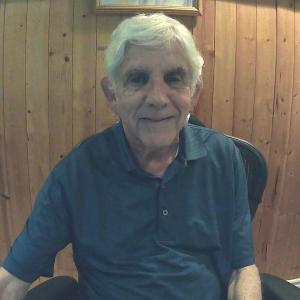
Reviewer & Author Interviewer, Norm Goldman. Norm is the Publisher & Editor of Bookpleasures.com.
He has been reviewing books for the past twenty years after retiring from the legal profession.
To read more about Norm Follow Here

Bookpleasures.com welcomes as our guest, former New York Times sports reporter and author of The Chosen Ones, Lisa Luciano. The Chosen Ones won multiple awards in advance of its release in May 2020 including Best Sports Fiction in the NYC Big Books Competition.
Lisa was also a television producer and director who received national recognition for excellence in educational programming. A teacher with 40 years of experience, Lisa taught English, TV Production, Technology, and Digital Literacy and most recently worked as a Library Media Specialist.

Bookpleasures.com welcomes as our guest, former New York Times sports reporter and author of The Chosen Ones, Lisa Luciano.
The Chosen Ones won multiple awards in advance of its release in May 2020 including Best Sports Fiction in the NYC Big Books Competition.
Lisa was also a television producer and director who received national recognition for excellence in educational programming. A teacher with 40 years of experience, Lisa taught English, TV Production, Technology, and Digital Literacy and most recently worked as a Library Media Specialist.

Norm: Good day Lisa and thanks for participating in our interview. What do you consider to be your greatest success (or successes) so far in your various careers?
Lisa: I’m very glad to be here. I would have to say that being a teacher and just recently retiring after 40 years makes me extremely proud as I was in the profession long enough to see my students go on to build successful lives.
That’s the greatest compliment a teacher can receive.
But I have to put writing sports for the NY Times in the 1990’s right up there in terms of achievements. Uncovering the corruption in the sport of figure skating actually resulted in changes and put the power structure on notice that they were being watched. Being a voice for those who couldn’t or dared not speak out against the status quo was humbling and truly satisfying.
Norm: What has been your greatest challenge (professionally) that you’ve overcome in getting to where you’re at today?
Lisa: I would say the greatest challenge was being a woman writing sports for what was then the most powerful newspaper in the world.
I was given the opportunity to take on a sport that was enjoying unprecedented success and attention thanks to the Nancy/Tonya drama.
But at the same time, I was challenging the good old boys network in the newspaper business and I knew I was being held to a higher standard and had to get it right every time, especially in light of the serious accusations I was lodging against the skating federations.
I’m proud to say I was never proven to have written anything that was untrue and I hope I helped open some doors that had previously been closed to women in the world of sports journalism. It was an amazing opportunity that had been a dream of mine for as long as I can remember.
Norm: What are your
thoughts as to why people read crime novels and what makes a good
crime novel?
Lisa: I think people read crime novels for the same reason they watch the many TV shows that involve crime. We are fascinated by people who break the rules and want to know how their minds work.
And many of us enjoy playing amateur detectives which was popularized by writers like Agatha Christie and those who followed her.
Since so many crime novels have been written, I think today the writer has to come up with a unique concept. Some unexpected twist. A crime so dramatic that it’s like a car accident.
We don’t want to look, but we can’t help it.
Readers also enjoy the
suspense and the cat and mouse game the author challenges them to
play. Can they figure out the solution to the mystery before it’s
revealed? And that’s one of the cardinal rules. If the writer does
their job, the reader isn’t able to guess the ending, but is
satisfied with it. Those who have read The Chosen Ones have given me
that kind of feedback. They weren’t able to guess which skater was
the victim or what happened to him. That’s what puts a smile on a
mystery writer’s face.
Norm: Could you tell our readers a little about The Chosen Ones?
Lisa: The story opens with an anonymous message being left on the answering machine of a newspaper sports editor saying before the end of the upcoming Olympics, one of the world’s top skaters will be dead.
He asks a former reporter who he fired years before for humiliating the paper by writing an expose that turned out to be incorrect to go undercover.
It’s his chance to redeem himself and save someone’s life. As he hunts for the victim and possible murderer, we see that the real world of figure skating is corrupt and brutal.
The story follows the
men’s competition as they fight to get to the top of the podium at
the Olympics not knowing that there is far more danger that awaits
one of them. As the book’s tagline says, “Only one can win. Not
everyone will survive.”
Norm: Did your experiences as a television producer and director help you in writing your novel? If so, how?
Lisa: It’s interesting that you would ask about that. Some reviews the book has gotten actually said that it reads like a movie.
I think having the TV production background definitely not only influences my writing style, but helps it.
When I write, I need to see what my characters are experiencing.
As a producer/director you have to see the TV show in your head in order to have your actors and crew bring it to life. You have to plan and strategize how to put all the pieces together and tell a coherent story. In writing a novel you make an outline.
In TV you draw a
storyboard. I also see my characters and the action in my writing
like scenes in a TV show. Angles and shots that emphasize the
emotions and action. I also play the parts of the characters when
editing. In fact, I’ve had family members think I was losing my
mind when they would hear voices coming from the room where I was
working. Fortunately, they’ve gotten used to it and know when they
hear yelling or crying it’s just Lisa working on her new book.
Norm: What do you think most characterizes your writing?
Lisa: I would say my visual style of description as I just mentioned and that my priority is making the reader feel that they are inside the world of the story whether it be the events, characters or theme.
I think one of the things readers want is to find essential truths in stories that are universal and they can relate to. They also like learning new things.
One of the comments I hear most often after someone has read The Chosen Ones is that they feel they now know the world of high stakes sports. In fact, they sometimes say they know more than they wanted to.
The picture I paint for
the reader is not a pretty one, but it is real and based on actual
skaters and situations. The one thing I can promise is that after you
read the novel, you will never see figure skating the same way again.
Norm: What were your goals and intentions in this book, and how well do you feel you achieved them?
Lisa: My goal for writing the book was to finish what I started after writing for the NY Times. I wanted to cast a light into the deepest, darkest corners of figure skating to prompt changes that are so badly needed. I knew I would only get one chance at this, so I put in everything I could think of that needed attention – corrupt judging, greed, jealousy, sexual abuse, homophobia, substance abuse, depression, eating disorders, racism, cutthroat competition, demanding parents, unreasonable expectations forced on the skaters, and more.
The murder mystery is the
glue that holds the characters and storyline together, but revealing
the secrets of the sport was my ultimate goal and I’m very happy
with the end product.
Norm: What are some of the references that you used while researching this book?
Lisa: I watched countless hours of national, world and Olympic competitions and exhibitions, both amateur and professional and listened to the commentary. I also drew on my experience as a competitive gymnast for the internal aspects of some of the characters as well as the intense training that athletes on that level have to endure.
I referenced texts about the rules of the sport as well as newspaper and magazine articles. But more than anything I used the things I observed and was told by my sources about the drama going on behind the scenes.
Norm: What is the most
important thing that people don't know about the subject of your
novel that they need to know?
Lisa: Sadly, the thing that most people want to know is if figure skating is a legitimate sport. The answer is… sometimes.
The powers that be want the audience to stay uninformed and confused to the point that they changed the scoring system that is now so complex that even skaters and their coaches sometimes can’t understand it.
Despite being caught
manipulating the results of countless competitions over the course of
years, the officials and heads of the skating federations still feel
they can and should control the sport and the competitors.
But just as important is the life young athletes are forced to endure. Everything they do and are is criticized and planned for them from their weight to their brutal practice and competition schedules to having to stay silent about abuse by coaches for fear of losing their chance of winning a title, not realizing that the game was over before they took the ice.
That’s why I chose the title The Chosen Ones. If you aren’t one of them, no matter what you do on the ice, someone else gets to write the ending to the story.
Lisa: Some of the novel was influenced by my experiences as a journalist and an athlete. The majority of it was the result of watching and learning about the sport from the outside and inside.
So the challenge for me as
a writer was to tell an entertaining story while making sure I got
the specific facts about the sport right and did justice to the
skaters whose lives and struggles I was reflecting. I’m not at
liberty to say who, but one of the world’s most famous skaters was
asked to read the manuscript and his reaction was that he thought I
was using a pseudonym because he said only a skating insider could
write a book that was so accurate. That’s when I knew I had done my
job.
And at times, there was a bit of intuition at work. There is actually a scene in the novel that predicts exactly what happened in real life to one of the main characters. I can’t explain it except that sometimes writers lead storylines to what they think is a logical conclusion that later actually happens. It’s eerie, but also a validation that their instincts led them to a realistic conclusion.
Norm: What was the most difficult part of writing this book and what did you enjoy most about writing this book?
Lisa: The most difficult
task was juggling so many characters and storylines. I could have
streamlined the plot, but I wanted to reflect the diverse situations
and issues in the sport. I also had to figure out how to deal with
the “he did this jump, then that one, then did a spin…” dilemma
of trying to help the audience visualize the action which at times
involves the skaters’ actual performances. My solution was to make
the times the characters are actually skating a reflection of either
external or internal drama, not just a laundry list of actions.
What I enjoyed most was working with each of the characters. Some were despicable, some were tragic and a few were triumphant. But it was fun to go through the emotions with them and root for them not necessarily to win, but to survive.
Norm: How much editing did you do before turning in the novel? As a follow up, how does an author know when to stop revising?
Lisa: That’s a really tough question. Some writers just let it flow, then clean it up later. Others, like myself, edit as I go along. Being a retired English teacher, I have a tendency to focus on the actual sentence structure and word choice in my writing as well as avoiding mechanical errors, so I do a lot of revising.
I lost track of how many
times I proofread The Chosen Ones before I signed off on it.
But when you get to the point that you’re skimming and scanning
through the text, then it’s time to take a break, let it cool off,
then look it over again or give it to someone else who will read it
with fresh eyes.
At some point the writer has to hand the manuscript over to a copyeditor, but my goal is to give them as little work as possible to avoid having my material rewritten and thereby losing my writer’s voice. It’s easy for a writer to obsess over material in an effort to produce the best book they can.
My advice is for writers
to edit a little at a time. When you try to do too much at once, you
miss the mistakes. Only proofread when you are alert and mentally
focused.
Norm: Where can our readers find out more about you and your novel, The Chosen One?
Lisa: They can learn more
about The Chosen Ones on my WEBSITE
They can get updates on my appearances on radio, TV, online and at
various locations, learn what I do when I’m not writing and read my
blog on sports and other subjects.
They can also visit my FACEBOOK PAGE and join me on TWITTER
I would love to hear from them.
Norm: What is next for Lisa Luciano?
Lisa: Having just spent the last 40 years working as a teacher, I think the time is right to tackle the subject of education in America. Where it was, where it is and where it is going in the age of snowplow parents, children unable to function without a digital device attached to their bodies, and how we move forward in the age of COVID-19 among many other subjects. So I will be going back to my roots – good old straight forward journalism. If you want to know the real deal about learning, teaching and parenting in America, you might want to check out my next book.
Norm: As this interview comes to an end, what question do you wish that someone would ask about your book, but nobody has?
Lisa: Wow! That’s a great question. Something that no one has ever asked is what if The Chosen Ones turns out to be the only book you ever write? Would you be satisfied with your career as a writer? The answer to that is I feel I have more to share, but there are many great writers who only produced one book. Anna Sewell (Black Beauty), Emily Brontë (Wuthering Heights), Boris Pasternak (Doctor Zhivago), Margaret Mitchell (Gone With the Wind), J.D. Salinger (The Catcher In the Rye), Sylvia Plath (The Bell Jar), Ralph Ellison (Invisible Man), Oscar Wilde (The Portrait of Dorian Gray) and more. That would be pretty good company to be in. But I’m so proud of my work for the NY Times and The Chosen Ones that if either was the thing I would be remembered for, I would consider myself successful.
Lisa: Thank you for the chance to talk with you and your readers.
Follow Here To Read A Review of The Chosen Ones Contributed To Bookpleasures.com By Marian B. Wood