
Reviewer & Author Interviewer, Norm Goldman. Norm is the Publisher & Editor of Bookpleasures.com.
He has been reviewing books for the past twenty years after retiring from the legal profession.
To read more about Norm Follow Here
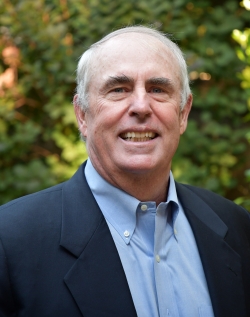
Bookpleasures.com welcomes as our guest August Turak author of Business Secrets of the Trappist Monks: One CEO’s Quest for Meaning and Authenticity. August is also a speaker, consultant and contributor for Forbes. com and the BBC.
He is the founder of the spiritual and educational nonprofit the Self Knowledge Symposium Foundation (SKSF).
August attributes much of his success to his 20-year stint as a frequent monastic guest of the Trappist monks of Mepkin Abbey. As a monastic guest, he lives and works alongside the monks sometimes for months at a time.
When August is not hanging out with Trappist monks, he lives and works on his 75-acre farm just outside Raleigh, NC.

Bookpleasures.com welcomes as our guest August Turak author of Business Secrets of the Trappist Monks: One CEO’s Quest for Meaning and Authenticity. August is also a speaker, consultant and contributor for Forbes. com and the BBC.
He is the founder of the spiritual and educational nonprofit the Self Knowledge Symposium Foundation (SKSF).
August attributes much of his success to his 20-year stint as a frequent monastic guest of the Trappist monks of Mepkin Abbey. As a monastic guest, he lives and works alongside the monks sometimes for months at a time.
When August is not hanging
out with Trappist monks, he lives and works on his 75-acre farm just
outside Raleigh, NC.

Norm: Good day August and thanks for participating in our interview.
What do you consider to be your greatest success (or successes) so far in your career?
August: Several years ago I
showed up at my gym just as I’d been doing every day for years.
There was an older man handing out towels. This was unusual.
Never before or since have I encountered anyone handing out
towels. Typically, towels are self-serve. As I reached
for a towel, the man held onto it. Using it as rope, he tugged my
face towards his and fairly shouted, “If you could be anywhere,
doing anything, where would you be and what would you be doing,
RIGHT NOW! Without a thought or hesitation I calmly replied,
“I’d be right here, right now, doing this.”
As I walked toward the locker room my eyes filled with tears. I realized that answer had come from the deepest part of me and represented the fact that I was at peace with myself and the universe. I know that I am now a far better and more generous human being than I once was. This is my greatest accomplishment. All my other achievements have been byproducts of my goal that I set for myself at 19 of becoming the best person I could be.
Norm: What has been your greatest challenge (professionally) that you’ve overcome in getting to where you’re at today?
August: My greatest challenge has been overcoming myself. Mostly overcoming my fears. Fear is the greatest single obstacle we all face. We are afraid of the truth. We fear that if we ever had to face the truth about ourselves the disappointment would be unbearable.
My God do they make
numbers that big? When I was only about 7- years-old I loved
Christmas, so I decided to go Christmas caroling. I
talked all my neighborhood friends into going with me. After
it got dark, I went to each house looking for my friends to join
me. Each one chickened out. I was really disappointed.
So I returned home, got my caroling book and a huge railroad
lantern that my Dad used as a flashlight.
The lantern was so
heavy that I had to prop it on my shoulder. We lived in a
residential circle with no traffic. So I straddled the center of
the street and started off all alone singing Carols at the top of
my lungs. It was cold and I didn’t see a car. No one
came out of their house so I doubt a single soul heard me singing.
When I got home, my mother was waiting for me—I thought I had snuck out but of course she knew. I collapsed in her arms and cried bitterly. This experience of rejection both shaped and adumbrated the rest of my life. I think I realized only at seven that rejection and disappointment were going to be the general lot of my life. I also realized at 7, I think, that if I ever wanted to get anywhere and live my dreams I couldn’t let others determine my fate. I realized that I would more often than not have to “go it alone,” and this was not only frightening but very sad and lonely.
My life has played out exactly in that way. I have constantly had to deal with rejection and disappointment. But that is what has also made my life into the adventure I dreamed about. What knight in shining armor would wish for a world where dragons and evil sorcerers didn’t exist? What would be the point?
Norm: How did you find out about the Trappist Monks? Who are they? Why did you decide to spend a great deal of your time with them
August: I was coaching college
students at Duke university about spirituality in 1996. The
enticed me into going skydiving. I smashed my ankle on
landing. Compound fractures. In the hospital I started
having panic attacks and deep depression. I couldn’t
understand what was happening. Suddenly I realized that I was
facing my mortality for the first time. No, this injury was
not fatal. But one day the doctor would not be sending me
home. He’d be sending me to the undertaker.
When I
got out of the hospital the panic subsided but the sense of
depression and despair got even worse. It was the beginning
of what I call my two year “Dark Night of the Soul.”
Several months later, another student called me from Mepkin Abbey
monastery. He told me he was spending his entire summer
living with the monks as a monastic guest. Before I knew what
I was doing I’d made arrangements to come down that very
weekend. I’ve been returning ever since.
*Editor's Note: Trappist monks, or Trappistines, are a Roman Catholic order (the Order of Cistercians of the Strict Observance) founded in France in 1098. Trappist monks and nuns are known for their lifestyle of extreme self-denial, isolation, and dedication to prayer.)
Norm: What is the connection between the Trappist monks and business?
August: The motto of the Trappist monks is “Ora et Labora.” It means “Prayer and Work.” Every monastery must be self-supporting. That is the “work” half of the equation. For over 1000 years Trappist monasteries have had businesses. And they are incredibly good at it. So good in fact that I wrote an article for Forbes about it that went viral and later became my book.
August: The first ingredient is
the most important: You must make it a priority. Personal
development should be the central focus of your life. The
monks think that if you seek first the kingdom of personal
development everything else will take care of itself. For the
monks, what we typically call “success” is just a byproduct and
trailing indicator. So do I.
The second most important is self-knowledge. Self knowledge is not just introspection. To know ourselves we must structure our lives in such a way that we ENCOUNTER ourselves in real life situations. Every man thinks he is a hero when he is sitting in an easy chair reading military history. The only way he can know he is a hero is by actually going to war. War here is a metaphor for how we must live our lives. As my old partner used to say, “You don’t know anybody till you’ve been to war with him.” And you never know yourself until you have gone to war yourself.
Norm: What do you believe is a meaningful life?
August: The purpose of every human life is to be transformed from a selfish into a selfless human being. Or, to put it another way, self-transcendence. A meaningful life is one that is spent responding to the universal call to self transcendence.
Norm: What motivated you to write Business Secrets of the Trappist Monks: One CEO’s Quest for Meaning and Authenticity? As a follow up, please tell our readers a little about the about?
August: I wrote a white paper on why monks are so good at business. I gave it to friends and somehow it got to an editor at Forbes magazine. He called me and asked if he could publish it as a four part article. The article went viral and Columbia Business School Publishing called me and asked me to turn it into a book. One of the themes of the book is how to let success happen through what I call “cultivating the art of inviting happy accidents.” My entire writing career has been on happy accident after another.
Each chapter of Business
Secrets of the Trappist Monks features a virtue that is critical to
monastic business success. The chapter starts with a true
story from my time at the monastery that illustrates this virtue.
Each chapter also contains a story of how my partners and I used
the very same virtue in our startup software companies.
Business Secrets of the Trappist Monks is not an academic exploration of Trappist business practices. It also contains the actual story of how we built two high tech companies in seven years from a $2500 investment using those very same principles. In 2000 our companies were acquired by an Israelis company for millions of dollars. Several years later our combined companies were sold to BMC Software for $150 million. Trappist principles are not just for monks They worked for us as well and they will work for you.
August: My publisher at Columbia
Business School Publishing said to me, “You are not kidding
me. Business Secrets of the Trappist Monks is not
really a business book.
You’ve written an excellent
business book which is really a Trojan Horse that contains all your
spiritual ideas.” I sad, “You are right Myles, that is
exactly what I did. “ He laughed and said, “That is why
we love it, and that is why Business Secrets is going to be so
successful.” My goal in everything I do is to help
people find a higher meaning and purpose in their lives. We
live in an age of despair.
The mission of my not for profit is “to help people find a sense of higher meaning and purpose in a world so many feel is bereft of meaning and purpose.” Since my goal is to save the world I of course still have some ground to cover! Seriously, the powerful response to our work has been deeply moving, but, yes, there is so much more to do.
Norm: Can you share some stories about people you met while writing this book?
August: Here’s one. In my book I describe an encounter I had with Brother William at Mepkin Abbey. Brother William had earlier lived for several years as a complete hermit out in the woods surrounding Mepkin Abbey monastery. I peppered him with questions about his life as a hermit but was reluctant to ask him the question I really wanted to ask. Finally curiosity got the best of me and I said, “Brother William, did you get anything out of it?” For a full minute Brother William did not move but sat staring at a spot on the ground between his knees. Then his head slowly turned, his eyes met mine, and he whispered, “I had to face myself.”
While I was writing the book, I was standing in a cafeteria line telling this story to a colleague I knew only slightly. When Brother William said, “I had to face myself” I heard a crash. The woman in front of me had dropped her tray. As I knelt down to help her, she turned to me with tears streaming down her face. “That’s all there is!” She said. “That’s all there is!”
August: It is in your own self interest to forget your self-interest. The monks are not so fantastically successful DESPITE their commitment to only the highest values but BECAUSE they are.
August: To successfully market a book today you need a “platform.” A platform consists of all your website and social media followers that give you a readymade market to sell into. Your platform provides that first group of readers that provide visibility. It also helps tremendously if you are a good speaker. Speaking engagements are one of the best way to sell books. But most importantly, if you are not by nature a “hustler” you must become one. You have to spend a lot of energy on the phone just making contacts and getting people to review your book and/or interview you on a podcast or radio show etc.
August: MY WEBSITE
Norm: What is next for August Turak?
August: I have a couple more books in mind. Right now however I am very busy doing speaking engagements. So far this year I have been in Peru, Chile, Norway, Sweden, Russia and Israel twice talking about Business Secrets. Just yesterday I got an invitation to speak in Rome to the Pontifical Colleges. I am also working closely with the Busch School of Business at Catholic University about how to build the lessons of Business Secrets of the Trappist Monks into their graduate curriculum.
August: Great question! Throughout my book I pound the table on the need for community. I emphasize repeatedly how my work in building community has been essential to my success. Yet no one has asked me yet how to go about building a community. Personal development all by yourself without teachers and community makes a difficult task well nigh impossible. The old saying about doctors and lawyers applies to personal development as well. The person who coaches himself has a fool for a student!
Norm: Thanks once again and good luck with all of your future endeavors