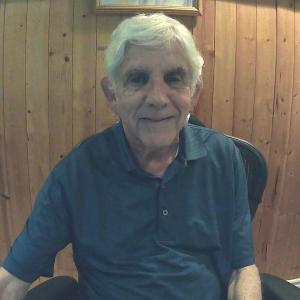
Reviewer & Author Interviewer, Norm Goldman. Norm is the Publisher & Editor of Bookpleasures.com.
He has been reviewing books for the past twenty years after retiring from the legal profession.
To read more about Norm Follow Here
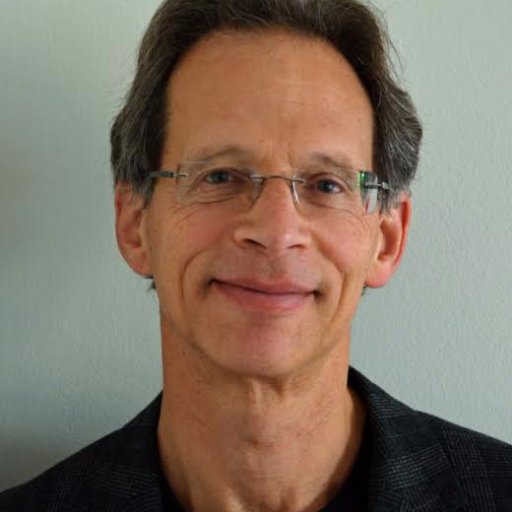
Bookpleasures.com welcomes as our guest, Norman Bacal author of Odell's
Fall.
Norman was born in Montreal in 1956. He attended McGill University and graduated with honors in 1980. His amazing journey, along with the rise and shocking fall of the Canadian law firm, Heenan Blaikie, is documented in the best-selling book, Breakdown.
He founded the Toronto office of Heenan Blaikie in 1989 and served as a managing partner from 1997 to January 2013. Norman helped grow a law firm that employed over 600 lawyers and featured two former Canadian prime ministers.
Norman is known as one of the world's top entertainment tax attorneys and has been in countless boardrooms. He knows what makes lawyers tick and he also knows what goes on in front of the camera as well as behind the scenes. He’s a lifelong storyteller and a fascinating, sought-after guest speaker and lecturer. He has advised movie studios, including Warner Brothers and MGM. He served on the board of directors of Lionsgate Entertainment for almost a decade. Bacal is currently a director of Elevation Pictures, Canada’s second largest theatrical distribution company.
Bookpleasures: Good day Norman and thanks for participating in our interview.
What makes an attorney(or) want to become a novelist?
Norman:
Most lawyers are skilled at writing, and so many believe they ‘have
a book in them.’ That was never me. I did not set out to write
Breakdown, my
first book. It began as a memoir, a journal, to process the pain and
anger of the collapse of a business I had spent twenty-five years
building. Eventually I convinced myself it might make an interesting
book. But to write fiction – never. I did not believe I was
imaginative enough.
Yet I had developed the obsession of writing every night; so my wife convinced me to go read some Shakespeare for inspiration. After a couple of months and half a dozen plays, I decided to write “Othello the lawyer.” I was surprised to discover the skills I developed as a lawyer – largely problem solving in impossible situations – translated well to fiction writing. As an author I had to find ways around, over, and under plot obstacles.
Bookpleasures: What do you consider to be your greatest success (or successes) so far in your careers as an attorney and now as an author of fiction and non-fiction?
Norman:
As an attorney, my greatest success, was in learning to lead and
build an organization. I discovered that I enjoy taking risks and I
don’t mind failure. My greatest successes always followed failed
first, second and sometimes third attempts. I learned never to give
up. To obsess until I figure it out.
As an author I began as a neophyte. My first legitimate draft of Odell, was in the words of my first editor, “a great attempt for an amateur.” Four years later I can now understand what I want to achieve when I sit down to write or rewrite a scene. I live and breathe each character and have learned to answer the key question any novelist must ask. ‘What would this particular character, with this life story, do in this situation?’ I know I have so much further to go as a novelist, in the same way as I continually stretched to learn new skills as an attorney. The moment you stop advancing, you risk sliding backwards.
Bookpleasures: What has been your greatest challenge (professionally) that you’ve overcome in getting to where you’re at today?
Norman: I lived most of my professional career, from about the fifth year and onward from success to success. In 2013, a year after I had retired from management, the law firm that I built collapsed. The media called it “the largest failure in Canadian law firm history.” Like it or not I was part of it. Aside from the financial losses, I spent months in mourning. Facing up to my role in the debacle, processing my anger, accepting the loss, and beginning the slow process of reinvention, became my next objective. Could I re-emerge?
My career as an attorney was over. It would have been easier to ride off into the sunset. To blame others for the firm failure. To learn to meditate and relax. Could I be successful in building a second career as a motivational speaker, writer and mentor? I had no idea, so I put one foot in front of the other on the new journey. I had to learn social media (my greatest fear). Once I took those first few steps, I knew there was no turning back.
Bookpleasures: Odell's Fall is you first fiction writing project. Did you enjoy the process? How was it different from writing your first non-fiction, Breakdown?
Norman: After finishing Breakdown, I assumed I had learned how to write: to find the story line among all the stories. However, I found the process constraining. I was limited by the facts, or at the least, by my interpretation of the facts. There were numerous opinions I could not express due to libel restrictions. I assumed fiction would be so much easier.
Boy was I mistaken!
The
difficulty with fiction is that the story options, when facing the
blank page, are limitless. Some authors have developed the discipline
of mapping out all the characters and the story line before they
write a word. I am not from that school. I much prefer to have a
sense of where a scene begins and ends, what I want to achieve, and
leave it to the characters to surprise me by what they say and do
unexpectedly.
That
means considerable revision. Often a character does something mid -
book that I don’t believe a reader would accept. If I like the
scene enough, I will rewrite the character and previous scenes so
that the action or statements are consistent. For me, that’s
where all the fun is found. Currently I write my books forward,
backwards, and sideways until every last detail is consistent. If it
means 100 rewrites, so be it. For me the love is in giving readers an
experience they do not expect when they pick up the book. I want them
to not be able to put it down. I want them to go sleepless through
the night.
Bookpleasures: How did you become involved with the subject or theme of Odell's Fall?
Norman: Odell is the modern-day Othello. I took the cast and reset them in 2015 Manhattan. Fortunately, Shakespeare provides no back-story for any of the characters, so that is the starting point in re-imagining the play. Othello the “General”, becomes a leader of lawyers. My goal: to make Shakespeare accessible to a broader audience.
Bookpleasures: Are the characters in your book based on people you know or have encountered or are they strictly fictional?
Norman: Of the characters, only two were influenced by people I have worked with. Odell’s back story comes from the gripping story of a friend of mine who suffered child abuse, grew up to become a successful professional, and asked me to write his story. I began from that footing, but as I rewrote Odell, his own story of abuse began to vary; however, I drew on the emotions of my friend in breathing life into Odell the child.
Hundreds upon hundreds of hours go into research of locations, character quirks and personality traits. I consult medical experts. I visited the Beverly Wilshire Hotel and sat in the lobby. I did fifty hours of work learning about the slave trade. I traced the route that Elijah the slave might have taken from Africa before I could write about the amulet.
Bookpleasures: What were your goals and intentions in this book, and how well do you feel you achieved them?
I believe I have succeeded but what I believe does not matter. Only the readers count.
Bookpleasures: Do you write more by logic or intuition, or some combination of the two? Please summarize your writing process?
Norman:
My process begins with logic. I set a scene, decide who the
characters will be and what the outcome of the scene needs to be.
Then I give my characters the freedom to show me who they are. That
is where the intuition comes in. I live for the moments, and they are
truly rare, when I look down at the page where a character reveals
something to me and my gut response is, “I had no idea.”
Bookpleasures: What was the most difficult part of writing this book and what did you enjoy most about writing this book?
Norman: The most difficult part was getting to understand my characters so that I could answer the key question, “what would this character do in this situation?” I want the reader itching at my characters’ poor choices. The reader needs to be cheering for them to make the right decision when facing a choice of courses of action. In that way fiction is like life. Few of us are able to be objective when facing our own life choices, yet we are able to see the decisions others need to make far more clearly.
The most enjoyable part of the process was putting the final touches on most of my characters. I played with everyone, right up to the final proof. Toward the end of the process I was flooded with insights about the characters that I was bursting to share with the readers. I also went back to the source material, Othello, searching for tidbits to modernize.
Bookpleasures; What do you hope will be the everlasting thoughts for readers who finish your book?
Norman: I hope my readers will have a strong emotional response to Emily’s predicament. Some will hate her, others will feel for her. I have given her impossible choices: love versus friendship; honesty versus loyalty. It does not much matter to me how readers respond, as long as they do.
I also want a reader to come away with a better understanding of love and its impact on their personal lives: how challenging it is to love others if we do not love ourselves enough.
Bookpleasures: Which character was the easiest to write? Most difficult?
Norman: Emily, Jackson’s wife, was the easiest, born out of a simple question. ‘Who would marry the evil Jackson?’ What drives a woman to marry a brilliant man, who is, in a certain sense, sociopathic.
She
needed to be a woman of ambition, and smart enough to keep up with
him. Once I understood her upbringing and birth order, I could
feel her life-desires consuming me. I became her. After that, writing
her story was an act of love. It poured out of my fingers quickly and
without the need for much re-writing.
As to the most difficult, unquestionably it was Dee. She is missing from the middle of the narrative. I also experienced great difficulty making her into someone that a reader could feel for and identify with. It took me to the final draft when the light bulb finally turned on. I understood precisely what had to be added and where. The parallels with her mother’s life also emerged toward the end of the process.
Bookpleasures: If Odell's Fall were made into a movie, who would you like to play the roles of Odell Moore and Jackson Sherman? Explain to our readers why?
Norman: I’ll leave that one to the studio! The characters belong to the imagination of the reader. As soon as we attach an actor, I think the reader gets cheated out of a key part of the reading experience.
Norman: I have just completed a modern-day Hamlet, currently titled Sacred Vow. The story follows the life of Beri Neilson, a Danish emigrant to America who builds a successful generic pharmaceutical empire. As a child, he and his father, a fisherman, rescue a Jewish family from Hitler’s deportation order, creating an extraordinary relationship between the two families that spans sixty years.
When Beri dies in mysterious circumstances, Beri’s son must make a choice between his own drug addiction and survival. The voice of Beri challenges him to become a man and fight for his legacy. The heirs of the Jewish survivor are driven by a vow made by the Jewish patriarch, which becomes an obsession to secretly support Beri and his family for generations.
The book is set as a murder-mystery; a prequel to Odell’s Fall, telling the story of how Mac and Cheese, the two detectives met, as well as the early years of TGO and a number of their lawyers, Odell included.
I am very proud of the manuscript which reflects my growth as a novelist, in building a more complicated, intertwined story. I also ask the reader to examine many philosophical issues, including our views on God’s role in the universe, recovery from addiction and the complex relationships between parents and children. The book is set in Manhattan, Montreal, Toronto, and Amsterdam.
I am sixty pages into the first draft of MacBeth, which will fit, in time-line, between Sacred Vow and Odell’s Fall. A tale of the supernatural, blind ambition and once again – murder. If all goes well Richard III will follow—a biography of one of the characters from Odell’s Fall and Sacred Vow.
I am also excited to be on the speaker panel for next year’s Stratford (Ontario) Shakespearean Festival. They will be producing Hamlet, coincidental with the publication of Sacred Vow
Bookpleasures: Where can our readers find out more about you and Odell's Fall?
Norman:
Norman: Who is the murderer?! I’ll leave that one to the careful reader.
Bookpleasures: Thanks once again and good luck with all of your future endeavors