
Reviewer & Author Interviewer, Norm Goldman. Norm is the Publisher & Editor of Bookpleasures.com.
He has been reviewing books for the past twenty years after retiring from the legal profession.
To read more about Norm Follow Here
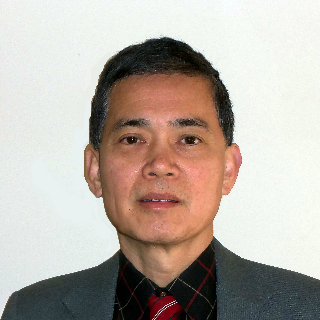
Bookpleasures.comwelcomes as out guest Victor Cunrui Xiong, author of From Peasant
to Emperor: The Life of Liu Bang. Victor received his Ph. D.
in Asian History from the Australian National University (1989),
taught history at the University of Iowa, and is at present professor
of history at Western Michigan University in Kalamazoo,
Michigan.
Among his other scholarly publications are A
Study of Capital Cities and Urban Form in Premodern China, Luoyang
1038 BCE-938 CE, Emperor Yang of the Sui Dynasty: His Life, Times,
and Legacy, Sui-Tang Chang'an: A Study in the Urban History of
Medieval China, and
Historical Dictionary of Medieval
China.
He appears in a documentary by NHNZ and Discovery
Channel entitled Man Made Marvels: China's Forgotten City, which
is in part based on his book on Chang'an.
He is also the
author of Heavenly Khan, a historical novel based on the true
story of Li Shimin (also known as Tang Taizong).
Norm: Good day Victor and thanks for participating in our interview.
Why did you choose to write From Peasant to Emperor: The Life of Liu Bang a hybrid of fact and fiction which you call in the Author's note to the book, a “faction”?
Victor: The most obvious reason was that the life of Liu Bang was a great story, and very few people outside East Asia know anything about him at all. Liu Bang has inspired dynasty-makers of China including Mao Zedong for more than two thousand years. My book is based on the great work of Sima Qian, and told in the voice of Ban Gu, arguably two greatest historians of traditional China. But it is not history per se. It contains a fair amount of fictitious elements, for example, attributions of motives, most dialog, and many subplots.
Norm: How did you become involved with the subject or theme of your book?
Victor: The original source of the book is The Grand Scribe’s Records or Shiji by Sima Qian, which is probably the most famous history by a Chinese author. I read the Shiji when I was in college three decades ago and the story made a deep impression on me.
Norm: What was the time-line between the time you decided to write your book and publication? What were the major events along the way?
Victor: I planned to write a series of historical novels of traditional China. The first one was Heavenly Khan: The Life and Times of Tang Taizong (Li Shimin). Not long after its publication in 2014, I started my second project in 2015, which was essentially completed in 2016. The book was published in 2018. I considered Liu Bang as a historical fiction theme a lower-hanging fruit.
So the decision was not hard at all. During this period, nothing extraordinary took place except for the rise of Donald Trump to power. I also wrote the Chinese version of the same story. Just as it was about to go to press in China in June, its production was halted, for reasons not entirely clear to me. Probably its portrayal of peasant rebels touches a raw nerve.
Norm: What were your goals and intentions in this book, and how well do you feel you achieved them?
Victor: My first goal was to introduce Chinese history to Western readers through fiction, especially college-age young people. My second goal was to expose the general readership in the English-speaking world to traditional Chinese history. My third goal was to provide the Western audience with an opportunity to better understand how the Chinese mind works at the top. At risk of sounding complacent, I am satisfied with the way the book turned out. But the book has yet to reach a wide audience.
Norm: What is the most important thing that people don't know about your subject that they need to know? As a follow up, what do you hope will be the everlasting thoughts for readers who finish your book?
Victor: Liu Bang was a great empire builder and a household name in China for more than two thousand years. Among his many achievements was the creation of the Han empire, which stood alongside Rome as the two great powers in the Old World for four hundred years. The title of his dynasty “Han” would be accepted as the name for the majority ethnic group in China. Liu Bang was neither a military genius nor a talented administrator. But he followed a unique path to power and glory by controlling the geniuses.
Norm: Did you see your book from an outline or did it come from a completed manuscript? As a follow up, did you write the book more by logic or intuition, or some combination of the two? Please summarize your writing process.
Victor: I would say the book was based on select chapters of the ten-volume history, the Shiji (The Grand Scribe’s Records). I wrote my book by a combination of logic and intuition. Even though the writing process did not take very long, my familiarity with the contents of the Shiji and Han history in general was essential for the project.
I first reread relevant historical accounts while taking copious notes; I also read or reread historical novels in the West including Robert Harris’ Imperium and Robert Graves’ I Claudius. Based on the notes, I drew up a descriptive outline. Only then did I begin to write the novel proper based on the outline and notes, verifying facts frequently in the Shiji and other related histories.
Norm: What was the most difficult part of writing this book and what did you enjoy most about writing this book? As a follow up, what was one of the most surprising things you learned in creating your book?
Victor: The book was based on the Shiji and to lesser extent the Hanshu, two excellent histories. However, they contain many lacunae from a story-teller’s point of view. To convincingly supply those lacunae by way of imagination is the most difficult thing. The most surprising about the book was that no one in the West had bothered to write a novel about Liu Bang before.
Norm: For those interested in exploring the subject or theme of your book, where should they start?
Victor: For starters, I would recommend Sima Qian / Burton Watson, trans. Records of the Grand Historian: Han Dynasty I. This volume contains most of the chapters the book is based on. William Nienhauser, Jr., ed, The Grand Scribe’s Records (vol. II), contains some key chapters of the Shiji and is richly annotated. Readers can consult the Bibliography at the end of my novel.
Norm: Where can our readers find out more about you and From Peasant to Emperor: The Life of Liu Bang?
Victor: They go
to amazon.com. There is some information about me and my books.
They can also go to my page on Western Michigan University’s
site
Norm: What is next for Victor Cunrui Xiong? Are you working on any new projects?
Victor: I am currently writing a novel about Wu Zetian, the only female emperor in Chinese history. She was active in the Tang and her own Zhou dynasties.
Norm: As this interview comes to an end, what question do you wish that someone would ask about your book, but nobody has?
Victor: Why no one had written a novel about Liu Bang in the West before?
Follow Here To Read Norm's Review of From Peasant to Emperor: The Life of Liu Bang