
Reviewer & Author Interviewer, Norm Goldman. Norm is the Publisher & Editor of Bookpleasures.com.
He has been reviewing books for the past twenty years after retiring from the legal profession.
To read more about Norm Follow Here
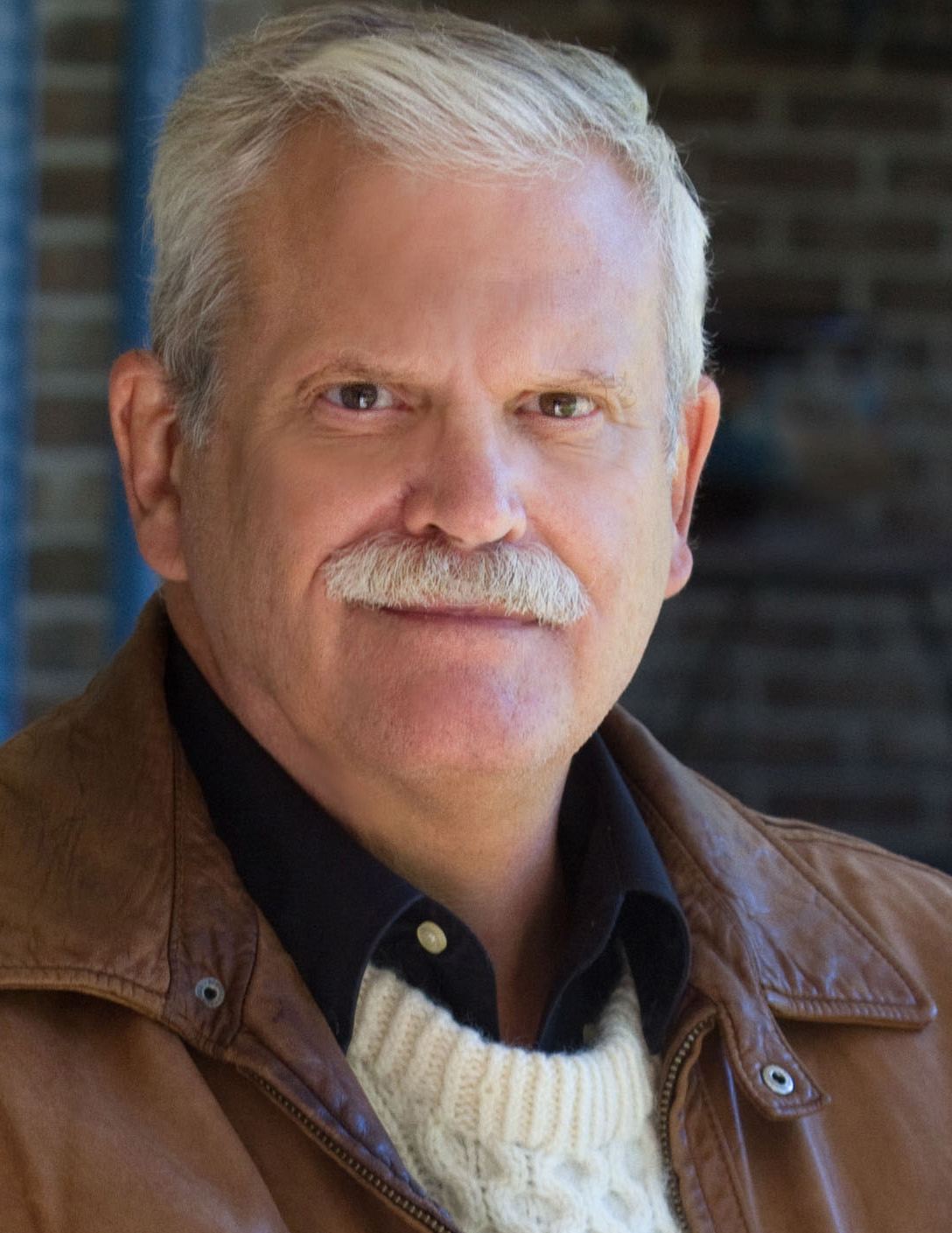
Bookpleasures.com welcomes as our guest, W. Clark Boutwell. Walt graduated from Northwestern University Medical School at twenty-three, he trained in Philadelphia to become a Neonatologist, a specialist in the care of critically ill newborn infants, a career he continues to pursue.
For the last twenty years, he has volunteered at mission hospitals from South America to Africa to India, which provides him a vivid palette from which to paint his stories of a future America. He is a member of the Libertarian Futurists of America, National Association of Book Entrepreneurs, the American College of Pediatricians, and a believer. He lives with his wife of over forty years in rural Alabama.
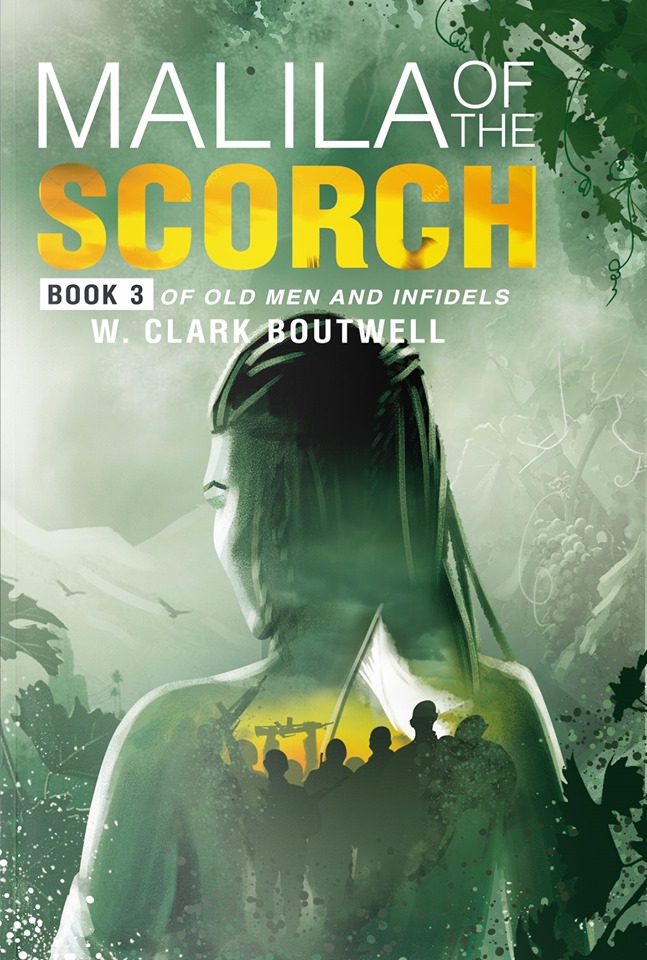
Walt is the author of three books: Outland Exile: Exiles’ Escape and Malila of the Scorch: in a series called Old Men and Infidels.
Bookpleasures.com welcomes as our guest, W. Clark Boutwell. Walt graduated from Northwestern University Medical School at twenty-three, he trained in Philadelphia to become a Neonatologist, a specialist in the care of critically ill newborn infants, a career he continues to pursue.
For the last twenty years, he has volunteered at mission hospitals from South America to Africa to India, which provides him a vivid palette from which to paint his stories of a future America. He is a member of the Libertarian Futurists of America, National Association of Book Entrepreneurs, the American College of Pediatricians, and a believer. He lives with his wife of over forty years in rural Alabama.
Walt is the author of three books: Outland Exile: Exiles’ Escape and Malila of the Scorch: in a series called Old Men and Infidels.
Norm: Good day, Walt and thanks for participating in our interview.
How long have you been writing, and why do you write?
Walt: Good to talk with you, Norm. Not counting scientific writing—and I certainly would not count that as of writing—I started writing in 2012. With the rise of so many online chat programs, I found I enjoyed trading opinions online. What I noticed was that in a war of words, most people went into it pathetically under-armed. I had a ball.
Then, I wrote a few memoirs about some of my solo backpacking trips, before deciding to attempt a short story, a big project for an apprentice writer. To my surprise, that morphed into half-a-million-word book series and a few short stories along the way.
Norm: What makes a Neonatologist become a writer of novels?
Walt: What, indeed? Let me first say that I am privileged to deal with the world’s best patients: none smoke, none drink, and there is no heavy lifting. Infants are patients who have not caused their own problems; it makes it just that much easier to get out of bed at 2 AM to go in. We all need whatever motivation that works for us.
A friend of mine of very long acquaintance (we met as Cub Scouts) expressed the opinion that I must be very well organized, planning every possibility to anticipate problems with my patients. I don’t think intensive care gives you that skill, necessarily.
Instead, it makes you—forces you—to be a crafty broken-field runner. A Neonatologist is at the mercy of the Next-Thing-to-Happen—unlooked for and feared. Making detailed plans for a future which fails to cooperate is pointless.
Now, however, I am at the part of my career, which allows me some freedom. The kids are grown and, as one of my characters comments, “there are no milestones to look forward to but the last.” That sounds morbid, but it very liberating. Most of us are bound by our striving to “become,” to finally arrive at our dream. Having an opportunity to sit back and collect one’s thoughts is a luxury I had not had before.
Norm: Does writing interfere with your career as a Neonatologist?
Walt: It should, shouldn’t it! Actually not at all. I started doing what is called locum tenens about twenty years ago. It means “filling in the place.” There are only about 3100 neonatologists in the country. Most work in single person practices. Locums docs fill in when there are vacations, illnesses, and absences. It gives me the flexibility I was not allowed in my previous situation. I wanted to do medical mission work—since high school actually—and locums work allowed me to fulfill that dream.
However, the locums lifestyle is solitary: I have no “bowling league” when I am on assignment. Writing is a solitary practice. Others have observed that one initially needs solitude to write, then one seeks solitude to write, and finally one requires solitude itself.
On assignments, I do have my books and my characters. Parts of the books have been written in airports from Nairobi to Accra to Honolulu, on riverboats on the Danube, cruise ships on the Java Sea and motel rooms from Maine to Hawaii.
Norm: Could you tell us about people or books you have read that have inspired you to embark on your writing career?
Walt: I have been reading science fiction since I figured out I could borrow my dad’s without getting into trouble. Both my parents were avid readers, lovers of poetry, and published authors—in a small way. My father wrote science, and my mother wrote poetry and short stories.
I helped my dad read galleys as a teenager. Verbal skills are a family affectation, I suppose. Many family stories were handed down about the clever turn of phrase of Aunt Delores or Grandpa Boutwell. Comic circumlocution and grand eloquence of the mundane are prized family heirlooms, but until 2012, I was still becoming.
As a reader, I am more catholic than evangelical. Several authors are important to me. My oldest favorite was Jack Lewis, Clives Staples Lewis. Some of his books, like the Problem of Pain, I consider essential reading for anyone who deals with sick humans.
His space trilogy, while a good deal of fun, is also emotionally wrenching and philosophically liberating. I read Huxley, Asimov, Dick, Niven, Pohl, Clark, Herbert (Dune was the only novel I read in med school), Heinlein, Ellison, Gibson, Card… I seem to be rambling. Three more: Douglas Adam, Terry Pratchett, and Neil Stephenson. I suppose the humor of Adam and Pratchett (British to the core) is my favorite sort (“How do you fly?” “Throw yourself to the ground—and miss.”) I come by it honestly (British grandmama and all). The world building of Stephenson and Herbert I would love to be able to emulate.
Norm: What has been your greatest challenge (professionally) that you’ve overcome in getting to where you’re at today?
Walt: I am not sure I have overcome. I consider myself a journeyman author. I am still trying to figure out the secret handshake which opens the doors to fame and fortune. However, I write to find readers. I measure success by how many reviews I get and how many books I sell. I still have a shed with a few hundred copies of Outland Exile, which my wife reminds me are there to be sold—repeatedly.
I am in the fortunate situation that I can write what I feel needs to be written without having to starve in a garret. To answer your question, however, I suppose the greatest challenge (if you ignore learning the craft of writing and the arcane mysteries of the comma) is learning the craft of publishing. I made choices early which, at the time, I thought reasonable, but now I see to have been self-defeating.
Specifically, the first book, Outland Exile, I had published through iUniverse, as I thought that a developmental editor and a certain amount of hand-holding on a first book was a good thing for a noobie author (which it is). I should have gotten the developmental editor independently and then gone looking for an agent. Once a series is established, it becomes much more difficult to interest agents in the next in the series.
Norm: For your writing, does the story come first, or the world it operates in? As a follow-up, what do you think most characterizes your writing?
Walt: For me, the world came first. I intended to invent a hard science America, divided by an ancient civil war, which reassembles itself as one young country and one old country. I then planned to let the countries incubate for a while before taking a single person from the young country and dropping her into the old country and seeing what happened. The characters had different ideas, of course; they want their stories told.
Part Deux—What do I think characterizes my writing? That frightens me. I am terrified I will be put into a niche and the public, like a stray dog, will turn their collective backs on me and kick dirt over my words. If I remain unlabeled, I might last a little longer?
But to be honest, I suppose what I am trying for is a certain amount of “gritty lyricism,” poetic cadences dancing over the raw nerves of the world. I started writing because I have not heard anything sounding like my inner voice in anything I have read recently. I might have to go back a wee bit to find anything like it, I suppose. Kipling? Masefield? Much of writing is craftsmanship of course, but it is there for the odd and unpredictable moments where the words seem to write themselves, and I just hang on for the punctuation.
Norm: Do you write more by logic or intuition, or some combination of the two? Please Summarize your writing process.
Walt: I wished I knew. I very logically and rationally came up with the idea of the Old Men and Infidels World. However, the very first scene I wrote was the capture of Malila Chiu by Jesse Johnstone, my two major protagonists. Within moments of my starting the scene, I knew what Malila looked like, down to a drift of freckles across her nose and the color of her eyes, her back story, her disappointments, and her fears. I knew Jesse, went prematurely gray, and that once embarrassed, he slips back into talking the Scots of his youth. Those two scamps slithered up my arms and into my head, living rent-free for the next several hundred thousand words. Much of what I wrote was to please them.
That sort of epiphany is the exception. Mostly, I had a very broad idea of the arc of the story—in the first three books—and it was not very complicated: boy meets girl, boy loses girl, boy finds girl in the middle of a jungle, boy loses girl in the middle of an invasion, girl finds boy dying, sentient plant heals the boy, happily ever after—the usual. The plot is there to show off the conclusions of the set-up, the old vs. young countries.
However, the process of writing for me is not well ordered. I think one writes what you can on that particular day. I get up at 5:30 AM every day and write something. I consider much of it may be scaffolding. Those words need writing but may be taken down before completion of the work. I have on occasion written a whole scene between two characters and have them argue and rant at each other—only to toss the whole scene as I realize that, now that the characters have told me how it is going to fall out, I should go a different way. Once a character starts talking, you must listen.
The next step is to organize the scenes, usually a few thousand words each, into a narrative that fits your basic story arc, like rearranging blocks. The next is “sanding and sculpting:” going back time and again to smooth the segues, polish the dialogue, correct point of view and continuity, expand shorter narratives to reduce choppiness while planning down long discourses to focus interest.
It’s stepwise. I frequently start with a disembodied monologue, giving me a chance to expand on my reasons for an opinion—pretty deadly stuff, usually. The next step is to put the discourse into the mouths of the right characters and see how they would say or think about it. Then I go back and see if the effect leads to an emotionally valid response.
I did this with an interview with a student spy with his teacher. I wanted to say some things about drug use in the second book. The old country considers it an economic rather than a moral activity. You buy insurance to get high, and you buy drugs at the post office. In the young country, drug consumption is a requirement. It turned into a fairly amusing conversation between the two and moved the story along nicely.
Norm: What did you find most useful in learning to write? What was least useful or most destructive?
Walt: Most useful? Learning how to type—I didn’t. It was not expected that we college prep types would need the skill in the early and mid-60s. I tried teaching myself on an old portable Underwood just before I went to college without much success. Other than that, writing for a critical editor is unsurpassed as a learning tool. Mrs. Helwig! I had her for senior year in high school. She was brutal. Her lessons unimpeachable. I have had a few editors and critics since then but none as good as Mrs. Helwig.
What is least useful? The paragraph! I was taught the standard “three-point paragraph” style, circa 1960. “Topic sentence, development, conclusion.”
None of it. Paragraphs are there to be played with.
I admit to writing numbingly long paragraphs the first time around—the muse is upon me. I then go back to make the paragraph serve the end-requirements of the passage. The sentence has to carry the cadences of the thought—have enough beats if you will. The paragraph is only there to slow you down—allow you to make a statement and give it time to sink in. Like that.
Norm: What do you think is the future of reading/writing?
Walt: A chance to pontificate on the future of all literature? That hardly seems fair. Literature can't talk back, after all.
It seems evident we Americans are getting less literate and more tolerant of bad literature. How could it be otherwise? The bar for publication has practically disappeared. Works escape into the public domain that have barely felt the lash of the editor’s whip or the harnessings of adequate spelling or punctuation. They clog things up.
Even so, without that freedom, I doubt I would have had the brass or crass to attempt it myself. For my part, I try very hard to add value to a work I produce, to make it as perfect to language and punctuation as I can considering I enjoy the occasional malapropism and neologism ( “makin’ up th' leid fae malinky air”—making up the language from thin air, donchakno).
Norm: Could you tell our readers how you became involved with the subject or theme of your books? As a follow-up, could you briefly tell us about the books?
Walt: That is a story in itself. The whole series stems from a conversation I had in Nalerigu, East Malaprusi District of northern Ghana in 2009. A ten-year-old boy of my acquaintance shared with me the Ghanaian national anthem in English (no surprise there, English is Ghana’s national language). In partial payment, I sang the “Star Spangled Banner” for him and mentioned, while he was recovering, that it had been composed during a battle America had with England.
He was dumbfounded, “American and England have been at war?”
“Well,” I admitted a little embarrassed, “that was the second war America and England have had,” adding in America’s defense, “The first was our War of Independence.”
“America has not always been?” the sound of incredulity now evident in his voice.
“No,” I confessed. “We were a colony of England—for about a hundred years before the revolution. Come to think of it,” I added, thinking it would be a mark of shared heritage between us, “both America and Ghana have been colonies of England.”
The boy stiffened. “Ghana has never been a colony.”
“Nonsense, I was your age when Kwame Nkrumah declared the republic. I remember it.”
“Ghana has never been a colony.”
“Why do you speak English, then?”
“Ghana is an English-speaking country.”
I gave up.
Ghana is a young country despite its 600-year history. Half of Ghanaians are under 22 years old. All teachers are national employees. They do as they are told to do. Today, history for Ghana begins with Nkrumah in the mid-1950s.
Thanks to western medicine, global trade, intolerance to war and better nutrition, the world is both getting older, with increasing life expectancies (Ghana’s went up from 48 to 65 since the end of WWII) but also younger due to decreased infant mortality. So Ghana, America, and the world are all getting older and getting younger.”
It has inevitable consequences.
About that time, I jotted down the words that I would put into a character’s mouth: “If you have no past, how much of a future can you have?”
Part Deux: As a follow-up, could you briefly tell us about the books.
I already mentioned the story arc is fairly simple. There is, however, a lot I will leave out for brevity’s sake. Book One, Outland Exile, is set in an America which has been torn asunder by the collapse of global trade, destruction of the American armed forces, a disastrous civil war, and the Scorching, the use of an experimental mutagen-herbicide (the Scorching) by the People’s Republic (now the Democratic Unity) to starve the Midlands into submission. The Unity’s soldiers-of-choice are neuro-ablated old (over forty) people, who die within five years of being Sapped. This has allowed them to become a Utopia with free housing, full employment, computerless surfing of the nation-wide CORE computer, recreational drugs at quite reasonable prices, and retirement at (you guessed it) forty. The army is in control of all aspects of Unity life with the Solons (unnamed and unnumbered ultimate rulers) firmly in charge.
Colonel Eustace Jourdaine is in the midst of a stealth coup d’état, using an otherwise unknown entity, a CORE personality, Presence (whose name we eventually learn is Cain). Cain is a new thing, a computer entity which in many ways has taken on the personality of his original user, Philip (long dead from “incurable” leukemia).
Jourdaine, to affect his coup, needs the unknowing help of Malila Chiu, a career army officer. She is middle-aged at 17 years and a bit of a hardass. Her destruction merely is a means to an end and with her demotion for crimes, real and manufactured, she is sent to the outlands to fix a “sniffer” station in the wilds of a depopulated Wisconsin. She is almost immediately captured by a barbarous and disfigured giant of a man who murders her platoon, takes her captive, mutilates her body and marches her south to American lines despite their mutual disdain, brutal weather, slaver gangs, and carnivorous plants. Jesse Johnstone, we learn, is the first of the Old Ones, who, as children, received the Ageplay agent and will live well into their second century.
Malila’s capture is the beginning of her liberation, mentally and philosophically. Just as she begins to understand the illusions of her homeland, to gain acceptance among the frontier people, and to fall in love with the selfless Jesse—she is recaptured. Months later, after plumbing the depths of the Unity’s illusion, she fakes her suicide and starts her escape from the nation-wide prison of her homeland.
Book Two, Exiles’ Escape, is Malila’s subterranean escape to America. We learn she can be tracked by a homing device inserted into her by the resourceful Jesse, who, by coming back into the heart of America, has triggered new attempts to assassinate him. Surviving one such attempt, he takes to the skies in a new American weapon, the R-ship. Meanwhile, a young American, Will Butler, has been recruited and trained to be a spy, before his insertion into New York, there to “follow his nose,” and learn as much as he can before his expected capture.
In the end, Will is saved by Malila and Malila is saved by the sentient plants of the Scorch. Jesse comes back to earth to find Malila, once her homing signal is detected.
Book three, Malila of the Scorch, will be published shortly. It is a third in the trilogy and finishes the Malila-Jesse story arc. This is acted out against the backdrop of the impending invasion of Georgia by the Unity with Jourdaine now its undisputed ruler, having assassinated the solons with Cain’s assistance.
Malila is sent to America as a Messenger of the Scorch, but perfidious American bureaucrats delay the negotiations for a mutual defense pact between America and the Scorch. The talks collapse when the Unity attacks. Malila and Jesse suffer an acrimonious separation. They are both recaptured by Jourdaine who gives Jesse the neuro-ablation treatment to spite Malila’s affection for him. America wins the day, however, and Jesse recovers after some help from his vegetable friends.
Book Four, (WT The Demarchy has gone Silent) goes off on another slant entirely. America, despite its triumph, knows another Unity attack is coming. It needs allies and weapons. The Demarchy (what remains of the American west coast) is the only candidate for a treaty. B-list diplomates, businesspeople, academics, agriculturalists, engineers, and an old felon are bundled into a new R-ship and sent to visit the neighbors—just as they are invaded by the narco-state of Nuevo Mexico. I explore drug use and the zeitgeist of “enlightenment.”
Norm: What do you hope will be the everlasting thoughts for readers who finish your books?
Walt: I would hope several. I make a point of having my characters speak for me, on occasion when they are not speaking for themselves—author’s prerogative, donchakno. They leave tidbits of ‘wisdom’ littered about the pages and attributable to others: “Small conspiracies fail; large conspiracies are betrayed;” “Beware the babe. Name me another human who can seduce an otherwise rational adult to feed, clothe, house, relearn trigonometry for, and bake cookies at the last moment for the benefit of, for such small returns on both goods and service. Cave Infans;” “History is there to remind you of all wisdom you chose to ignore.”
However, I suppose the major “slogan” of the series is that we are currently in the “zeitgeist” of “youth.” The spirit of the age can never be examined properly; it is all around us, and we can never see it anymore than we see the air. It can be destructive, like the idea of “progress” in the late 19th century, where it was presumed that all the advances the late Victorians were experiencing (every bit as earth-shattering as those we experience) would lead inexorably to a golden future of peace and prosperity. That idea died with the millions in the trenches of France and led to the bloodbaths of the first half of the last century.
We currently, just as completely, and with just the same lack of examination, believe that what is new and young is better than what is older. That idea doesn’t even have the panache of promising a utopian tomorrow, as many people live lives where they know that the “world is going to end in” a random number of years unless we (meaning others) “do something” they cannot imagine will occur. Recycling 3-D glasses, despite what they claim, will not “save the planet.”
Many are sufficiently unaware of what has come before them that they cannot be apt judges of the present. Mere facts, such as who fought in World War II, are no longer universally known. IQs have dropped by 14% in a century, SAT scores keep dropping—and the universal response of nations is to move the intellectual goalposts closer.
The old, whether people or ideas, have, at least, the proof of survival to recommend them. Who is collecting Betamax tapes anymore? Who is collecting vintage vinyl?
If any country embraces what is young and dumb, what is the likelihood of it being led astray? Old countries, those that imagine that they are the last of a failing society, act weird as well. Japan and much of Europe are below the replacement rate as far as births. They actively contemplate the death of their own societies. It makes them too cautious--miserly, bitter and, in the last moments, daft—rearranging deck furniture on a sinking ship.
If I can get the young to inspect their current supremacy, I will have done well.
Norm: Where can our readers find out more about you and your books?
Walt: That at least, is an easy question, Norm. My website is https://oldmenandinfidels.com. The books are available at the usual bookish crack houses and websites. I have ebooks and audiobooks for both, as well.
Norm: What is next for W. Clark Boutwell?
Walt: Another easy question! The Demarchy Has Gone Silent, is at the “sanding and sculpting” phase. I started sending her out to beta readers just this last week. The fifth book, as yet unnamed, is the conclusion of the series, as I first imagined it. The Unity, having just lost a war and all its ruling class, is headed for implosion unless EffieCee (a proper plural noun) step into Bibi Riddles fluffy pink slippers. We shall see what can be done.
I plan on retiring from my day job shortly, within a year or three. Which way the muse takes me is up to her. I try to write every day and have done so for six years so far. I expect to do that as long as I am able, given certain limits.
Norm: As this interview comes to an end, what question do you wish that someone would ask about your books, but nobody has?
Walt: Laughs. Very Clever. No one has asked me how autobiographical the characters are. Surely Jesse, down to his being a doctor, outdoorsman, prematurely gray, and, oddly, a member of the McLellan clan of Galloway, is as close as I might get to a clone. Jesse and I disagree on a number of things. He kills people. It changes a man. Jesse is more maudlin than I.
Other than he, I cannot find among my acquaintances anyone who matches my friends. Loana Băsescu, in the fourth book, shares some foibles with my wife but lacks her mental toughness she has. Did I mention we are both pediatricians (Amazing the children survived!)?
Places are another thing. Will Butler finds a hole to hide in just outside Philadelphia in an unused part of the beltways in Willow Grove, strangely the town I grew up in. Rather stranger is that the location for his nest of spies is the same location of an old tunnel complex for the trolley, now buried. I had
thought I made up that bit, but I was reminded that during my youth, the derelict Tunnel still existed. It was decidedly off-bounds when I was a kid and used for illicit assignations—first kisses and perhaps more. The brain is an odd sorter-out of facts, isn’t it?
Norm: Thanks once again and good luck with all of your future endeavors