Reviewer & Author Interviewer, Norm Goldman. Norm is the Publisher & Editor of Bookpleasures.com.
He has been reviewing books for the past twenty years after retiring from the legal profession.
To read more about Norm Follow Here

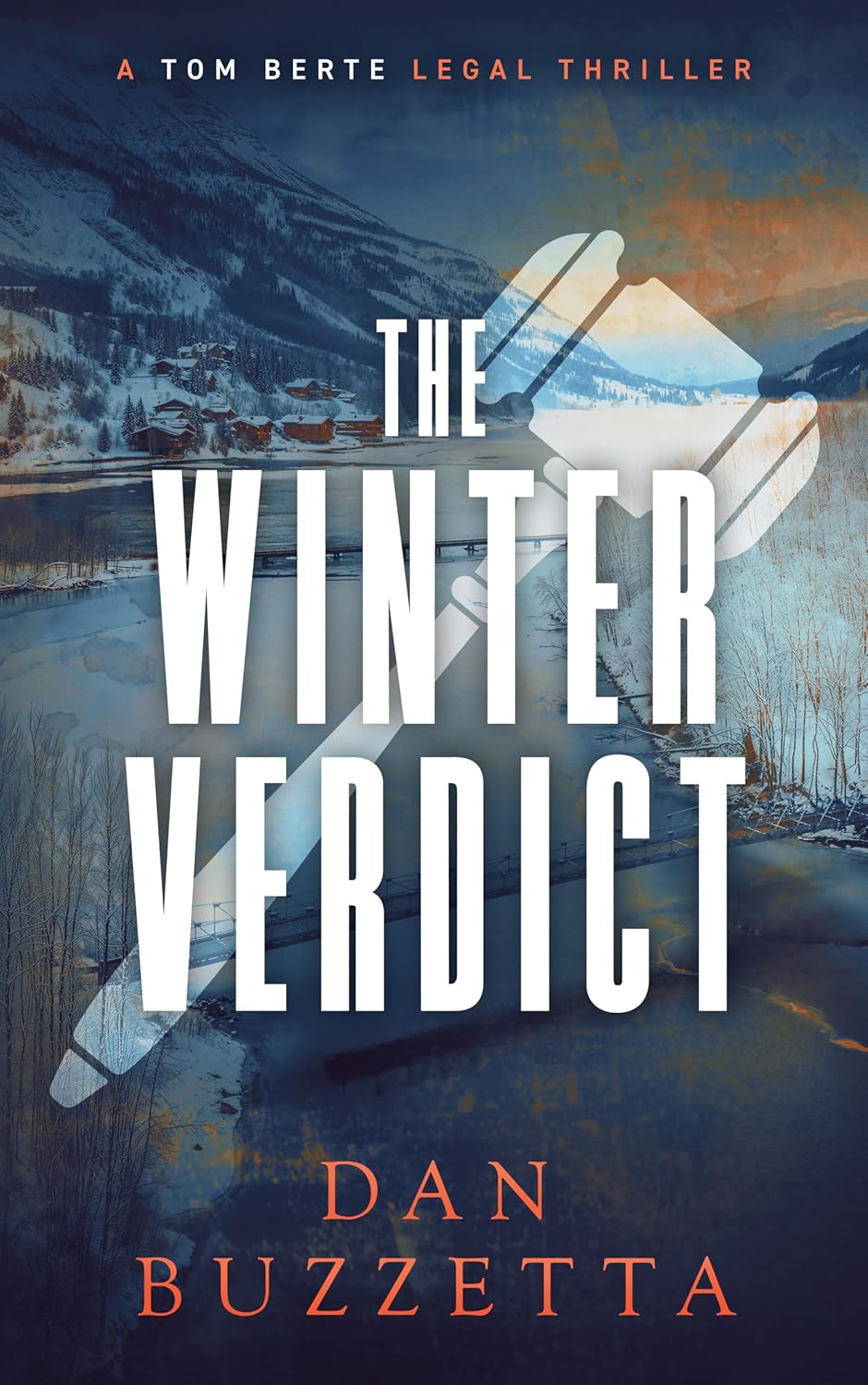
Inside the Mind Behind The Winter Verdict: A Dialogue with Dan Buzzetta
Bookpleasures.com is excited to sit down again with acclaimed author Dan Buzzetta.
After his successful debut, The Manipulator, Dan has released the much-anticipated second book in the Tom Berte legal thriller series, The Winter Verdict.
Published by Severn River Publishing, this fast-paced story brings readers back to former DOJ lawyer Tom Berte, whose quiet life in Castle Ridge is suddenly disrupted by a global conspiracy. From local ski slopes to risky desert hideouts, Dan shows again how well he mixes real legal details with suspense. Dan, welcome back.
Norm: Tom Berte’s move from DOJ operative to solo lawyer in Castle Ridge feels very real. How did your 30 years as a litigator shape his everyday cases, like injunctions and property disputes, while also drawing him into global threats?
What real-life experiences influenced his shift to putting family first since The Manipulator? How do Brooke and Aneilia’s roles raise the tension in this second book?
Dan: As a business and corporate litigator for the last thirty years, I’ve handled a lot of commercial disputes, from small cases involving private business owners to cases involving large, public, multi-national companies where corporate reputation and literally hundreds of millions of dollars were at stake.
Since Tom Berte worked at one of the world’s largest international law firms before heading to the DOJ and later hanging his own shingle as a solo practitioner in Castle Ridge, he would be comfortable handling a variety of commercial disputes and I wanted to bring that level of realism to his legal work in The Winter Verdict.
Although the rule of law and justice are important to Tom, his first priority is always his family, namely his wife Brooke and daughter Aneilia.
In this second book I wanted Brooke to have a larger role, and I wanted to introduce their daughter, Aneilia, who faces a grave threat which forces Tom to consider how much danger he’s willing to put his family in to prevent a mass tragedy that could affect millions.
Norm: The Winter Verdict blends small-town legal work with the dark conspiracy of Phoenix Holdings. What inspired you to create this corporate villain with foreign investors and a 'Grand Plan'?
Is Anastasia Maine based on any real lawyers or executives you’ve met? Without giving too much away, how does their land near Bensonville Reservoir connect to the bigger themes of environmental and terrorist threats?
Dan: Anastasia Maine is a compilation of ruthless business executives and corporate lawyers I’ve met in my career who wouldn’t flinch at putting personal greed, revenge and power above all else.
They’re often colorful characters with interesting backgrounds who are motivated by a variety of complex factors. I thought it would be fun to write about a corporate villain, Phoenix Holdings, and its high powered lawyer, Anastasia Maine, as the chief antagonists.
I also wanted to incorporate global threats that seem to always be lurking in the background. With the upcoming twenty-fifth anniversary of the 9/11 terrorist attack, I thought writing about the potential of an unspeakable mass terrorist attack would be a way of reminding us that the price of freedom is never free, and that people everywhere need to be vigilant to protect our freedoms and our way of life.
Norm: The ski assault scene is intense and fast-paced. How did you make Castle Ridge’s slopes and Tom’s morning routine feel so real and surprising? How much research did you do for Terrie’s rescue as a ski patrol EMT?
Did your time as a volunteer firefighter shape Tom’s lasting paranoia after the attack?
Dan: I am both an avid skier and proud to serve my community as a volunteer firefighter and I wanted to incorporate both these passions in The Winter Verdict.
Writing the opening scene came naturally to me and I’m glad to hear you say it felt real and carried suspense - exactly what I was hoping to accomplish.
As a volunteer firefighter I’ve seen and experienced things I wish I hadn’t - and they’ve changed me. I’m even more cautious than I was before my training and I try to anticipate consequences before bad things happen. It’s either paranoia or just trying to be extra careful and paying attention to situations. Either way, I wanted Tom to exhibit the trait of vigilance in The Winter Verdict.
Norm: The Revolutionary Avengers introduce cyberterrorism into the story, targeting the chairlift. What real events inspired this modern threat, and how did you balance the graphic lift disaster with suspense?
What does the warning 'Independence is coming' hint at for the July 4 plot?
Dan: Fortunately, no real events inspired the chair lift disaster I wrote about - it’s completely made up. But I have worked on cases where real cyber breaches and attacks have wreaked havoc on companies and their customers.
And the fear of the unknown and the extent of the threat made the attack even more perilous which led to real-life suspense. It’s a threat we all face and is becoming all too common and I wanted to incorporate that concept in my book.
July 4th is a time for family, fun and celebrating our nation’s independence and birth, which this year celebrates its 250th anniversary. But it’s also a time to be on guard to protect the freedoms we value most.
I imagine that some of our adversaries around the world who wish to do America harm also view July 4th as a potential independence day from them - a symbolic day to free themselves from the perceived tyranny of the United States.
That’s why I chose to create drama around Independence Day in my book.
Norm: Castle Ridge’s small-town feel is very different from the global conspiracy in the story. How did you use skiing scenes and local routines to keep the plot grounded?
Are any real people from Castle Ridge behind characters like Faith McReynolds, Constable Ozzie, or Chet? How does the quiet at the resort after the tragedy show your thoughts on how the legal system deals with justice?
Dan: In The Winter Verdict I sought to combine two stories in one. On one level it’s a story about a global conspiracy and the threat of a mass disaster that could affect millions.
At the same time I wanted to give the story a local feel about how global events affect people in small towns.
The characters I wrote about, who are all fictitious, are a compilation of the wonderful people I’ve met in the small town in Upstate New York (Windham) where my wife and I own a home and where my family enjoys skiing.
The quiet at the ski resort after the chair lift disaster is symbolic of the quiet that often follows a tragedy, while our system of justice churns slowly and methodically to identify those responsible and hold them to account, while ensuring that their rights are protected.
One would hope that quiet serenity is also the result of a justice system that works the way it’s meant to.
Norm: The Zincar virus and bio-terror plot add a sense of dread. What real research on bioterror threats helped shape the 'Grand Plan'? His Eminence’s backstory, with his family killed on July 4, makes the villain more human.
How do you avoid clichés in terrorist motives, and is it scientifically possible to contaminate Bensonville Reservoir?
Dan:I don’t think it’s scientifically possible to contaminate a reservoir or a city’s drinking water, but I’m not a scientist and I take it on faith that those responsible for protecting our rivers, streams, reservoirs and drinking water sources are ever vigilant to protect us from the kinds of threats I write about in my book.
Norm: Faith’s decision to turn down Phoenix’s $500 million offer changes the whole story. What does her struggle with her legacy say about inheritance versus making your own way?
How does her growth after the sabotage show your approach to strong female characters in legal thrillers? Did you mean for the $150 million ransom demand to align with Phoenix’s down payment offer?
Dan: I’m glad you picked up on the theme of inheritance versus making your own way. It’s similar to the burden Tom Berte carries with him after he discovered in The Manipulator that all of his success and achievements were orchestrated by his father.
I wanted to carry that theme in my second book and have Faith McReynolds struggle with the same issues Tom struggles with. Like Tom, Faith became stronger because of the adversity she faced, which is another theme I enjoyed exploring.
And I purposely wanted to write about strong female characters because I find that element missing in a lot of legal thrillers. Lastly, yes, I purposely made the amount of the ransom demand align with the money Faith recovers at the end. I thought she, and the victims of tragedy at the ski resort, deserved that money.
Norm: Manipulation remains a major theme from the first book. How does The Winter Verdict look at justice when systems like the law and the FBI fail? Tom becomes more practical, moving 'beyond rigid rules.'
What do you think about lawyers bending ethics to survive, and how does this set your work apart from authors like Margolin or Grisham?
Dan: Tom Berte is guided by his sense of justice and doing the right thing for the right reasons. Sometimes rules hinder instead of promote justice. I’m reminded of a saying that ‘sometimes in society there are too many laws and not enough justice.’
It’s a theme Tom struggles with at times because often two principles are hard to reconcile. But in the end, Tom finds a way to pursue justice while still honoring his ethical responsibilities
Although I’m not an expert on either Phillip Margolin or John Grisham (although I’m a huge fan of both), I think Margolin’s protagonists tend to bend rules more willingly as a way of dealing with an imperfect justice system, whereas Grisham’s protagonists often struggle with moral decisions and ethical questions much in the way Tom Berte does.
By the way, just being mentioned in the same sentence as Phillip Margolin and John Grisham is a blessing.
Norm: As we end our interview, you hint at the System of Justice as the third book. Without giving away spoilers, how does it continue from this cliffhanger, and what’s next for Tom Berte? As a busy litigator, do you write every day or in creative bursts?
What made you shift from mafia stories to cyber and bio-terror themes?
Dan: System of Justice takes place several years after The Winter Verdict and finds Tom Berte running a larger law firm, although nowhere near the size of BCC from The Manipulator.
In this third book in the Tom Berte Series, Tom returns to his roots as a courtroom litigator, but this time he finds himself defending a young woman, Madison Redding, charged with murdering a Supreme Court Justice and potentially facing the death penalty.
But Tom knows something almost no one else does. And what he knows may mean the difference between Madison’s innocence - and her death.
I wish I could write everyday, but my day job as a busy partner in a large law firm handling important matters for my clients prevents me from indulging in my passion on a daily basis.
And so I tend to write in creative bursts when time allows, which is usually in the early mornings a few days a week and weekend mornings. I tend to be at my most creative in the mornings, when my wife, kids and dog are still asleep and the house is quiet.
I really enjoyed writing about the mafia in The Manipulator and I’d gladly write more about the subject, but an agent who chose not to represent a few years ago suggested that publishers aren’t interested in “mob books” anymore.
I disagree with that agent - and I think the success of shows and like Tulsa King and Peaky Blinders, and reruns of the Sopranos, supports my theory. Having said that, I also wanted Tom Berte to face different challenges and seek justice against an array of antagonists and so I moved to the world of cyber and bio-terrorists and corporate cold-blooded murderers. But maybe one day I’ll write about a mafia kingpin again.
Follow Here To Read Norm's Review of The Winter Verdict