
Reviewer & Author Interviewer, Norm Goldman. Norm is the Publisher & Editor of Bookpleasures.com.
He has been reviewing books for the past twenty years after retiring from the legal profession.
To read more about Norm Follow Here
Bestselling mystery author Kathleen Kaska opens up about the emotional moment that launched her writing career, the real-life inspirations behind her beloved Sydney Lockhart and Kate Caraway series, and the deep connection between her storytelling, wildlife conservation, and travel.
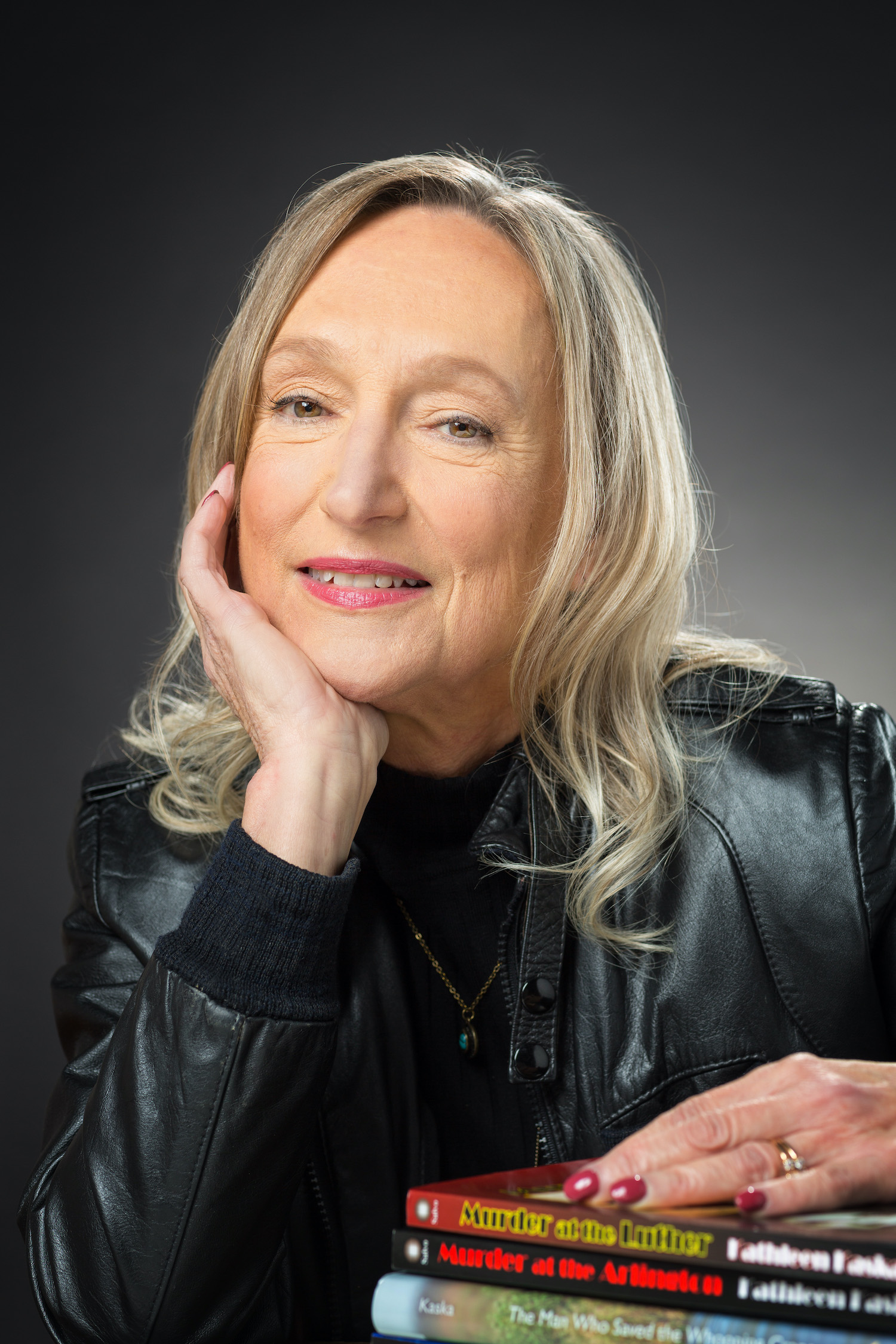
From 1950s hotel intrigue to animal rights suspense and a forthcoming hard-boiled novel, Kathleen shares the creative sparks, surprises, and passions that continue to shape her remarkable body of work.
It is a pleasure to welcome Kathleen Kaska to Bookpleasures.com.
Kathleen is widely recognized for her engaging Sydney Lockhart 1950s Hotel Mysteries, the Kate Caraway Animal-Rights Mysteries, and her acclaimed mystery-trivia works, including The Sherlock Holmes Quiz Book.
Her writing is distinguished by a seamless blend of historical insight and a profound respect for the natural world, qualities that have garnered her several notable honours.
Among these are the PenCraft Award for Murder at the Pontchartrain and the Amity Literary Award for her forthcoming novel, Death Without Dignity.
Beyond her fiction, Kathleen has contributed over one hundred travel and adventure articles, and she is the author of the nonfiction title The Man Who Saved the Whooping Crane, which underscores her enduring dedication to bird conservation.
When she is not writing, Kathleen and her husband are frequently found travelling the back roads of the United States, drawing inspiration for her stories and observing birds along the Texas coast.
Norm: Kathleen, what led you to mystery writing, and was there a specific moment or influence that set you on this path?
Kathleen: What was the specific moment that set me on my writing path? Well, you’ll need to grab a tissue for this one. The idea of writing fiction stemmed from a time in my life when I did little else but read.
My fifteen-year-old dog was experiencing his last weeks. Thankfully, it was at the beginning of summer vacation, and I had free time, and I wanted to spend as much time as I could with him.
He was always there for me, and it was my turn to be there for him. So, for the next month, I only left the house to buy groceries and pick up a novel from the neighborhood bookstore.
The more I read, the more I wanted to write. I see it as his parting gift to me. After he passed, I enrolled in a creative writing class. That was thirty-six years ago. His picture is on my bookshelf, and I’m still writing.
Norm: What inspired each of your mystery series, and did one feel more natural to write than the other, or did both develop simultaneously?
Kathleen: Both of my mystery series developed around the same time. My initial idea was to write an animal rights mystery inspired by my volunteer work with Wildlife Rescue in Austin, Texas, where I rehabilitated injured and orphaned wildlife.
wanted to create a series with a social message, and this idea seemed perfect. My Sydney Lockhart mystery was influenced by Janet Evanovich’s Stephanie Plum Series and Elizabeth Peters’ Amelia Peabody Series.
I aimed for it to be humorous and lighthearted, featuring quirky, colorful characters. Both of my protagonists, Kate Caraway and Sydney Lockhart, are strong female characters.
Kate stood up against greyhound racing, the destruction of a wild mustang in Montana, and supported a controversial eagle rehabilitation facility. Sydney’s pursuit of justice involved clearing her own name, as she is a suspect in each murder case.
Norm: Why did you choose the 1950s for the Sydney Lockhart series, and what excites or challenges you about this era?
Kathleen: I wanted Sydney Lockhart to be an independent woman focused on her career, determined to stay single and succeed on her own. That’s much easier to do today, but not so simple in the 1950s, which made Sydney’s life goals more challenging.
Norm: How do you select each hotel setting, and what research process do you follow to authentically capture the era?
Kathleen: I choose hotels in Texas and nearby states. Since this is the 1950s and Sydney travels frequently, I didn’t want to spread her all over the country. After all, she’s a Texas girl like me.
The hotels needed to have existed during the story’s time period and still be open today. Setting is important to me. I want my readers to visit these charming hotels. I often hold book signings and meet with book clubs at the hotels.
When it comes to capturing the era, I dedicate time in each hotel to learn about its history. While there, I explore every nook and cranny I can find. The concierges are often helpful in answering questions about the hotel’s history.
The Arlington is where my husband and I spend each Thanksgiving. We’ve probably spent a total of four months at the Arlington. It’s our home away from home in Hot Spring, Arkansas.
The same is true for the Luther Hotel in Palacios, Texas, and the Galvez Hotel in Galveston, Texas. As for the other hotels, the Driskill in Austin, the Menger in San Antonio, and the Pontchartrain in New Orleans, I only stay a few days for research.
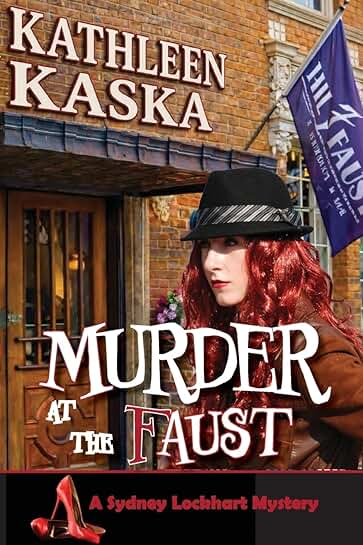
The Faust Hotel, the setting of my latest mystery, is also a place I frequently stay.
Norm: How did you develop Sydney as a protagonist, and has she changed in ways that surprised you?
Kathleen: I like to say that I didn’t develop Sydney; she simply walked up to my room at the Arlington Hotel and introduced herself. Once, when we arrived and had to wait two hours for our room to be ready, my imagination started to spin.
I imagined that something bad had happened in “our” room, and a major clean-up or cover-up was happening. As soon as we were allowed in, I began unpacking. Sydney came out of the bathroom and told me not to blame her. I asked for what?
She said for the dead man in the bathtub. After that encounter, I was off and running.
Sydney’s life has changed, but she hasn't. She’s still the same sassy, stubborn, and determined young woman I met in the first mystery. Sydney started out as a newspaper reporter but quickly realized she had a knack for crime investigation.
She and her partner and beau, Ralph Dixon, opened up a detective agency in Austin. She’s seriously considered accepting Dixon’s marriage proposal. You’ll find out what happens in Murder at the Faust.
Norm: How does writing across different genres influence your storytelling approach, and does switching genres help or hinder your creative voice?
Kathleen: When I first started writing, I tried my hand at everything: travel writing, stage plays, short stories, and poetry. I was also teaching biology at the time and was asked to contribute to a science textbook. I jumped at the chance and really enjoyed it.
I taught advanced middle school students using high school textbooks, so I had to make the chapters I was assigned to write both easy to understand and engaging enough to capture their interest in the lessons. Creative writing helped me in this effort.
I enjoy writing what I love to read: cozies, suspense, and hard-boiled fiction. For example, I admire the classic hard-boiled detective novels by Dashiell Hammett, Raymond Chandler, and Mickey Spillane.
They inspired my novel Death Without Dignity, which is set for release in January 2027. Currently, I’m reading many novels set in Ancient Egypt. I’m in the early stages of writing a story set during King Tut’s era.
By reading similar books, I can get a sense not just of the setting but also of the voices of my characters.
So, to answer your questions, switching genres helps me develop my creativity.
Norm: What fascinates you most about Sherlock Holmes, and do you intentionally include Holmesian qualities in your work?
Kathleen: What fascinates me the most is the voice. Sir Arthur Conan Doyle gave Doctor Watson, the narrator, a voice that captivates me from the first line. It’s as if I’ve stepped into 221B Baker Street and sit down to listen as he recounts Holmes’s latest exploits. There aren’t many authors whose books or stories I read repeatedly.
I don’t intentionally use Holmes’ qualities or investigative methods in my mysteries, but I did when I wrote the Holmes short story, The Adventure of Old Baskingstoke.
Capturing Dr. Watson’s voice and Holmes’ methods of deduction was crucial, just as it is in writing any Holmes short story or pastiche. If I didn’t, I would have definitely been called out on it if any Holmes scholar read it.
Norm: What new projects or directions can readers look forward to in your upcoming work?
Kathleen: I just finished a quirky British mystery set on the Cornish Coast, and now I’m writing a cozy set in my hometown, West, Texas. Locals refer to it’s name as West (Comma) Texas, to distinguish it from the western region of the state.
West Comma is located in Central Texas near Waco.
Norm: Where can our readers find out more about you and your novels?
Kathleen: Readers can go to my website, sign up for my newsletter, and check out my Amazon author page. Murder at the Faust is now available for pre-order.
Amazon
Pre-order Murder at the Faust
Barnes & Noble
Norm: As we conclude our interview, what is your top advice for aspiring mystery writers, and is there guidance you wish you’d received starting out?
Kathleen: All aspiring writers should read, read, and read more, especially in the genre in which they want to write. Also, joining a writer’s critique group is essential. Being with a group of supportive people will keep you on track and make you accountable.
And, of course, never give up.
Norm: Thanks once again and good luck with all of your endeavors