Reviewer & Author Interviewer, Norm Goldman. Norm is the Publisher & Editor of Bookpleasures.com.
He has been reviewing books for the past twenty years after retiring from the legal profession.
To read more about Norm Follow Here
If you’ve ever viewed walking as just a way to get from point A to point B, you are missing out on one of the most potent healing tools available to the human body.
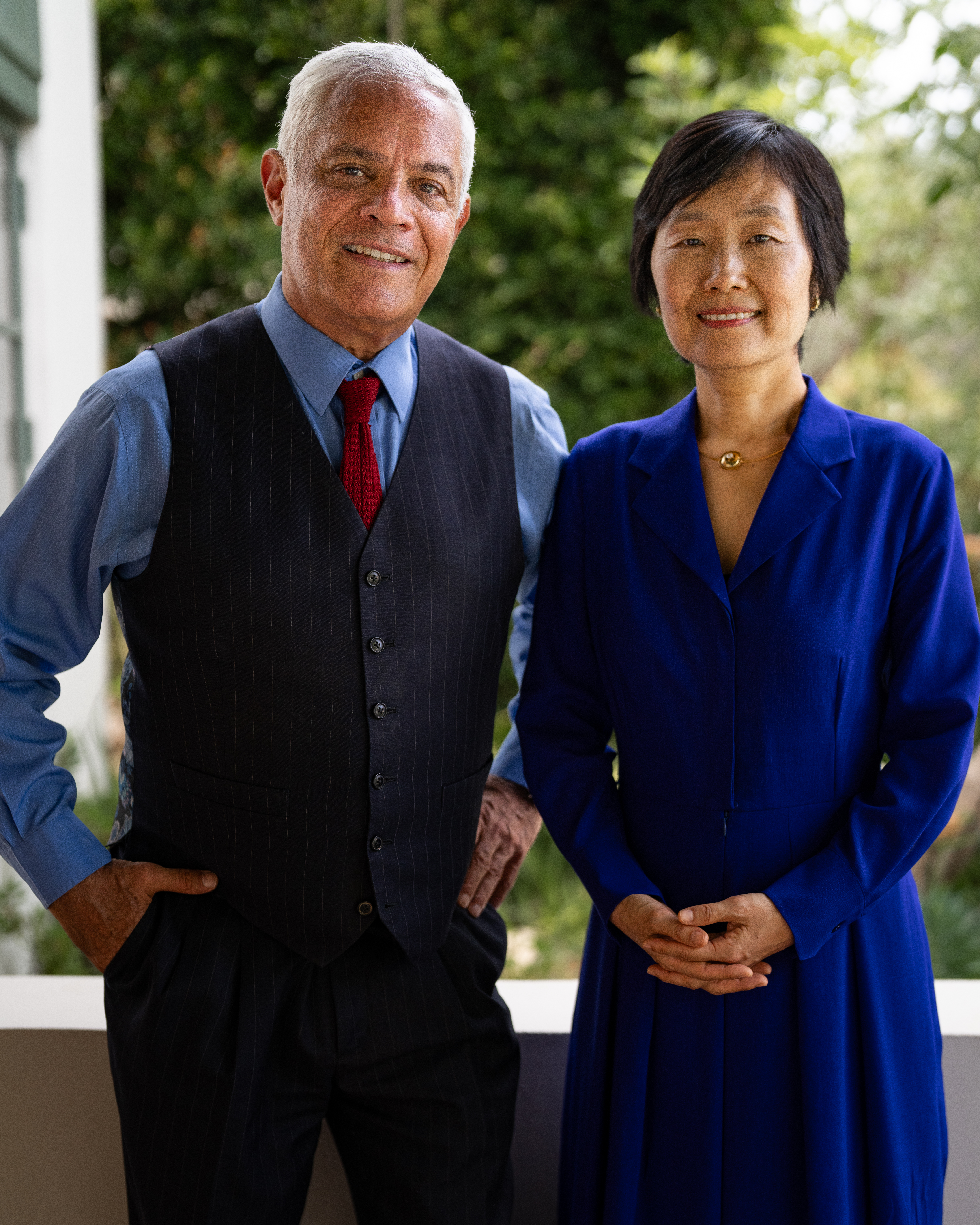
In this insightful interview, we sit down with Dr. Jacques MoraMarco and Dr. Yun Kim, the authors of Walking Your Way to Vitality.
Drawing on decades of expertise in traditional East Asian medicine, acupuncture, and Sun Tai Chi, these experts reveal how a simple, mindful approach to walking can do far more than burn calories—it can reduce stress, boost your immune system, and fundamentally restore your life force. Whether you are battling desk-bound fatigue or seeking a sustainable path to long-term health, this conversation offers a fresh, transformative perspective on the world’s most accessible exercise.
Today, Bookpleasures.com welcomes Dr. Jacques MoraMarco and Dr. Yun Kim, two respected experts in traditional East Asian medicine and Sun Tai Chi. They co-wrote Walking Your Way to Vitality, a book that offers a new and engaging look at walking, the world’s most accessible exercise.
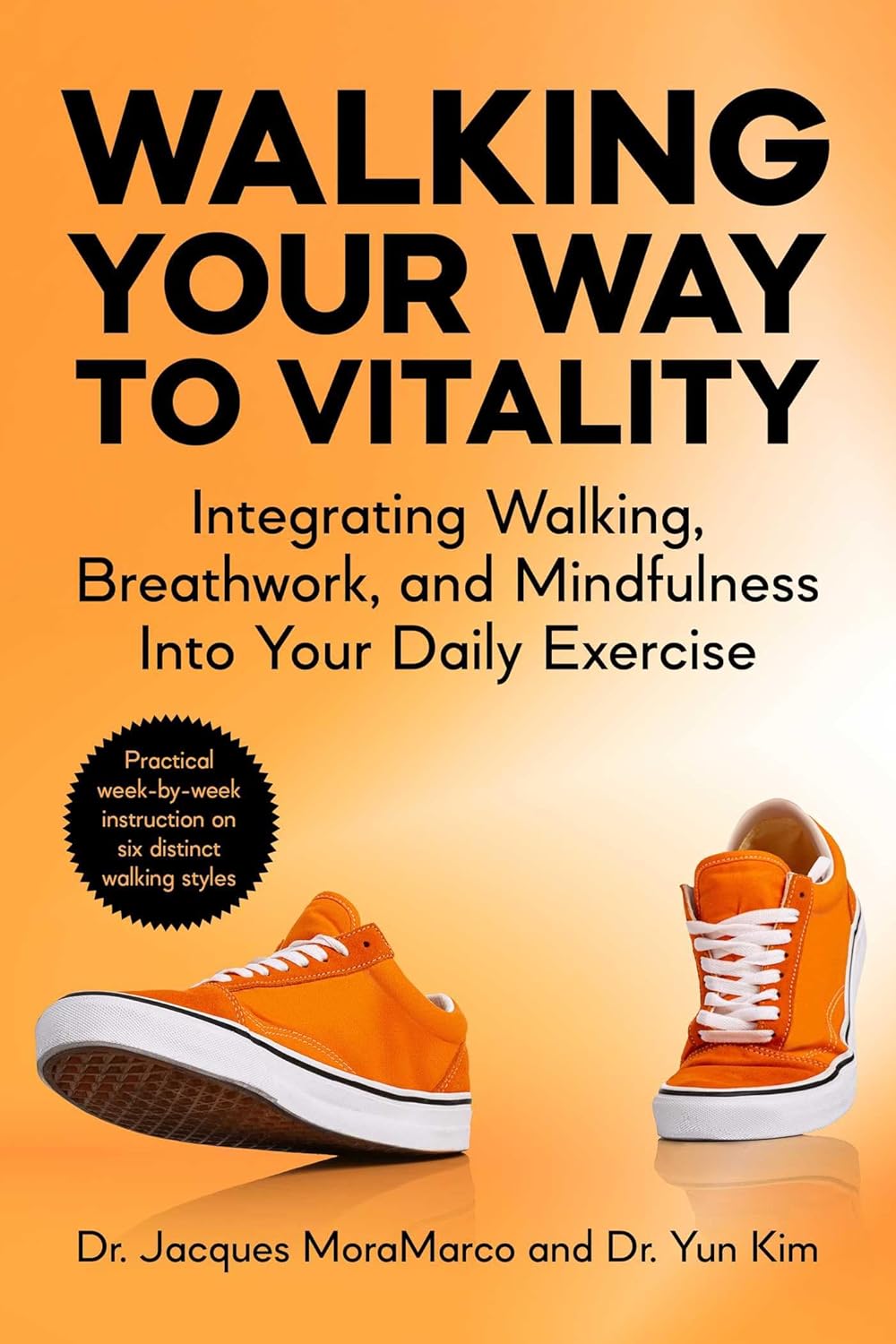
Their book encourages readers to see walking in a new way, offering a fresh perspective that is particularly relevant today as many grapple with desk-bound fatigue and the desire for more vitality in everyday life. We’ll delve deeper into how they achieve this in our conversation.
Jacques MoraMarco is a fourth-generation lineage holder and co-founder of the International Sun Tai Chi Association, underscoring his deep expertise in the field. With a career in acupuncture beginning in the 1970s, he participated in California’s first licensing exam, marking his longstanding commitment to health practices. More notably, he spent ten years refining his skills in Sun Tai Chi in Beijing. Additionally, Jacques has shared his expertise with people living with HIV/AIDS and veterans with PTSD, broadening his impact as a practitioner. Later, he became dean emeritus of the former Emperor’s College of Traditional East Asian Medicine.
Yun Kim, founder of Emperor’s Wellness and a fifth-generation Sun Tai Chi lineage holder, joins him. Yun has practiced mindful meditation for 20 years, learning from teachers such as Thich Nhat Hanh, Trudy Goodman, and Christiane Wolf. She is a licensed acupuncturist in Los Angeles, completed her clinical doctoral rotation at the VA’s PTSD clinic, and holds a Doctor of Education from the University of Southern California.
Norm: Hello, Jacques and Yun, and thank you for joining us for this interview.
Norm: What inspired you both to write a book about walking, which is simple but often overlooked? Can you take us to that moment when you realized the deeper potential of walking, perhaps a turning point in your personal journey?
Was there a particular moment or experience that made you realize walking had deeper potential?
Jacques: When I was practicing acupuncture in the early 1990s in Palms Springs, California, it was the height of the AIDS epidemic, and I treated patients with full blown AIDS who at the time had 18 months life expectancy.
In addition to treating them with acupuncture, I held classes with them, teaching them the immunity walk that is featured in our book. Many patients were able to survive until the medications were perfected.
This was a great inspiration to delve further into the therapeutic powers of walking combined with breathwork and mindfulness.
Yun: Twenty years ago when I began practicing mindful meditation, I was fortunate to have the opportunity to study with Thich Nhat Hanh, the renowned Vietnamese monk and peace activist at Deerpark Monastery in Escondido, California.
At a retreat, Thay (teacher in Vietnamese) led us in a walking meditation from the meditation hall to the top of a hill, and I still remember how he emanated peace and dignity while walking. This made a big impression on me, and I began a regular walking meditation practice.
Norm: your book talks about walking as more than exercise. How do you define “vitality” in everyday terms? To make it more tangible for readers, could you provide a concrete example, such as 'waking up without the need for an alarm'?
This might help readers gauge their progress. How can someone tell when their vitality is improving?
Jacques: First, let’s go back to the root of the word, which in Latin is vitalitas, which translates to life or lifeforce, both a mental and physical energy that defines a person beyond the chronological age. When one has vitality, one can go throughout the day without fatigue and be resilient in the face of inevitable challenges life.
Norm: Many people think walking is “too basic” to make a real difference. What do you say to that? Have you seen surprising transformations in people who started walking regularly?
Jacques: If you walk regularly, the research shows compelling outcomes. If you increase your daily steps by 1,000, you have a 15% reduction in early death. If you increase by 500 steps, you lower risk of heart disease by 7%. If you walk 6,000 to 10,000 steps a day, you have 40% lower risk of early death.
Norm: You both come from deep traditions in East Asian medicine and Sun Tai Chi. How do those traditions shape the way you approach walking? Is there a Tai Chi principle that beginners can easily apply to their daily walks?
Jacques: The awareness of stepping and shifting your weight from one leg to the other in a slow, intentional way enhances your proprioception. This is the ability to sense your body in space and therefore you will be aware of different components of your muscles, joints, and tendons.
Norm: For someone who hasn’t exercised in years, what’s the simplest way to begin walking for health? What’s the biggest mistake beginners make? What’s one common fear you hear, and how do you reassure people? This will help them feel more confident in starting their walking journey.
Yun: I have patients who tell me that they can’t walk very far. I tell them, start where you are. Start by walking around the block of your house or apartment. You can gradually add more steps. Even walking for 5 minutes a day can have a profound effect, if you do it with mindful awareness. This is a key component of our walks–that you bring awareness to the mind, body, and breath.
Norm: You emphasize posture and awareness. Why do these matter so much when we walk? Is there one small adjustment that gives the biggest benefit?
Yun: In the yogic tradition, the hand position called Adi Mudra is done with a loose fist and tucking the thumb gently inside. This mudra promotes well being and concentration and connects to the lung region to help improve breathing and circulation and energizes your movement. (Different hand positions or mudras in the Yogic tradition are said to create an energy circuit.) You may try this simple yet powerful gesture as you walk.
Norm: Your book blends physical movement with mindfulness. How can an ordinary walk become a mindful one? What should people focus on if their minds keep wandering?
Yun: It is the nature of the mind to wander. It is natural for the mind to think. The key is to let the thoughts come and go naturally. Do not attach yourself to a thought and do not push it away. The meditation teacher, Jack Kornfield, has likened training the mind to training a puppy. When the puppy wanders, gently bring the puppy back with love and understanding. So when one’s mind wanders, gently bring it back to the breath or to the sensation of the feet touching the ground.
Norm: Many readers struggle with stress or anxiety. How can walking help calm the mind? Is there a specific breathing pattern you recommend while walking? Maybe you could share a 'one-breath check-in' technique that readers can try during their next walk. This kind of simple ritual may help them quickly experience the stress-reducing benefits we're discussing.
Jacques: We have been teaching these walks for decades and students and patients report that their minds calm down when they practice the dynamic inhales and the exhales during the vitality walks. It becomes a concentration practice as you count the breaths and the steps. This breathwork is similar to what the Navy Seals use to reduce stress.
Norm: You both have extensive experience working with people facing serious health challenges. How has that shaped your understanding of walking as a healing tool? Are there gentle modifications for people with limited mobility, such as people with Parkinson's disease?
Jacques: In chapter 4, we introduce the immune power walk for cancer support. When doing the immune power walk, you exercise the entire body, delivering healthful benefits to various organs and bodily systems, including the immune system. The movements and breathing patterns are designed to strengthen your qi energy, giving you an internal boost of vitality.
Norm: Technology often distracts us. Do you encourage people to walk without devices, or can technology play a positive role? If someone insists on using their phone, what’s the healthiest way to integrate it?
Yun: Yes, we encourage people to try walking without technology so that they can connect with their bodies and feel the different sensations as they walk. This is an important part of healing. However, walking with soothing music or nature sounds can be a powerful sound meditation.
Norm: You write about reconnecting with nature. Why is the environment we walk in so important? What can people living in cities do if they don’t have easy access to green spaces?
Jacques: It is ideal to be in a park with greenery when you walk, as trees release beneficial plant chemical called phytonicides, which support our immune system. If you do not have access to green spaces, you can visualize being in a deep forest.
Visualization is also a very powerful and healing therapy. You can also use essential oils, such as pine and evergreen, while you walk.
Norm: How does walking compare with more intense forms of exercise in terms of long-term benefits? Are there situations where walking is actually better than vigorous workouts?
Yun: Yes, in the blue zones, walking is a critical component of health and longevity. Walking is sustainable throughout your life, and there is lower risk of injuries.
Norm; Your book encourages people to listen to their bodies. What are some early warning signs that someone is pushing too hard? How should they adjust without losing momentum?
Jacques: In our clinical experience, when people are attuned to their bodies, they can address their symptoms before they become dire. We always emphasize moderation in all activities.
These walks are not about pushing oneself to the limit, but bringing mindful awareness to our bodies. There are no performance goals. The goal is simply to be.
Norm: As we wrap up our interview, where can our readers find out more about you and Walking Your Way to Vitality?
Jacques: suntaichi.com
Yun: @emperorswellness
Norm: Thanks once again and good luck with all of your future endeavors