
Reviewer & Author Interviewer, Norm Goldman. Norm is the Publisher & Editor of Bookpleasures.com.
He has been reviewing books for the past twenty years after retiring from the legal profession.
To read more about Norm Follow Here

Dive into this eye-opening interview where Dr. Egilius L.H. Spierings, Imitrex pioneer and headache expert, debunks myths on migraines, cluster headaches, pregnancy pain, and more—offering actionable strategies from 50 years of research to reclaim your life from debilitating headaches.
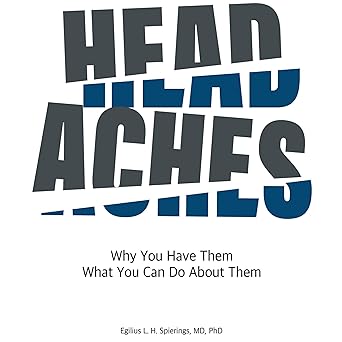
Bookpleasures.com welcomes Dr. Egilius L.H. Spierings, M.D., Ph.D., author of Headaches: Why You Have Them – What You Can Do About Them (Fulton Books, 2025).
Dr. Spierings brings more than forty years of expertise as both a pharmacologist and neurologist, dedicating his career to understanding and treating headaches.
He is the founder of MedVadis Research, a clinical center near Boston that specializes in headaches, migraines, and chronic pain.
In the late 1980s, Dr. Spierings played a key role in developing Imitrex, the first triptan medication, which revolutionized migraine treatment when it became available in 1991.
He has published more than 300 medical articles and has held leadership positions at both Tufts University and Harvard Medical School.
His latest book, Headaches: Why You Have Them – What You Can Do About Them, draws on nearly fifty years of experience to provide readers with straightforward, practical guidance on a health problem that affects so many, yet is often misunderstood.
Dr. Spierings, thank you for taking the time to speak with us today.
Norm: The literature suggests that migraine accounts for the majority of intense headaches. What distinguishing characteristics would enable a patient to differentiate migraine from other headache types without immediate medical intervention?
And following accurate self-diagnosis, what initial at-home management strategies would you recommend before pharmaceutical intervention?
Dr. Spierings: In essence, migraine is a chronic condition of recurring intense headaches with the headaches lasting a good part of a day to days. The foremost distinguishing characteristic of migraine is the high intensity of the pain.
It is so intense that it impacts the ability to function, sometimes to the extent of requiring bedrest. Due to its intensity, a migraine headache also upsets the body as a whole, resulting in light, noise, and sometimes smell sensitivity, nausea, sometimes vomiting, and occasionally diarrhea.
They may also wake you from sleep at night. They are not like regular headaches that are relieved by some rest, relaxation, or taking a couple of over-the-counter pain medications.
Migraine headaches require medications that we specifically developed for them, like triptans or gepants, to be relieved. If you have headaches that the proverbial two aspirins do not take away, you have to assume you have migraine.
You should seek medical consultation for them because the specific migraine medications require prescriptions. There are no home remedies that relieve migraine headaches.
What you can do to make them a little bearable are lying down in a dark and quiet room, applying cold to the head, and a heating pad on the neck and shoulder muscles.
The most effective way to prevent them is to lead a very regular life, make sure you always get enough sleep without oversleeping in the morning, eat regularly, preferably three times per day, and not going without food too long, spreading activities over the day and the week in order to avoid excessive fatigue, and be very modest with coffee and alcohol.
Norm: Although brain tumors represent a rare etiology of headache, patient anxiety regarding this possibility remains prevalent.
Which preliminary clinical assessments could a primary care physician employ to provide adequate reassurance before imaging studies are pursued?
What clinical red flags would necessitate immediate advanced imaging?
Dr. Spierings: Migraine is by far the most common reason for people to experience recurring intense headaches. Headache intensity is also the prime driver of seeking medical consultation.
People do not see a physician or other healthcare practitioner for headaches that they can easily treat themselves, for example with over-the-counter pain medications.
If someone seeks medical consultation for headache, this has to be acknowledged and migraine should be diagnosed and treated. No brain imaging is required and treatment should be with a specific migraine medication, that is, a triptan or a gepant.
These medications are safe, well tolerated, and effective. Red flags are recent-onset headache, that is, within weeks or months, in a youngster or older individual, presenting with the first severe headache, headache that has a very sudden onset like a blow to the head, headache associated with fever, especially in a child, teenager or adolescent, headaches associated with memory impairment, seizure, persistent disturbed vision, one-sided weakness, or speech impairment.
Norm: Migraine demonstrates clear hereditary patterns. To what extent can individuals with a family history of migraine modify their risk through lifestyle intervention, and what early identification strategies exist for affected children?
At what age should parents anticipate migraine manifestation in genetically predisposed offspring?
Dr. Spierings: Migraine generally manifests itself between the ages of 5 and 15, in girls often in the early teens due to the onset of menstruation. In a young child, severe headache upon awakening in the morning and headache waking the child from sleep at night are red flags.
Intense headaches should always be treated but preferably not with pain medications. In a young child, a liquid antihistamine often does the job, like diphenhydramine. In those children, stomach symptoms tend to be prominent, like nausea, vomiting, and sometimes abdominal pain.
As an antihistamine, diphenhydramine eases those complaints. It also tends to cause drowsiness, allowing the child to sleep, and a nap is often very helpful to relieve headache in a young child. Otherwise, migraine headaches generally require overnight sleep to be relieved.
For treatment of migraine headaches in a teenager or adolescent, the specific migraine medications that we employ in adults should be used.
The general rules as mentioned above also apply here. In addition, girls and women should be advised against the use of estrogen-containing medications, whether it is for birth control, regulation of the menstrual cycle, painful periods, or menopause.
Norm: The relationship between metabolic factors—specifically sleep deprivation and skipped meals—and headache onset appears mechanistic rather than coincidental. Could you elaborate on the biochemical basis for this association?
What constitutes an adequate sleep duration for individuals with migraine vulnerability?
Dr. Spierings: I think that in general, people need 8 to 9 hours of sleep per night, which has to be uninterrupted and at the right time. The function of sleep is restoration and the production of metabolic energy.
This is the energy that every single of the billions of cells in our body needs to function properly. Without the required energy, we feel tired and fatigue is, in my opinion, the number one trigger of headache.
When you happen to be genetically burdened with migraine, that headache is not going to be a regular headache but a disabling migraine headache. Headache is very common but in my experience, disturbed sleep seems even more common.
I would say that it is pervasive and, like headache, is grossly undervalued in its importance by the medical profession and, hence, grossly undertreated. With fatigue and lack of sleep, skipping meals and, of course, stress, are common triggers as well.
As opposed to stress, which in general is difficult to tackle, skipping meals should be easy to address by eating regularly, preferably three times per day. It may be the relatively low blood sugar level associated with not eating on time that causes the headache.
Sugar is an easy source of energy for the body, while fat is really the preferred source. In this context it is interesting to note that diabetes, a condition in which the blood sugar level is consistently high, seems protective of headache.
Norm: Visual aura phenomena—characterized by scintillating scotomata and fortification spectra—appear alarming to patients. Are these manifestations indicative of cerebrovascular compromise, or do they represent a benign neurological phenomenon?
Can visual aura be reliably triggered under controlled conditions, or does its occurrence remain unpredictable?
Dr. Spierings: We used to think that the migraine aura symptoms are caused by blood vessel spasm in the brain. A little bit similar to what occurs in a transient ischemic attack (TIA) or ministroke but due to transient blood vessel spasm rather than because of a rapidly dissolving blood clot.
As opposed to a migraine aura, a ministroke or TIA is a serious event because it often heralds a stroke, often with permanent disability as a result. The idea that the migraine aura symptoms are caused by a blood vessel spasm, however, has been disproven.
What has been shown is that they are due to a transient disturbance in brain function, called spreading cortical depression. Although it is called ‘depression’, it is actually a wave of excitation that travels through the cortical layer of the brain.
This is the most superficial layer of the brain that contains most of the brain cells. In the wake of it, there is a depression of brain cells activity. This phenomenon causes the symptoms that are typical of the migraine aura, such as the visual disturbance that is called scintillating scotoma.
This constitutes an arc of zigzag lines, often flickering and sometimes colorful, that develops in one visual field or the other. It travels from the center of vision to the periphery and then fades away or disappears out of the field of vision.
It is followed by blind spots due to the depression of brain cell activity. All of it typically lasts 15-20 minutes, usually around 20 minutes. \
It can be triggered by a combination of fatigue and visual stimulation. It may be the brain’s safety valve to undo its activity when that it hampered by a lack of metabolic energy.
Norm: Chronic daily headaches may result from either primary migraine or medication overuse. What diagnostic criteria and management protocols distinguish between these entities?
What withdrawal protocol would you recommend for patients attempting to discontinue overused analgesics?
Dr. Spierings: When you have headaches daily or almost daily, migraine or not, medication overuse may be an issue. Under those circumstances, the high frequency of the headaches is driven by the intake of medication.
The medications involved here are vasoconstrictors, medications that narrow the blood vessels. The worse in this regard is caffeine, which constricts blood vessels for up to 2-3 days.
It is the caffeine that is in coffee and caffeinated sodas but especially that is contained in headache and migraine medications. It is a liked chemical in headache and migraine medications because it tends to make those medications more effective.
It improves the absorption of the medications with which it is combined and, as mentioned, it narrows the widened blood vessels in the headache that contribute to headache and migraine.
For this reason, I always recommend that when a caffeine-containing medication is used for headache or migraine, it should not be used more than twice per week, on average.
If used more often, it may increase the frequency of the headaches and, very importantly, it may make any preventive measures less effective. The best way to get out of such a cycle is to stop the caffeine use abruptly and suffer through the withdrawal headache, which may last 2-3 days.
Triptan medications, such as sumatriptan, are also vasoconstrictors and, hence, may also cause medication overuse headache. However, in order for a triptan to do that, you have to take it not just daily but 2 or 3 times per day.
This is because they stay in the body for no longer than 10 to 14 hours. You often hear that a triptan cannot be taken more than 10 days per month but that is not based on anything.
Medications that are not vasoconstrictors, such as simple pain medications like aspirin, do not cause medication-overuse headache.
Norm: Cluster headache presents a distinct clinical entity from migraine, predominantly affecting men. What distinguishes the acute management approach, and why do these patients demonstrate superior medication tolerability?
What factors account for the characteristic temporal clustering pattern?
Dr. Spierings: Cluster headache is a migraine-related condition that, as you mention, mostly affects men. The headaches are much shorter than in migraine, that is 1-2 hours as opposed to at least a day if not longer.
However, this does not make them any less disabling than migraine headaches. The headaches in cluster headache occur daily or almost daily, several times per 24 hours. They often strike at night, waking the patient from sleep in the early night, between midnight and 2 AM.
They are intense to the extent that patients tend to become very restless with them, pacing the floor or occasionally banging their head against the wall. While migraine patients tend to become sick in general with their headaches, this is not the case in cluster headache.
That may be the reason why cluster headache patients tend to tolerate medications much better than migraine patients do. The best acute treatment for cluster headache attacks is the sumatriptan injection. Inhalation of pure oxygen can also be helpful but that is quite cumbersome.
It requires an oxygen tank and a special so-called non-rebreather mask. For preventive treatment, we used to rely on high-dose verapamil but nowadays we can also see good benefit with what are called CGRP antibodies.
These antibodies are also the most effective approach to the preventive treatment of migraine. The headaches in cluster headache typically occur in stretches that last from weeks to months, which we call episodes.
In between the episodes, so-called remissions, patient can be headache-free for months or even years. Episodes tend to occur in the spring and in the fall due to the lengthening and shortening of the days.
Norm: Pregnancy presents unique management challenges for migraines, as many standard pharmacological interventions are contraindicated. What evidence-based treatment options remain available during gestation?
Do migraine symptoms typically improve or deteriorate during pregnancy and the postpartum period?
Dr. Spierings: Women suffer from migraine 2 or 3 times more often than men and their headaches tend to be more intense, more frequent, and longer lasting. All of this mostly related to menstruating women, from menarche, that is, the onset of menstruation, until menopause.
The reason is the estrogen cycle that underlies the menstrual cycle. Estrogens probably represent the most potent chemicals to affect headaches in a negative way. What is very frustrating about this is that we do not know why and very little research is done in this area.
I would like to say that if we understood the reason behind the negative effect of estrogens on headache, we would have a handle on at least half of all headache suffering in this world. Of course, when a woman becomes pregnant, the menstrual cycle disappears but not the estrogens.
In fact, the body makes more of them as pregnancy progresses but the fluctuations are gone, which I think is helpful for headaches.
However, there are also other hormonal changes that occur during pregnancy, such as a gradually rising progesterone level and, very importantly, an increase in thyroid function.
All of this means, in my opinion, that headaches, including migraine, should improve during pregnancy, certainly after the first trimester. If this does not happen, we should assume something is amiss, not so much from a brain perspective but related to the woman’s general health.
We should then check for such conditions as anemia, low iron reserve, and low thyroid function.
For this purpose, it is very helpful to have baseline values, which of course are only available when the pregnancy is planned. In this regard it is shocking to know that half of all pregnancies worldwide are unplanned.
When headaches occur during pregnancy, especially when they are severe like migraine headaches, it is important that they are treated effectively.
As far as I am concerned, the best medications for this purpose are the triptans, particularly sumatriptan for which there is good evidence of safety during pregnancy and nursing.
Norm: Facial pain and post-traumatic headache represent distinct entities from primary migraine. What physiological mechanisms differentiate these conditions, and how should management strategies vary accordingly?
Are cervical muscle tension and postural dysfunction amenable to non-pharmacological intervention?
Dr. Spierings: Chronic post-traumatic headache and face pain each have a dedicated chapter in my book. There are common misconceptions with both. The misconception with chronic post-traumatic headache is that it is due to concussion.
It is not and serious concussions are rare with chronic post-traumatic headache. The reason is that such headache is not likely to occur from a head injury but instead is much more likely to arise from a neck injury. Of course, head and neck injuries often occur together.
However, severe head injuries that likely result in serious concussion are rarely associated with the kind of neck injury that results in chronic post-traumatic headache. The kind of neck injuries that likely give rise to chronic post-traumatic headache are injuries from the back or the side.
These are the kind of neck injuries that lead to whiplash. A whiplash injury of the neck causes neck muscle spasm and that leads to chronic headache. This is a treatable condition and the first step in the right direction would be the daily application of heat to the injured muscles.
Regarding face pain, the common misconception is that trigeminal neuralgia is a major cause. It is not but that is the only cause of face pain that is taught in medical school.
It is very rare and almost exclusively involves people over the age of 60 or 70. It is grossly overdiagnosed and as a result overtreated. The treatment is quite aggressive and can involve brain surgery.
The most common cause of face pain is in fact temporomandibular disorder or TMD. It causes pain in one jaw or both, in the side of the face. Especially when it is on one side, it can be severe and associated with the stabbing pain that is typical for trigeminal neuralgia.
Physicians tend to know nothing about it and dentists generally have limited knowledge only. The treatment is with an oral appliance and, if necessary, Botox®. Pain in the center of the face, in the nose-cheek area, is also common, usually related to a problem in the nose.
A consulted ENT surgeon will, however, look at the sinuses and miss the problem. The problem is closed off sinuses with pain on both sides and bony intranasal contact with one-sided pain. Both problems can be treated relatively easily.
Norm: Where can our readers find out more about you and Headaches: Why You Have Them – What You Can Do About Them?
Dr. Spierings: I have a WEBSITE dedicated to the book. There is an introductory video on it as well as many reviews and videos of interviews that I have given about the book. There is also a contact button if you have questions or comments.
Norm: As we end our interview, drawing upon nearly five decades of clinical experience, what represents the most prevalent misconception among patients regarding headache etiology and management, and what single evidence-based recommendation would you prioritize for implementation by the general population?
What lifestyle modification demonstrates the most substantial impact on long-term migraine burden reduction?
Dr. Spierings: Over the last several decades, we have made tremendous progress developing specific medications for migraine.
These medications are the triptans and gepants abortively and the gepants and CGRP antibodies preventively. In general, these medications are very well tolerated, extremely safe, and highly effective.
However, especially the triptans but certainly also the gepants can be tricky to apply abortively. You have to know how to apply them effectively for the abortive treatment of migraine. Unfortunately, most physicians and other healthcare practitioners do not know how to do that.
The CGRP antibodies on the other hand are very straightforward to apply. Hence, I highly recommend them preventively when you have migraine headaches more than occasionally. There is nothing magical about migraine headaches.
They are intense headaches that impact your ability to function and upset your body as a whole. When you have such headaches on a recurring basis assume you have migraine.
Even if they are not limited to one side of the head or do not come with other symptoms, like light sensitivity or nausea. If they are intense, they are migraine headaches and will respond to the specific migraine medications that are available.
Make sure that you get a medical consultation and get treated with those medications and nothing else. Finally, as a general lifestyle advice when you have migraine, lead your life normally but try to be regular with eating and sleeping.
Norm: Thanks once again and good luck with all of your endeavors