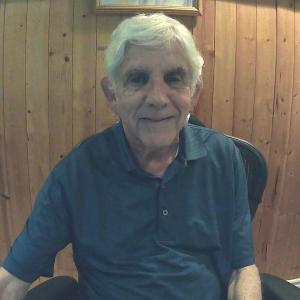
Reviewer & Author Interviewer, Norm Goldman. Norm is the Publisher & Editor of Bookpleasures.com.
He has been reviewing books for the past twenty years after retiring from the legal profession.
To read more about Norm Follow Here
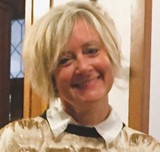
Ever wondered how a psychologist heals her own “broken soul; through writing?;
Dr. Beth-Anne Blue shares raw insights from her essays in Pearls and Purse Straps—on presence, vulnerability, and life’s profound “small moments.”
Dive into her exclusive interview now!
It is a pleasure to welcome Dr. Beth-Anne Blue to Bookpleasures.com. Her remarkable blend of creativity and clinical expertise makes her an extraordinary guest. Beth-Anne's ability to weave her experiences as a clinical psychologist with her talents in screenwriting and playwriting offers our readers a unique perspective on the human experience.
Beth-Anne brings a wealth of experience as a clinical psychologist, as well as notable achievements as an award-winning screenwriter and playwright.
Her professional journey has included significant roles in university counseling, sexual assault advocacy, and employee assistance programs throughout Ohio, Florida, and North Carolina.
During her time in Florida, one of her most memorable experiences was helping a young woman navigate the aftermath of a traumatic event, reminding Beth-Anne of the profound impact empathy and support can have in someone's life.
Born in Columbus, Ohio, Beth-Anne pursued her studies at Denison University and Palo Alto University.
Over several decades, she has dedicated herself to assisting individuals facing emotional challenges while cultivating her creative talents in fiction, screenwriting, and theater.
Today, our conversation will focus on her latest work, Pearls & Purse Straps, a collection of personal essays. Each essay offers a glimpse into her own life, distinct from her professional experiences as a psychologist, and reflects on the lessons she has drawn from these moments.
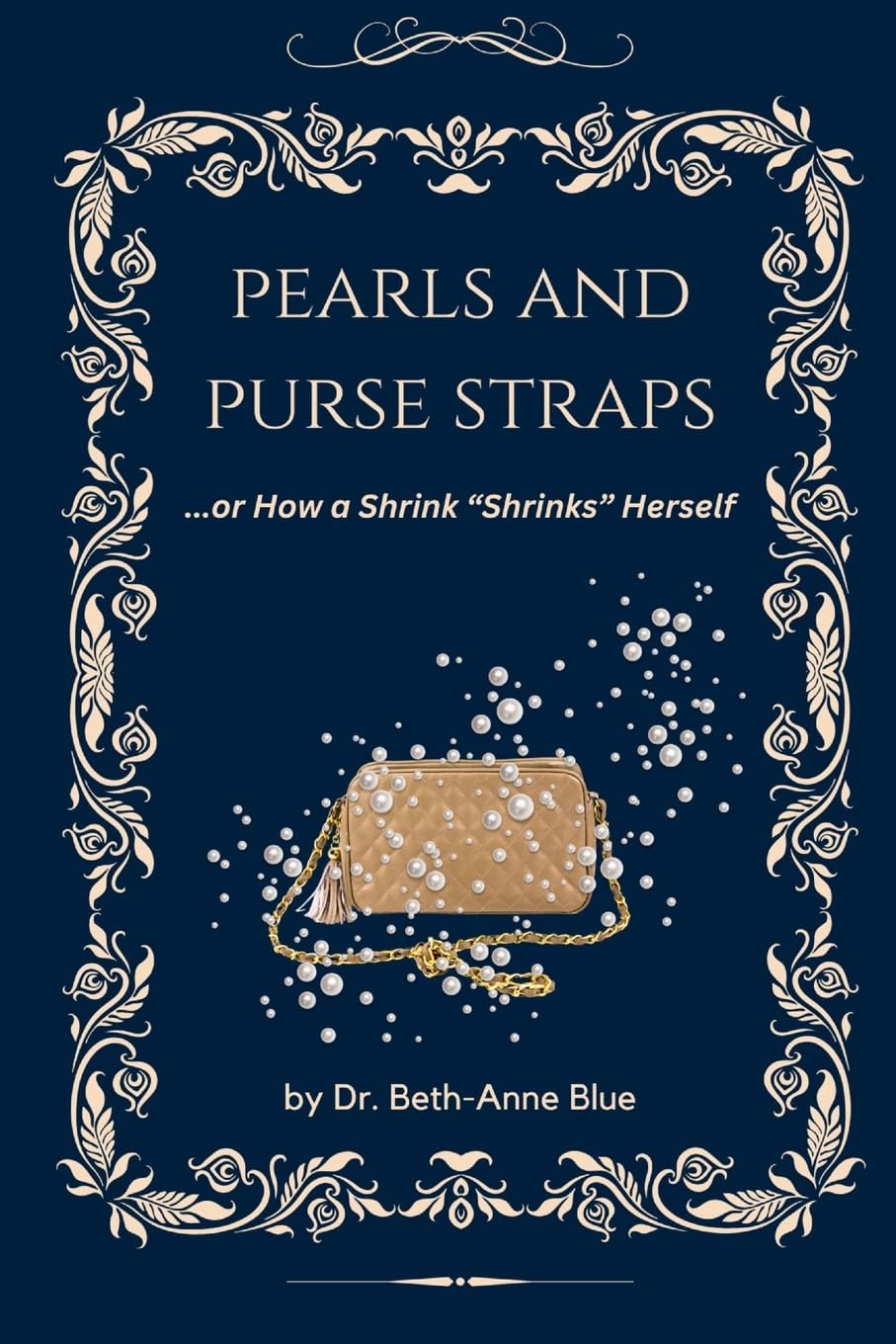
The book delves into themes of resilience, personal growth, and the nuances of human emotion, offering readers a profound reflection on life's complexities and Beth-Anne's continued journey toward understanding the self.
Beth-Anne currently resides in Sarasota, Florida, where she shares her home with her husband, their standard poodle Harlowe, and their extended family.
She continues to balance her writing pursuits with her responsibilities as Interim Director of the Health & Wellness Center at New College of Florida.
We are delighted to have the opportunity to speak with her today.
Norm: Hello Beth-Anne, and thanks for taking part in our interview.
Your book opens with the story of your name — its symmetry, its history, and its emotional weight. Why was that the right place to begin?
Has your relationship with your name changed since writing the book?
Beth-Anne: First let me say, thank you for your attention to this detail, Norm. As a writer, I am sure you are aware that every word, every punctuation, its placement in a sentence, it all has meaning. Why should a name be any different.
My life started off very difficult because as an incredibly shy child, I was tasked with correcting people…neighbors, teachers, other students, friends…about my name. A daunting and emotional task for someone who could barely speak, let alone correct others.
Interestingly, for years, I had this superstition that my professional life as a psychologist and my life as a writer must remain separate. I would use separate computers; separate notebooks; separate “vision” journals; even separate bags (i.e., briefcase bags) nearly everywhere I went.
My coworkers would comment, “There goes Beth-Anne with all her stuff.”
Fast forward to the publication of my current book. It was my agent, Diane, who convinced me to write under the name “Dr. Beth-Anne Blue” instead of Beth-Anne Blue, for Pearls and Purse Straps, simply because it might have more “traction” if people saw that it was written by a professional psychologist.
It was at that time, that I finally embraced the idea that they were two parts of the same person. For the first time I reveled in the fact that whatever gifts I have as a writer and whatever gifts I have as a psychologist could be combined – and it actually might enhance the work!
So, to answer your question, I wouldn’t say my relationship with my name has changed since writing the book, as the collaboration had to happen before I wrote the book in order for me to unite, truly, the two halves of me: the writer and the psychologist.
Norm: You chose not to use “Dr. Blue” on the cover. What did stepping away from the title allow you to reveal that you might not have otherwise?
Did writing as “Beth Anne” feel freeing, vulnerable, or both?
Beth-Anne: I would have to say it was both freeing and vulnerable. It was freeing because I didn’t have to stay so professional, but it gave me the space to speak personally.
And vulnerable, because I was quite revealing in the book about my own struggles, I had to allow myself to be vulnerable and brave when revealing things about myself.
These are two words that carry a lot of strength and accountability, no matter the context in which you are using them.
Norm: You describe being fully present with clients as both a gift to them and a form of self-healing. How did that insight shape the stories you chose to include?
Was there a moment in your career when you realized presence was your superpower?
Beth-Anne: I really do appreciate your clear understanding of what I was trying to say. That makes me feel good as a writer, when a reader really “gets it.” So, thank you for that.
In the chapter I write about why therapy actually works, I write about this very notion. Because I am not invested in whether my clients actually changes, what I am invested in is what I can control. In a therapy session I can control myself and not much else.
If I can control my level of presence during those 60 minutes, and be 100% actually in the moment with my clients, that is my contribution to their healing.
My clients still make their own choices and live their own lives, but hopefully, they, too, do it with more intention and presence. In the end, I think I realized this about mid-way through my career.
It is my responsibility to model in therapy, and in my life, what I want for others and myself.
Norm: Many chapters revolve around small, everyday moments — a pat down, a broken purse strap — that become profound lessons. How do you train yourself to notice meaning in the mundane?
Has there been a recent “small moment” that surprised you with its impact?
Beth-Anne: As I mention above, it is about training yourself to be present in all that you do. It takes time; it takes awareness; it takes letting go of what others think of you; it’s about stepping back to see things aren’t as catastrophic as one thinks or feels they are, and also stepping into the mundane moments to at least get some meaning from them – not meaning in the sense of “why is this happening to me” but meaning in the sense of “what can I learn from this happening to me?”
Norm: Roberta’s story is one of the emotional pillars of the book. What did she teach you about friendship, love, and being seen?
How did writing about her help you process her loss?
Beth-Anne: Roberta touched a lot of people as a human being. Dare I say nearly every person with whom she had contact. She was unlike any other. She was the reason I took my first job at the University of Florida, meaning she changed the entire trajectory of my career.
I don’t think I had ever been cared for in this way. Said a different way, I wasn’t sure that I deserved to be cared for in this way. Continuing in that line of thought, I fear that I became too much in need of her attention, it was that meaningful – or perhaps I craved it too much, that sort of attention. What I think most people don’t realize is that it is people like Roberta who ultimately teach you to care about yourself enough to love and accept yourself.
If someone else can love you, why shouldn’t you be able to love yourself enough to be seen in any relationship that you have?
Writing is the only way I process my emotions. I wrote “Handstands in the Ocean” before Roberta’s passing. I finished it – or added to it – after she died. That gave me the unique perspective of having her in my life and appreciating all she had given me to her being gone forever.
Heart wrenching. Gut wrenching. Life-changing. In the most selfish way, I knew that she had taught me all she needed to when she left us. It was my job to go on and live my life the way she would have wanted.
Norm: You often describe your soul as “broken” at different points in your life. How has your understanding of that phrase evolved over time?
Do you feel your soul is in a different place today?
Beth-Anne: I’ll answer this by referencing a card that I gave to Roberta once. It had a quote on the front of the card that read, “When people care for you and cry for you they can straighten out your soul,” by Langston Hughes.
That was the beginning of me understanding what a “broken soul” really was…and that I had one. This led to the notion that not only was it up to me to fix it, but that it’s a start when you have someone like Roberta in your life.
So, I double-down on my wanting to help others – to help them heal their souls by caring for them, if even for 60-minutes at a time.
My soul is certainly on the mend. My husband has contributed to that. Every single day it is a struggle – but I have learned to let myself be where I need to be. My husband takes me where I am. He doesn’t always understand my emotionally issues, but he lets me have them and accepts them. And, for that, I am grateful.
Norm: You write candidly about your own depression and moments of deep emotional struggle. What gave you the courage to share those experiences publicly?
What do you hope readers who are struggling will take from your honesty?
Beth-Anne: I think something I like to call “radical self-acceptance” gave me the courage to share those experiences. I mentioned earlier the bravery it takes to be honest and vulnerable. If I am going to ask my clients to do be brave enough to be vulnerable with me in order to heal, then I damn-well better be prepared to model what that looks like.
I have a saying when I am practicing: I will never ask a client to do something that I haven’t already done myself. Who would I be if I didn’t stand by that? I hope reading who are struggling will learn that it is OK to ask for help; and with the right souls we choose to let into our lives, we can begin to heal.
Imagine if I hadn’t let people like Roberta, my boss at the University of Florida, and my husband into my life. Imagine if I hadn’t allowed them to help me heal as a person. I don’t know where I would be or what I’d be doing.
We have to be careful who we let into our weird, little lives. And, yes, that is something we have control over.
That is what I hope readers will learn from my own struggles.
Norm: You write about the tension between introversion and the demands of your profession. How have you learned to navigate that balance?
Has your introversion ever turned into an unexpected strength?
Beth-Anne: Let me answer the second question first! Yes, I do think my introversion has allowed me to develop my superpower you describe earlier: being present.
I’m not sure I can explain it from a chemical or neurological or even psychological perspective, other than to say that being quiet allows me to be an introspective, caring soul that I like to think serves to help others.
As a child, my introversion was excruciating. As a teenager, I learned how to adapt to it by becoming parts of “outgoing” crowds. As a young professional, I was forced out of my shell just to be respected by my peers.
As a mature adult, people either get it or they don’t. However, I finally know my limits and my needs. As a woman in a position of administrative power at my job, I have no problem speaking my needs to whomever wants to know and will listen.
It has been a bit of a full-circle moment for me – my introversion. To have worked so hard, at my job and on myself, to now say that I am a Director of a Health and Wellness Center at a respected university and to say that I did it my way, is something of which I am very proud. It wasn’t easy but it was, at least, my path.
Norm: Many of your stories revolve around humility — the reminder that life can change with a single moment. How has humility shaped your personal and professional life?
Is there a moment of humility that still stays with you?
Beth-Anne: Gosh, Norm, humility is one of the most powerful words there is. I’m glad you gleaned it from my book. In its most crass meaning – humility is learning to laugh at yourself.
If you cannot accept yourself as human and flawed, there are things that will never be within your reach. Humility is a moment of nakedness followed by someone graciously handing you a towel to cover up AND your ability to accept this as part of being human. I hope that makes sense.
So many things, good and bad, have happened to me in a single second. I mean, like, life-changing things. If I lack the ability to take advantage of the good and get through the bad, I would remain stuck forever.
My dad taught me humility. When he dropped his entire plate of food on the feet of an Ohio Supreme Court Justice, and I watched him handle this with as much grace as he could, coupled with the graciousness and forgiveness from the Justice – THAT was humility.
Norm: Several chapters explore the idea that “the universe is never wrong.” How has that belief guided your choices?
Has the universe ever redirected you in a way you didn’t expect?
Beth-Anne: Many live by iterations of this statement: Everything happens for a reason. Things will always work out. If it was meant to be, it will be.
I do believe in free-will, if even in a deterministic world, and that our hard work and our choices count for something. But, if the universe is never wrong, not God or someone else up there pulling the strings of our lives, this is a much more palatable explanation for some of the things that have happened in my life, than hearing one of the above statements.
What was more profound to me in that chapter is the way I came to overhear that expression. I had never heard it. I was in the depths of depression, crying in a pool all by myself, on vacation and, out of nowhere, I heard this. Huh, I thought.
That’s as good of an explanation as any as to why things happen. And it only really makes sense when dealing with something you didn’t want to happen. Once things reach a moment of peace and acceptance, then it becomes a reasonable explanation of why things went the way they did.
Getting married for the first time at 50 years old is probably the most memorable example of the Universe being right.
Norm: You say writing is your way of “shrinking yourself.” When did you first realize that writing wasn’t optional for you?
How does writing heal you in ways therapy cannot?
Beth-Anne: When I realized that the book I had self-published in 2008 under a pseudonym, STANDUP8, and was writing Pearls and Purse Straps, it occurred to me that they were, as works, bookends of my life up to its current state.
All of the stories, the people, my hard work, my passion for writing, my screenwriting experience, the morals, the mores, the social anxiety, the introversion, the humility, the presence, the bravery, the vulnerability, and the awareness of it all…when it all came together, I realized that this project was essentially me doing therapy with myself!
I think my writing heals me in ways that talking about things cannot, is because of my extreme introversion. This may be unique to me. I have to “write it out” instead of “talk it out” because writing is one of the few times that I have complete control over my own healing process.
I don’t wish this on anyone else; but if you do write, keep every page, chapter, idea, screenplay, journal, diary, even papers you write for academic/educational purposes…keep it all! You never know when it will suddenly come together and make sense…
Norm: Where can our readers find out more about you and Pearls and Purse Straps?
Beth-Anne: Ask! As you have so thoughtfully done here. There are pieces and parts on-line, I’m sure. The book is available. I don’t think of myself as a “counselor” or as an “advice-giver.” I never have. I place value in education.
And, yes, I’ve had a few more years of schooling than some, maybe even most. But, what makes me good at what I do as a psychologist or as a writer is my unique ability to be brave, self-accepting, vulnerable, humble and relentlessly fearless.
Fear guided my life for so long, that I am finally able to say, as I do to the people in my life, including my clients, please don’t let fear guide the decisions that you make. Dealing with any emotions around a decision will come only after you have made the decision.
And how you overcome these emotions, that is what will define you as a person.
My agent, Diane Nine, can get you in touch with me. You can reach me via Facebook (Beth-Anne Blue), Instagram (@babluephd), X (@drbablue), and professionally through my email bethanneb3@gmail.com. Thank you!
Norm: As we wrap up our interview, if readers could walk away with only one message from Pearls and Purse Straps, what would you want it to be?
And what message did you walk away with after finishing the book?
Beth-Anne: Stay present. Pay attention. Be accountable. Be humble…be human.
I have learned that most of the fear that guided the first, say, third, of my life, has dissipated. Now, I am relatively confident that I am straightening out my soul, day by day, moment to moment.
Norm – I just wanted to say thank you for your insightful questions; giving me an opportunity to answer them in this format; and allowing me to be part of Bookpleasures.com.
Writing can be a quiet medium, so I will take any proverbial “noise” I can get around my book, my screenwriting, or my playwrighting, that I can get. Thank you, again.
All best,