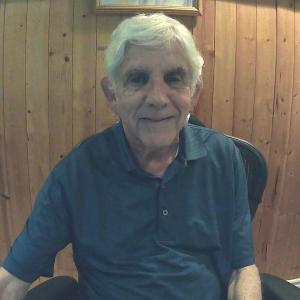
Reviewer & Author Interviewer, Norm Goldman. Norm is the Publisher & Editor of Bookpleasures.com.
He has been reviewing books for the past twenty years after retiring from the legal profession.
To read more about Norm Follow Here
Today, bookpleasures.com presents an insightful conversation with Tad Crawford, author of the compelling psychological novel A Woman in the Wild.

This evocative story follows Thea Firth, a therapist retreating to a remote mountain institute to confront her personal trauma, whose journey toward healing intertwines with that of Lucas Lamont, a mysterious “wild man” captured after living in the wilderness with a bear.
Together, their story explores the fragile boundaries between civilization and wildness, the limits of language in expressing trauma, and the enduring impact of intergenerational pain.
Today, bookpleasures.com has the pleasure of speaking with Tad Crawford, author of the compelling new psychological novel, A Woman in the Wild.

Set against the backdrop of a remote mountain retreat, the novel introduces us to Thea Firth, a therapist seeking solace from her own personal trauma—namely, a painful estrangement from her daughter following her ex-husband’s abuse.
Her quest for personal healing is quickly complicated by the arrival of a mysterious new patient: Lucas Lamont, a “wild man” who has been captured after living in the wilderness with a bear.
This central relationship becomes a powerful lens through which the novel explores the fragile boundaries between civilization and wildness, and the crucial distinction between what it means to heal versus to truly transform.
But the story reaches far beyond its central pair, delving into the weight of intergenerational trauma and the inadequacy of language in the face of profound experience.
Ultimately, A Woman in the Wild is a profound meditation on loss, the possibility of connection beyond words, and the difficult journey toward gratitude and acceptance of what cannot be changed.
Good day Tad and thanks for taking part in our interview.
Norm: Your novel, A Woman in the Wild, centers on Thea, a therapist who retreats to an institute to heal her own past, only to find herself drawn to the profound mystery of a silent “wild man” found living with a bear.
It’s a powerful exploration of healing beyond words, the tension between civilization and the wild, and the difficult search for forgiveness.
What was the initial spark for the story? Were you more drawn to Thea’s internal crisis as a therapist, or the external mystery of a man who rejects the human world?
Tad: Bears appeared in my first novel, A Floating Life. In the way an image works in the unconscious, I continued to write about bears after that novel was published.
In one short story a grieving man sees a bear digging at the boundary of his field. The man decides to take a nap on his patio and wakes to find the bear towering over him. But the bear is gentle and talkative.
After a conversation that undermines the man’s view of his situation, the bear says, “Come, follow me.” Faced with the terror of remaining as he is or the unknown dangers of following the bear into the wild, the man follows.
That story existed therapist Thea Firth leaves her city life because of a painful estrangement from her daughter.
When Thea goes to the mountains, to the Institute for Healing and Transformation, she arrives at almost the same time that the wild man (later called the bear man and finally named as Lucas Lamont) is captured in the forest and brought to the institute.
Thea takes a strong interest in this strange man who has also escaped from the normal bounds of life. Finally, her mentor and the director of the institute, Andreas Henniger, offers her the case of the wild man. So, she undertakes his cure and, by that process, begins her own healing.
Norm: The novel contrasts the rigid institute with the untamed forest. Is Lucas’s journey into the “wild” a mental breakdown, or is it a search for a more authentic state of being?
How does Thea’s own journey—leaving her structured life for the wilderness of the institute—mirror Lucas’s on an emotional level?
Tad: On an emotional level there are parallels between Lucas and Thea. When captured, Lucas is locked in a windowless room containing nothing he could use to harm himself.
Thea looks at him though the one-way window in the door and is outraged at his treatment. That she feels a strong connection to him isn’t surprising because both seek to escape emotional torments (grief for Lucas; estrangement and guilt for Thea) by going to the natural world.
Norm: The story links trauma across generations—from the Holocaust to domestic abuse. What is the connection you’re making between historical atrocities and private, familial pain?
Does the novel propose a way to break these cycles, or does it suggest they are an inescapable part of the human condition?
Tad: Moritz, the young Austrian who assists Thea in caring for Lucas, is very much caught in a generational trauma. His grandfather was a guard in a concentration camp where terrible atrocities were committed.
The grandfather must have had a role in those atrocities, yet he never speaks of what happened. This silence suffocates the life of Moritz’s father.
Moritz, in the spiritual quest that brings him to monasteries, shrines, and the institute, believes that by his actions he can change the family history, the suffocation passed down the generations.
In a similar way, Thea seeks to understand the sexual abuse of her daughter by her second husband.
She sees how the husband’s father was also a sexual abuser and, although she can’t know how many generations have been infected in this way, she uses this knowledge in her efforts to lessen her feelings of failure, guilt, and loss.
Norm: The bear is a powerful, almost mythical presence. What does the bear represent in the novel—untamed nature, a spiritual guide, or the physical embodiment of grief?
What is the significance of the fact that Lucas’s connection is with a potentially dangerous predator, rather than a more benign animal?
Tad: In A Woman in the Wild, the bear is a powerful absence. Lucas’ time in the wild with the bear will be the subject of a prequel in which Lucas, like Orpheus, seeks the beloved he has lost to death. But the bear is a mystery.
Thea wonders on her hikes whether the bear is near her, moving with her but unseen. This makes the bear feel like the unconscious, rich and powerful but hidden.
So the bear, who can walk upright like a human and rise from the near death of hibernation like Lazarus, is both a guide and the carrier of the sacred mysteries of nature.
Yet, as you point out, the bear can also be dangerous in the same way that nature itself can be dangerous. The journeys to escape grief or guilt possess not only promise but also risks and challenges.
To imagine such journeys only as benign would be to lessen the human condition and predicament.
Norm: The “talking cure” is central to Thea’s profession, yet the story’s central figure is silent. What are you exploring about the limits of language in the face of profound experience or trauma?
Does Lucas’s art, or even his physical presence, become a more powerful form of communication than words could be?
Tad: In the face of grief, language has its limits. It can’t undo the past, return the vanished loved one, calm the torment of loss. In his choice to go with the bear, Lucas moves beyond the human.
His grief locks him within himself. What use is a voice to speak when the pain is unbearable?
He goes with the bear, because, instinctively, he feels a healing power in the largeness of the bear and in nature itself. As he follows the bear through the forests and confronts the coming of winter and the bear’s impending hibernation, he also moves within.
Thea, in encountering the silent Lucas, makes a connection alien to the talk therapy on which she relied and in which she believed.
She wrestles with the question of whether returning him to what we expect of the human would even be a cure. And her efforts to help another ultimately are uplifting, and healing, for her.
Norm: Much of the novel involves characters simply watching each other. What is the power of silent, non-judgmental witnessing in the act of healing?
The infrared camera first captured Lucas with “invisible light.” Is this a metaphor for the therapist’s job: to see what is hidden in the dark?
Tad: “Invisible light” is a way to see beyond the surfaces, to see what can’t be seen. That is quest of therapy, to help the patient bring to the light of awareness what was previously hidden.
By seeing more, and incorporating these insights into conscious awareness, the patient grows in the therapeutic process.
If the therapist is directive, judgmental, impatient, caught in their own complexes, then the temenos—the sacred space in which the patient can trust and change—is truncated and may ultimately no longer be a place where the patient can trust and live fully.
That’s why it’s so important to be non-judgmental, to watch to allow. It reminds me of John Milton’s poem titled “On His Blindness” in which the final line is, “They also serve who only stand and wait.”
The therapist stands and waits in service to a more meaningful and deeper sight for the patient.
Norm: Thea’s love for her daughter Delphina is a source of immense pain. What does the novel explore about love that is rejected or cannot be expressed?
Is self-forgiveness possible for Thea without first receiving forgiveness from her daughter?
Tad: One challenge facing Thea is whether it is possible to be forgiven when the natural connection of mother to daughter has been severed. Especially if, as here, the daughter Delphina has good reasons for her belief that her mother failed her.
It would be like trying to gain the forgiveness of someone who has died except that Delphina is alive and unwilling to forgive. What is Thea to do with her love, her disappointment, her loss, her guilt?
Andreas Henniger, as Thea’s mentor and director of the institute, sees a way in which the energy that has made her leave her life can be harnessed and used to alleviate her inner suffering.
She expresses concern for the conditions under which Lucas Lamont is not only confined but also drugged. Andreas, to her surprise, puts her in charge of healing Lucas.
If she can’t find forgiveness in her relationship with Delphina, she can channel her energies toward another person in distress. She does that with her whole being. To act selflessly in the service of another gives purpose to Thea.
It gives her a way forward in her life. It isn’t the same as receiving forgiveness from her daughter and resuming their relationship, but she does when she can to help another and her sense of purpose gradually affects her feelings of guilt and sorrow.
Norm: The novel presents several men who are fractured in different ways: the abuser (Hugh), the silent wild man (Lucas), the spiritual seeker (Moritz). Are you exploring a crisis in modern masculinity?
How does Hugh’s father, Glenn, with his performative strength, represent a root of this brokenness?
Tad: Glenn, a man in his 60s, takes the whole family outside so they can watch him jump rope. That “performative strength” speaks of his need for connection, his lack of wholeness.
But the connection doesn’t come through the talking cure, whether with a therapist or a loved one. It comes from controlling others who must serve his egotism, his narcissism. There can be no happy ending to this.
The challenging question is where it began. Glenn sexually abuses his young daughter (Hugh’s sister) and Hugh becomes the abuser of Thea’s daughter. But what began this insufficiency of self that leads to domination and abuse of others?
How far can we see back into the generations that created behavior and needs like these? Our vision is limited, but we can sense that Hugh is both abuser and victim in that he grew up in a home where his father abused his younger sister.
Glenn, in his lack of connection, does represent a “root of this brokenness.” Lucas and Moritz are also damaged. While the healing they seek may go beyond the norms of what we expect, it doesn’t harm anyone else.
Lucas takes his grief to the wild. Moritz quests for a spiritual solution to the generational challenges in his own family, the legacy of the death camps and immense suffering. All of these men face the challenge of healing and growth. Not all of them are capable of meeting that challenge.
Norm: Andreas is both a respected psychoanalyst and a man who believes he shared a body with a psychic lover. What are you saying about the relationship between modern psychology and older, more mystical forms of understanding the soul?
Does his character suggest that a true healer needs to embrace both the rational and the seemingly irrational?
Tad: As Andreas shows in his toast for the institute’s Thanksgiving dinner, he values the spiritual contributions of many societies that thrived at different times. In this, he incorporates into his therapy more than the approach of a single school of therapy.
He is open to more mystical approaches to the soul. That a lover enters his body with her being may be made possible by this openness. Of equal importance, I think, is that when he no longer had the desire to be present for his patients, he ended his therapy practice.
He didn’t continue to go through the motions. He took his desire for health to the institute, a new direction for him but a position that allowed him to heal as the leader of the institute.
Certainly, he embraces both the rational and seemingly irrational with an inner spark that allows him to see, for example, how Thea and Lucas might each benefit from Thea’s concern for Lucas. Even his gift for Lucas of a small, white statue of the Buddha shows his expansive vision of healing.
Norm: Where can our readers find out more about you and A Woman in the Wild?
Tad: My website, tadcrawford.com, discusses my background, unusual career path, and mix of fiction and nonfiction books.
On social media I’m active on TikTok (@authortadcrawford), Instagram (tadcrawfordauthor), Facebook (AuthorTadCrawford), and LinkedIn (Tad Crawford).
Searching for my name on YouTube brings up the video “Art, Money, Fiction” about my overall career and the Living the Next Chapter podcast titled “A Woman in the Wild” in which I discuss the novel with host Dave Campbell.
Norm: As we wind up our interview, the novel ends without a neat resolution for Thea or Lucas. Why did you choose to leave their futures uncertain?
At the end, Thea learns to trust in the “mercy” of love, not just its “power.” What is the distinction, and is this the novel’s central lesson?
Tad: In my creative process, I begin with certain thoughts and feelings about a relationship or situation. I don’t know the future, nor do my characters.
The future unfolds as the present is plumbed. What has been submerged in the unconscious rises to become visible. I suddenly see into the characters in a way I couldn’t only a day (and certainly a month) earlier.
Likewise, the characters are in the suspense of the present. Thea has no idea when she feels outrage about the treatment of Luke that she will be given him as a patient. Nor does she know what to do with such an unusual case.
She feels her way forward. Lucas, even without speaking, is obviously moving forward in large part because of Thea’s intervention. Each development in the novel is a discovery for me as the author.
This was especially true when I circulated the first draft of the novel to a group of readers. Sitting with their insights at last enabled me to put the novel into its final form.
If I had power as an author, no doubt I would know from the beginning what the future would hold for me and my characters.
But if I am willing to trust that what is needed will be forthcoming—from the unconscious, from nature, from the generosity of those who respond to what is written--then I believe in what can best be called mercy.
I didn’t intend to write a novel containing a lesson, but that would be the lesson that emerges from the lives and interactions of Thea, Lucas, Andreas, and the other characters in the novel.
Norm: Thanks once again and good luck with all of your endeavors